Advertisement

Clergy, Religious Cautioned against Social Media “celebritization” at Communicators Meeting in Kenya

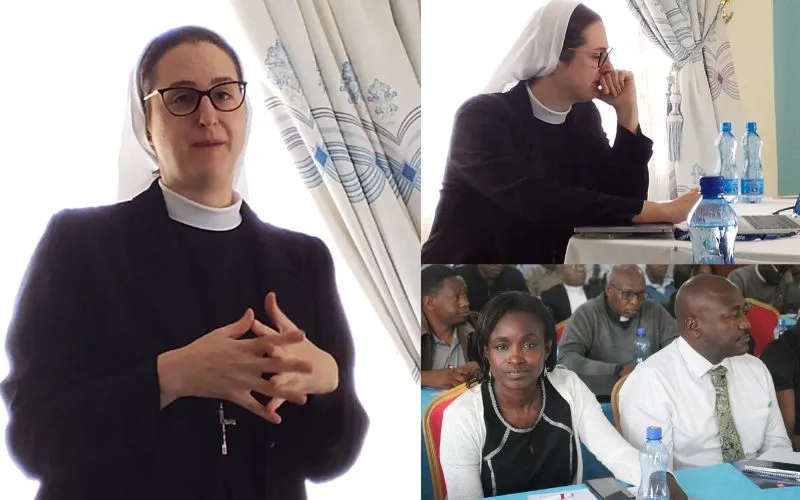
Sr. Nina Krapić, Communication Expert at The Vatican Dicastery for Communication (DFC). Credit: ACI Africa

The rapidly evolving digital environment is introducing new pressures that sometimes lead Clergy and the men and women Religious toward “celebritization”, a  communication expert at the Dicastery for Communication (DFC) has warned.

In an interview with ACI Africa on Tuesday, November 18 on the sidelines of the ongoing annual consultative meeting for Diocesan communication coordinators, Catholic radio managers, and other key media partners in Kenya, Sr. Nina Krapić said that today’s media environment, especially its focus on personalization, has made it increasingly easy for religious leaders to become public personalities who attract fan-like following.

“Some of the trends that are very present in nowadays media environments are personalization,” Sr. Nina said at the event that was organized at the JJ McCarthy Centre in Kenya’s Catholic Archdiocese of Nairobi (ADN).

The Vatican official said members of the Clergy and the women and men Religious “very easily become celebrities” if they get “blurred in some way with the pop culture context, which we did by entering the social media environment.”

“I say celebrities because a lot of academics now say that influencers are new celebrities. It's the contemporary form of celebrity, which is not anymore someone behind seven Hollywood hills, but someone who is very close to us, and we tend to form affective bonds with them, especially in social media,” she said.
Advertisement

The member of the congregation of the Sisters of Charity of St. Vincent DePaul (MVZ) highlighted the reality of social media celebrities “not just in church, but everywhere,” with “a lot of famous influencers who are lay or Clergy, now communicating on social media platforms.” 

Sr. Nina cautioned that without proper discernment digital platforms could lead a Church minister to shift focus away from their actual mission.

“Risks can always be promoting yourself and not being the link,” she said , and clarified, “We are here not to promote ourselves but to be the link to God’s Kingdom, to promote communion, not just our personal opinions.”

The Catholic Sister also highlighted the affective bonds that get created on digital platforms, which she said  are sometimes “more similar to a fan than to someone who is listening to a preacher” as another risk of “celebritization.”

“These things are changing in the digital environment,” Sr. Nina said during the November 18 interview with ACI Africa on the sidelines of the four-day event that the Kenya Conference of Catholic Bishops' (KCCB) Commission for Social Communication organized on the theme, “Deepening collaboration and building capacity for effective evangelization and ethical media management.”

More in Africa

She stated that with good discernment and with good formation, social media platforms, including artificial intelligence “are not inherently good or bad. They can be very good.”

“We just need proper formation. We need to know enough to be intentional on social media, not simply present with a partial vision, but to have an integral understanding of what we are doing there,” Sr. Nina said.

The MVZ member told ACI Africa that the DFC has undertaken significant initiatives to help the Church navigate the rapidly evolving media landscape shaped by social media and artificial intelligence.

She particularly highlighted the document “Towards Full Presence,” which she said talks about the engagement in social media. 

The document , she said, is the fruit of collaboration with academics, young professionals, and the religious men and women Religious “who sat together and discerned about our presence in social media.”

Advertisement

She described the document as a “fruit of synodal discernment” that "gives new answers to the questions that we have in the social media environment.”

“It’s not designed to give a simple answer to a complicated question, but to help us discern together,” the DFC official said.

She added that the document also encourages a move from individual presence on social media to fostering community.

Sr. Nina also noted that the DFC has a website fully dedicated to the document, where anyone can find questions for reflection to discern what to promote on social media.

Nicholas Waigwa is a Kenyan multimedia journalist and broadcast technician with a professional background in creating engaging news stories and broadcasting content across multiple media platforms. He is passionate about the media apostolate and Catholic Church communication.