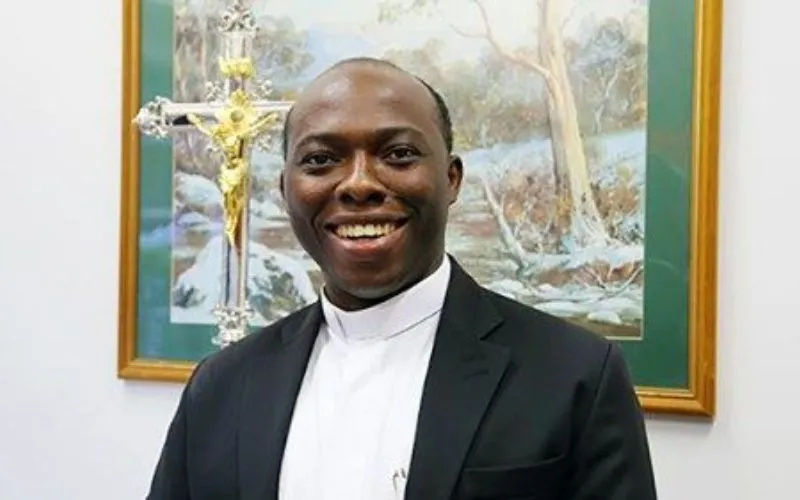
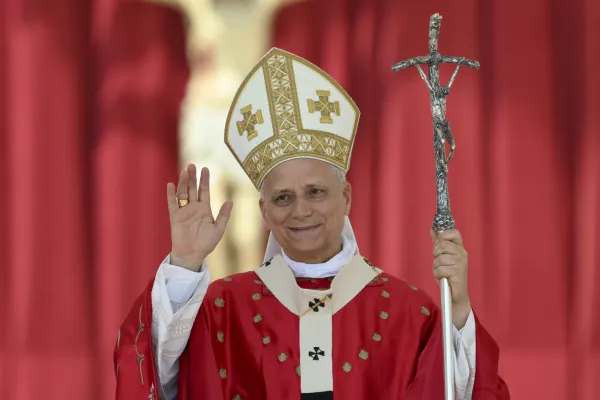
Besides Igbo and English, Mons. Onyemuche speaks Italian and French.
He served as an official in the General Affairs Section of the Secretariat of State Since 5 September 2016 to 2023 when he was appointed as under-secretary.
According to the Vatican, the Secretariat of State is the department of the Roman Curia that collaborates most directly with the Pope in carrying out his supreme mission, functioning as the central engine behind the Holy See’s political and diplomatic initiatives, while also serving as the key link and coordinator for the organization of the Roman Curia.
The department is organized into three sections namely the Section for General Affairs, the Section for Relations with States and International Organizations, and the Section for the Diplomatic Staff of the Holy See.
The Secretariat of State is responsible for assisting the Pope in governing the Holy See and carrying out his ministry as the universal shepherd.
Comprising a multinational team, the Secretariat works closely with the Pope, coordinating internally among the Dicasteries and Institutions of the Apostolic See and externally overseeing the Holy See’s diplomatic missions.
The department serves as the Pope’s principal collaborator in leading the universal Church. The current Secretary of State is Pietro Cardinal Parolin.
The origins of the Secretariat of State go back to the fifteenth century. The Apostolic Constitution Non debet reprehensibile of 31 December 1487 established the Secretaria Apostolica comprising twenty-four Apostolic Secretaries, one of whom bore the title Secretarius Domesticus.
More recently, in 1814 Pius VII established the Sacred Congregation for the Extraordinary Ecclesiastical Affairs. With the Apostolic Constitution Sapienti consilio of 29 June 1908, Saint Pius X divided the Sacred Congregation for Extraordinary Ecclesiastical Affairs in the form later fixed by the Codex Iuris Canonici of 1917.
Paul VI, with the Apostolic Constitution Regimini Ecclesiae Universae of 1967, implementing the will expressed by the bishops at the Second Vatican Council, reformed the Roman Curia and gave a new structure to the Secretariat of State.