“The Nicene Creed does not depict a distant, inaccessible and immovable God who rests in himself, but a God who is close to us and accompanies us on our journey in the world, even in the darkest places on earth,” the pope writes. “His immensity is revealed when he makes himself small, laying aside his infinite majesty to become our neighbor in the little ones and in the poor. This revolutionizes pagan and philosophical conceptions of God.”
Leo XIV also highlights the Nicene emphasis on the full humanity of Christ, noting the clarification that the Word “became man.” Against teachings that suggested the Logos only assumed a body, he recalls that later councils made explicit that “in Christ, God assumed and redeemed the whole human being, body and soul.”
Quoting St. Athanasius and the patristic tradition, the pope writes: “Divinization, then, is true humanization (becoming fully human). This is why human existence points beyond itself, seeks beyond itself, desires beyond itself, and is restless until it rests in God.” Only God, he adds, “in his infinity, can satisfy the infinite desire of the human heart, and for this reason the Son of God chose to become our brother and redeemer.”
A call to examine conscience
Beyond doctrine, Leo XIV insists that the Creed must shape Christian life.
(Story continues below)
“Both the liturgy and the Christian life are thus firmly anchored in the Nicene-Constantinopolitan Creed: what we profess with our mouths must come from the heart so that we may bear witness to it with our lives,” he writes. “We must therefore ask ourselves: What about our interior reception of the Creed today? Do we experience that it also affects our current situation? Do we understand and live out what we say every Sunday? What do these words mean for our lives?”
“In this sense, the Nicene Creed invites us to examine our conscience,” the pope continues. “What does God mean to me and how do I bear witness to my faith in him? Is the one and only God truly the Lord of my life, or do I have idols that I place before God and his commandments?”
He ties this examination to care for creation and social justice, asking: “How do I treat creation, the work of his hands? Do I exploit and destroy it, or do I use it with reverence and gratitude, caring for and cultivating it as the common home of humanity?”
Echoing the Second Vatican Council, Leo XIV notes that “for many people today, however, God and the question of God have almost no meaning in their lives,” and that Christians themselves bear some responsibility, since “they do not bear witness to the true faith; they hide the true face of God with lifestyles and actions that diverge from the Gospel.”
Instead of proclaiming a merciful God, he laments, “a vengeful God has been presented who instils terror and punishes.”
Following Christ and loving one another
At the center of the Creed, the pope writes, is the confession of Jesus Christ as Lord and God.
“The profession of faith in Jesus Christ, our Lord and God is the center of the Nicene-Constantinopolitan Creed. This is the heart of our Christian life,” he says. “For this reason, we commit to follow Jesus as our master, companion, brother and friend.”
Following Christ, he continues, “is not a wide and comfortable path,” but “this often demanding or even painful path always leads to life and salvation.”
“If God loves us with all his being, then we too must love one another,” Leo XIV writes. “We cannot love God whom we do not see without loving our brother and sister whom we do see. Love for God without love for neighbor is hypocrisy; radical love for our neighbor, especially love for our enemies, without love for God, requires a ‘heroism’ that would overwhelm and oppress us.”
“In the face of disasters, wars and misery, we bear witness to God’s mercy to those who doubt him only when they experience his mercy through us,” he adds.
Ecumenism as ‘sign of peace and instrument of reconciliation’
Recalling the teaching of Vatican II and St. John Paul II’s 1995 encyclical Ut unum sint, the pope says that in a divided world “the one universal Christian community can be a sign of peace and an instrument of reconciliation, playing a decisive role in the global commitment to peace.”
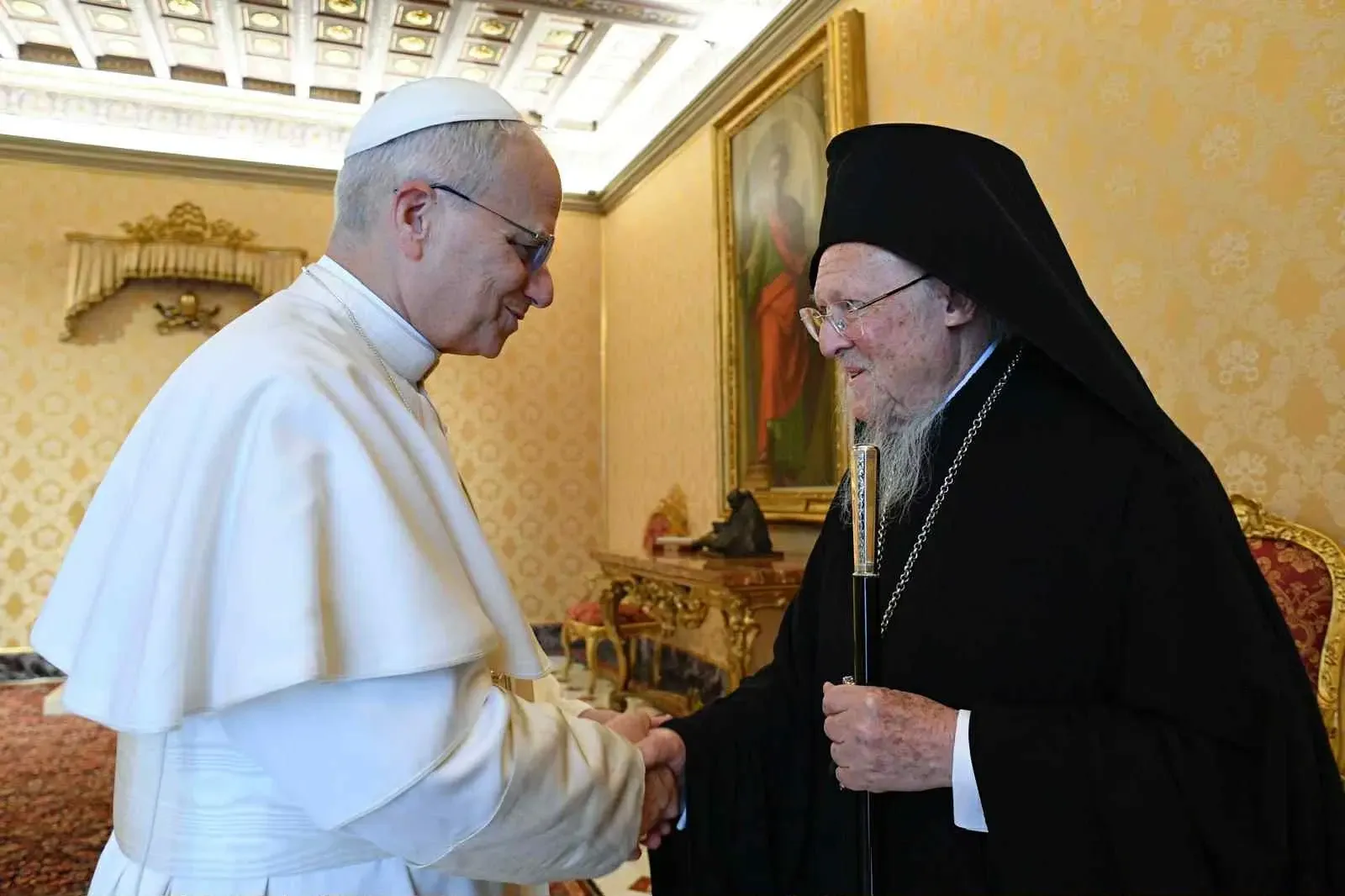
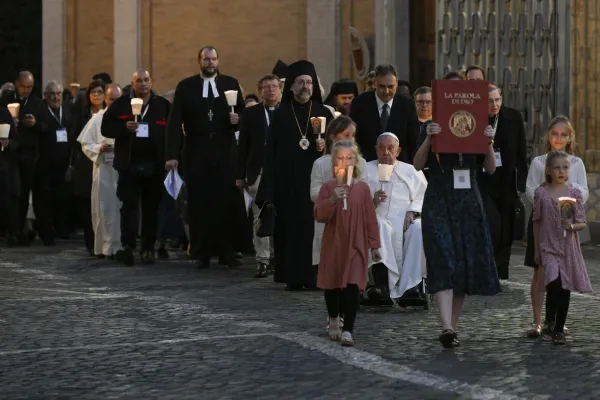
He notes that, while full visible unity with Orthodox, Oriental Orthodox, and communities born of the Reformation has not yet been achieved, ecumenical dialogue “founded on one baptism and the Nicene-Constantinopolitan Creed” has already helped Christians recognize each other as brothers and sisters in Christ and rediscover “the one universal community of Christ’s disciples throughout the world.”
“We share the same faith in the one and only God, the Father of all people; we confess together the one Lord and true Son of God, Jesus Christ, and the one Holy Spirit, who inspires us and impels us towards full unity and the common witness to the Gospel,” he writes. “Truly, what unites us is much greater than what divides us!”
‘Come, divine Comforter’
The letter concludes with a prayer to the Holy Spirit for the renewal of faith and the healing of divisions among Christians.
“Holy Spirit of God, you guide believers along the path of history,” Leo XIV prays. “We thank you for inspiring the Symbols of Faith and for stirring in our hearts the joy of professing our salvation in Jesus Christ, the Son of God, consubstantial with the Father. Without him, we can do nothing.”
“Come, divine Comforter, source of harmony, unite the hearts and minds of believers. Come and grant us to taste the beauty of communion,” he continues. “Come, Love of the Father and the Son, gather us into the one flock of Christ. Show us the ways to follow, so that with your wisdom, we become once again what we are in Christ: one, so that the world may believe.”
As a journalist, Victoria Cardiel has specialized in social and religious news. Since 2013, she has covered the Vatican for various media outlets, including Europa Press and Alfa and Omega, the weekly newspaper of the Archdiocese of Madrid.