Advertisement

Nothing but “genocide”, Catholic Bishop in Nigeria Describes Nigeria's “grief-stricken” Situation

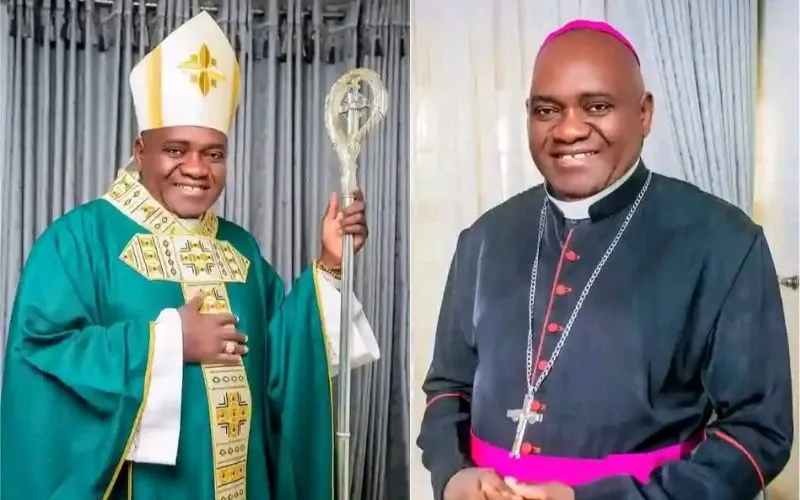
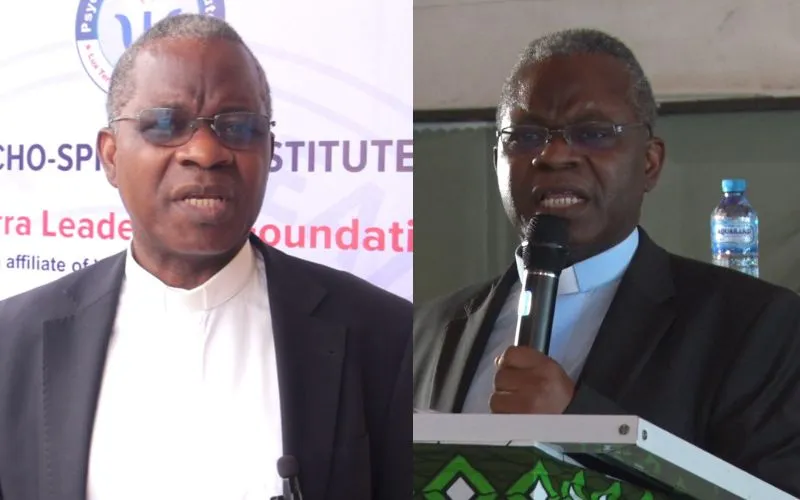
Bishop Isaac Bundepuun Dugu of the Catholic Diocese of Katsina-Ala in Nigeria. Credit: Catholic Diocese of Katsina-Ala

The Catholic Bishop of Katsina-Ala Diocese in Nigeria has reflected on the continued killings in Benue State that is served by his Episcopal See, noting that what is happening in his jurisdiction can only be best described as genocide.

In his Christmas 2025 message dated Tuesday, December 16, Bishop Isaac Bundepuun Dugu, while outlining the nature of genocide, clarified that the violence occurring in his jurisdiction is not a religious conflict between Christians and Muslims.

“With the horrific slaughter of innocent and defenseless Nigerians by the armed herdsmen in Benue State and particularly within the pastoral jurisdiction of the Catholic Diocese of Katsina-Ala and in my position as the Chief Shepherd, there is no adequate word at the moment that best describes our grief-stricken situation than the term genocide,” Bishop Dugu says.

He adds, “It is important to note here that in Benue State, there are no instances and acts of religious war between Muslims and Christians living together in our communities. We have mosques situated in our main towns alongside Christian Churches.”

He further clarifies that what is happening in Benue is ethnic, tribal, and economic genocide. “These unwholesome activities have continued to debase and impoverish the citizens of the state,” the Local Ordinary of Katsina-Ala says.
Advertisement

The Nigerian Bishop further explains that there “are trends of genocide among terrorist groups with jihadist mentality whose purpose and goal is to exterminate the natives who are Christians from their ancestral land and occupy them.”

To ascertain that what is happening in Benue State is tantamount to genocide, Bishop Dugu reflects on the definition of the term based on Article II of the United Nations Genocide Convention.

Genocide, he says in reference to the UN definition, “is any act committed with intent to destroy, in whole or in part, a national, ethnical, racial, or religious group.”

He continues, “These acts include killing members of the group, causing serious bodily or mental harm, deliberately inflicting conditions of life designed to destroy the group physically, imposing measures to prevent births within the group, and forcibly transferring children to another group, which is Genocidal.”

Bishop Dugu says that for many decades, civilians in Benue State have endured attacks by Fulani herdsmen, who he says have raided and displaced communities in the Middle Belt, destroyed farmland, murdered countless farmers, and “seized land that is not rightfully theirs.”

More in Africa

He reflects on the consequences of the acts of the herdsmen, saying, “In my jurisdiction, from May 29, 2023, to September 30, 2025, there have been 335 fatalities; 203 abductions; 104 injured persons in various degrees, along with the burning of 917 zinc houses and 917 thatch houses.”

“The conflict has led to the closure of 21 schools, destruction of 206 outpost stations, and three main parishes have been shut down; seven clinics have been closed and the displacement of approximately 12,472 residents,” Bishop Dugu says.

He says that many of the residents within his Episcopal See “have been dislodged from their ancestral homes and these places have been practically occupied by the armed herdsmen.”

The Nigerian Catholic Bishop says that the Universal Reformed Christian Church, known as the NKST, within the jurisdiction of his diocese, has also been adversely affected by the genocidal trend, with many other places experiencing a total death toll of approximately 874 persons.

Amid what he described as genocidal trends in his jurisdiction, Bishop Dugu encourages Nigerians to remain firmly rooted in Christ, especially during the Christmas season that celebrates His birth, and to place their hope not in material things but in faith.

Advertisement

“Advent is a moment we prepare to celebrate the solemn occasion of the birth of Jesus. This period heralds a sense of devotion and anticipation,” he says, adding, “In Advent we contemplate the end of time and yet herald the beginning of a new era of incarnation.”

He explains, “As we journey through Advent, the Advent Wreath, which has four candles, Hope, Peace, Joy, and Love, together with the central white Christ-Candle, that traces the biblical story of salvation, invites us into a rhythm of waiting and remembrance.”

“As we light each candle, we turn visible flame into spiritual refuge, letting the growing light nurture patience, peace, and renewed confidence that heartache, depression, sorrow, and crisis are not the end of the story,” he says.

Bishop Dugu explains that the feast of the incarnation is not to be celebrated in a vacuum, adding, “That Christ is born to the world, is the story of our human salvation. This is to be lived in our concrete world and existence. All mankind is called to this reality.”

He urges those in politics to work towards the right ordering of society, and traditional rulers to ensure that the values of African tradition, such as respect for elders, support for one another, hospitality, and justice, are upheld.

(Story continues below)

“The religious leaders should ensure that Christianity is not only preached but also lived, beginning first of all with the witness of their own lives,” Bishop Dugu says.

Silas Mwale Isenjia is a Kenyan journalist with a great zeal and interest for Catholic Church related communication. He holds a Bachelor’s Degree in Linguistics, Media and Communication from Moi University in Kenya. Silas has vast experience in the Media production industry. He currently works as a Journalist for ACI Africa.