Advertisement

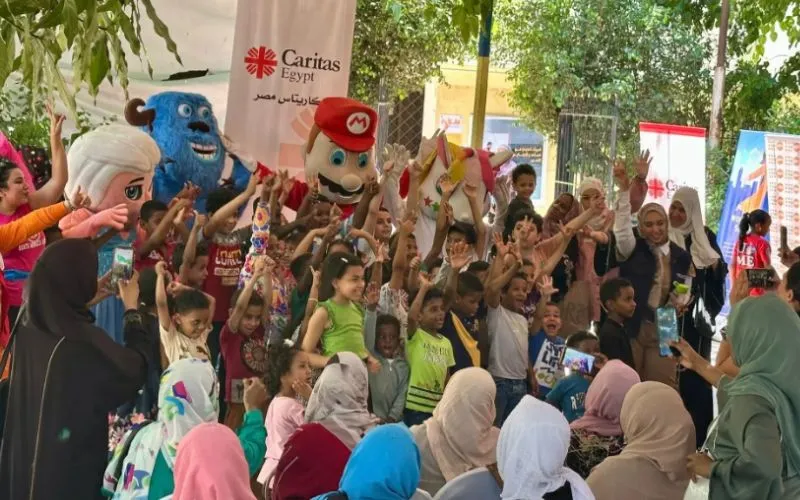
Caritas Egypt Reaching Out to Over 1 Million Sudanese Refugees with Medical, Vocational, Psychosocial Support

Credit: Caritas Egypt

After more than 1,000 days of violent conflict in Sudan, Caritas Egypt officials have reflected on initiatives undertaken to assist the over a million refugees from the Northeastern African nation through medical services, vocational programs, and psychosocial care.

In a Monday,  January 2026 publication, Caritas Egypt says that the effects of Sudan’s civil war that broke out on 15 April 2023 between the Rapid Support Forces (RSF) and army units of the Sudanese Armed Forces (SAF) continue to spread far beyond the country’s borders.

“The conflict has forced millions of Sudanese to flee, with Egypt now hosting an estimated 1.5 million Sudanese nationals, many arriving after long journeys with few resources and serious health needs,” Caritas Egypt say in the Monday, January 26 report.

With over 10 million Migrants including the Sudanese ones, the officials of the Church’s development agency say, “Caritas Egypt expanded its emergency response throughout 2025 and is now seeking additional funding to continue its work, focusing on health, livelihoods, and protection as needs grow while other services are reduced.”

Through its health programmes, the officials say that “Caritas helps refugees access care that would otherwise be out of reach. Doctors and nurses supported by Caritas provide consultations, medicines for chronic illnesses, and referrals for specialized treatment.”
Advertisement

The health programme manager at Caritas Egypt, Heba Semary, has been quoted as saying in the report that “in September 2025 alone, more than 1,000 people received medical care through Caritas.”

Ms. Heba, however, explains that access to asylum procedures has become increasingly challenging.

The Caritas official says that with UNHCR registrations now centralized in Cairo, refugees arriving via Aswan, a city located nearly 300 kilometres from the Sudanese border, who often arrive when often exhausted and malnourished, must now travel over 900 kilometers to complete the process.

For this reason, Heba says, “many remain undocumented, effectively invisible to the formal aid system. In that vacuum, Caritas’ food distributions and mobile clinics represent lifesaving services delivered where they are most needed.”

“Appointments are sometimes given years ahead,” she says, and explains, “This is why there is such a gap between official figures of registered refugees and the reality on the ground.”

More in Africa

Due to aid cuts, Heba says that “humanitarian agencies can now provide only basic treatment, such as vitamins and essential medicines, as funding for cash assistance and specialized care, including anticoagulants, has been halted.”

She says that beyond treatment, Caritas Egypt also focuses on prevention, providing nutrition screenings for children, health awareness sessions, and guidance on everyday care.

“Food vouchers are distributed to families to help them cope with high inflation, rising prices, and overall income loss,” Heba says.

On provision of vocational training, Caritas officials say, “With refugees largely excluded from formal employment, skills and vocational training remains a key part of Caritas’ response.”

In 2025, the January 26 Caritas report indicates that “more than 100 training sessions were delivered, reaching over 1,000 participants in areas such as refrigeration maintenance, tailoring, and other practical skills.”

Advertisement

On protection and psychosocial support, the officials of the church development agency underscore the importance of the support, explaining that “Prolonged displacement, overcrowded housing and financial strain have increased stress within refugee households.”

“Caritas addresses these risks through safe spaces for children, awareness sessions on violence prevention, and community activities that support mental wellbeing,” the officials say in the January 26 report.

Despite the efforts to maintain humanitarian assistance programmes in Sudan, Caritas Egypt officials say that the needs of the migrants “remain overwhelming as international funding for UN agencies has sharply declined.”

“In this shrinking humanitarian space, Caritas Egypt plays a fundamental role and is now calling for renewed international solidarity and funding, to prevent a deepening and largely invisible crisis,” the officials say.

The Sudan’s civil war between RSF, the paramilitary force under General Mohamed Hamdan Dagalo, and SAF, which is loyal to the head of Sudan's transitional governing Sovereign Council, General Abdel Fattah al-Burhan, started in Sudan’s capital city, Khartoum, before becoming a full-fledged civil war in the entire Northeastern African nation.

(Story continues below)

It has reportedly resulted in the death of “as many as one hundred and fifty thousand people”; well over 14 million people have been displaced, including to unstable countries such as Chad, Ethiopia, and South Sudan, where they have reportedly overrun refugee camps.

With some 30.4 million people in need of humanitarian aid in Sudan, reportedly more than half of the country’s population, Sudan has arguably the highest number of people in need ever recorded; the highest number of internally displaced globally, more than 12 million having fled violence in the country in the last two years. 

Sudan also has the highest number of people in emergency or catastrophic levels of hunger, “with over 600,000 people living in famine, and 8 million others on the cliff edge”, according to an April 2025 report.

Silas Mwale Isenjia is a Kenyan journalist with a great zeal and interest for Catholic Church related communication. He holds a Bachelor’s Degree in Linguistics, Media and Communication from Moi University in Kenya. Silas has vast experience in the Media production industry. He currently works as a Journalist for ACI Africa.