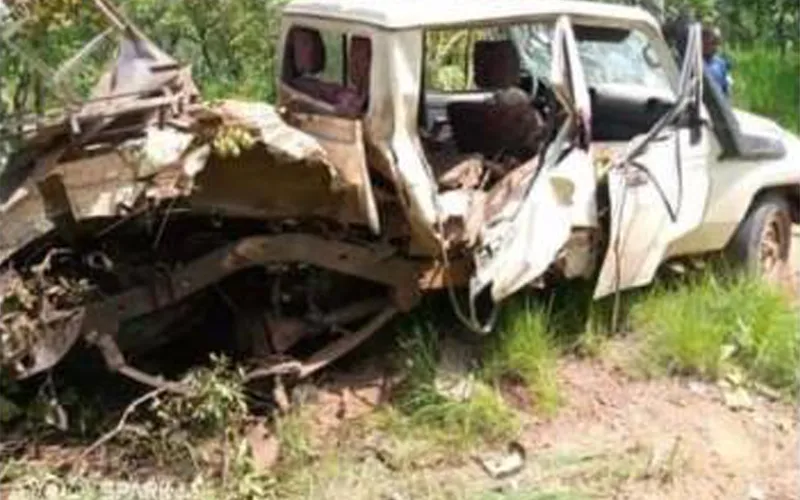
“Fr. Arialdo Urbani and one of his members of the Mission were on the way to the village of Kolo to attend a school run by the Mission. When preparing to return to Niem, another collaborator of the Mission, the young man in charge of the village dispensary, asked to be taken to visit his sister, who is admitted to the Mission hospital,” Bishop Gucwa narrates in the report.
He adds that despite Fr. Arialdo’s warnings about the risk of mines on the road, the officer in charge of the dispensary insisted on joining the ride and “unfortunately, 10 km from Niem, near the village of Zakau, the mission car drove on the mine, and this young man died.”
According to Bishop Gucwa, it is fortunate that the bomb that hit the missionaries' car was relatively low-explosive.
“If it had been an anti-tank mine, we would now mourn three victims,” the Bishop said and explained that the missionaries’ vehicle is the third to be hit by landmines in recent days in the Niem-Kolo road, within his ecclesiastical jurisdiction.
“The first to be hit by a mine was a surviving businessman’s car. There were Russian citizens in a second car,” he has reported.
Members of the coalition of armed rebel groups under the auspices of the Coalition of Patriots for Change (CPC) are suspected to be planting the landmines on targeted roads.
CPC was formed in December 2020 following the merger of six armed groups.
The members of the rebel coalition threatened to disrupt the December 27 presidential election with the intention to “march to Bangui.”
In January, the members of CPC launched a coordinated attack on the outskirts of the capital, Bangui, before being pushed back, Al Jazeera reported.
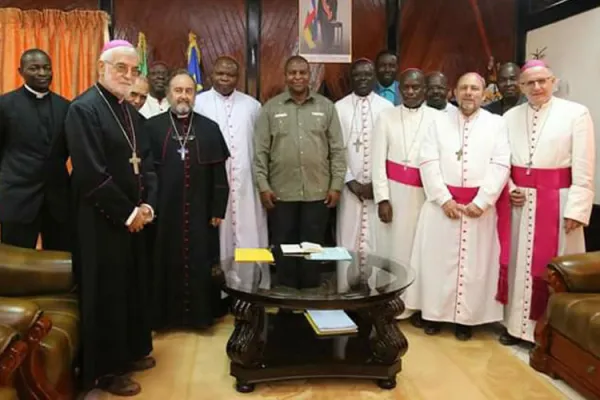
Following the unrest in the country, members of the Central African Episcopal Conference (CECA) called for “a sincere and frank, fraternal and constructive dialogue to find just and lasting peace, rejecting hatred, violence and the spirit of revenge.”