 Credit: ACI Africa
Some of the topics have been structured as an invitation to African female members of Institutes of Consecrated Life and Societies of Apostolic Life (ICLSAL) to reimagine and revitalize their way of life.
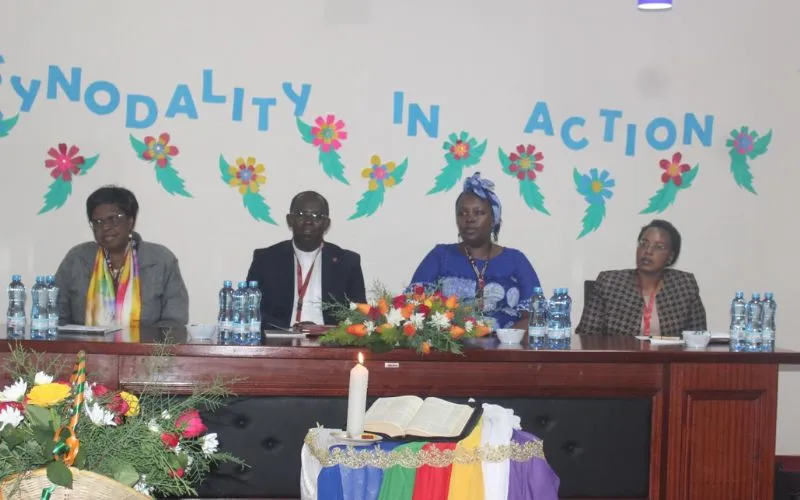
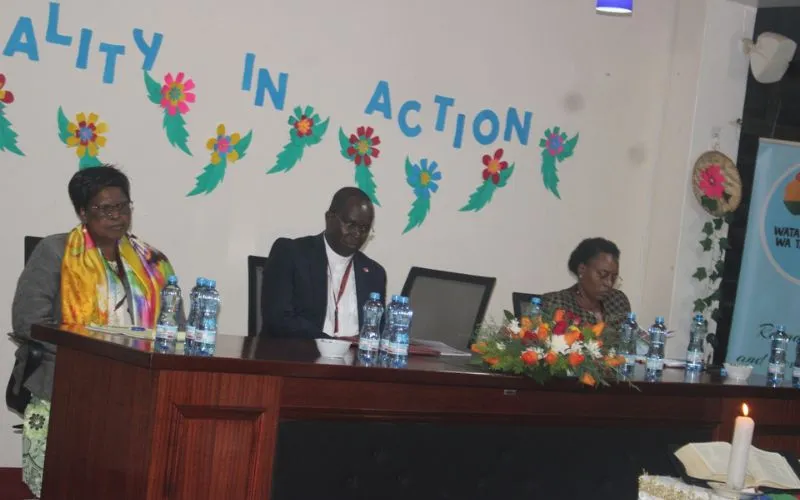
Convened by HUC in partnership with Watawa wa Taa (Consecrated Women of Light), the conference is aimed at creating a platform for the voices of African women theologians to be heard in global theological and ecclesial discourse.
It is also a way to strengthen and channel the intellectual abilities, leadership, and contributions of African women Religious towards the growth of the Church in Africa and beyond, according to the conveners who wish to create a network of African women scholars committed to the mission of the Church in Africa and beyond.
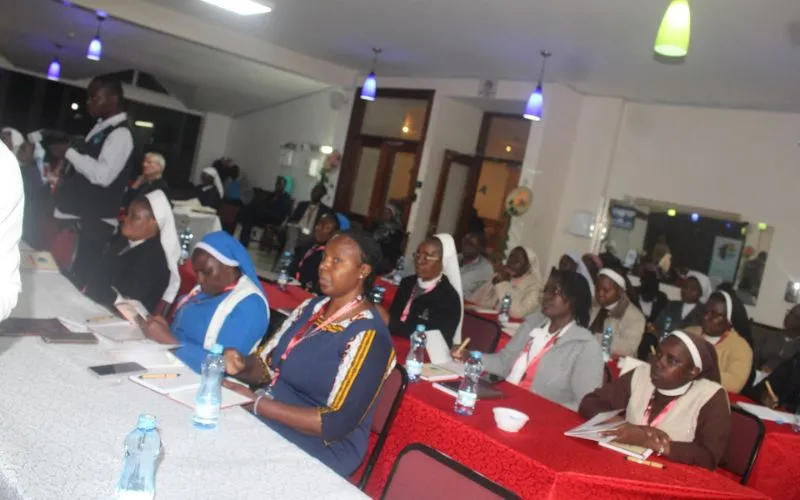 Credit: ACI Africa
(Story continues below)
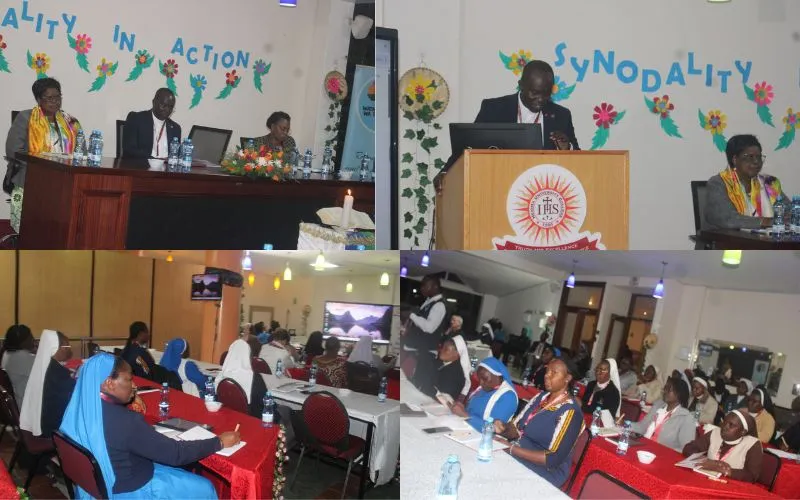
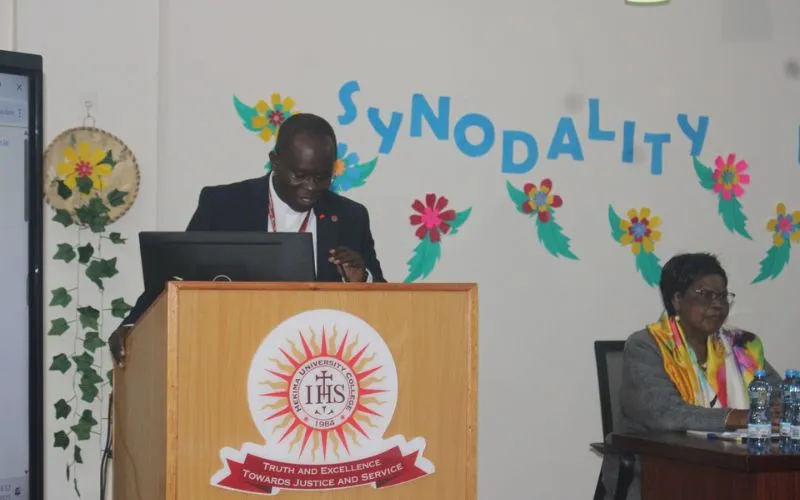
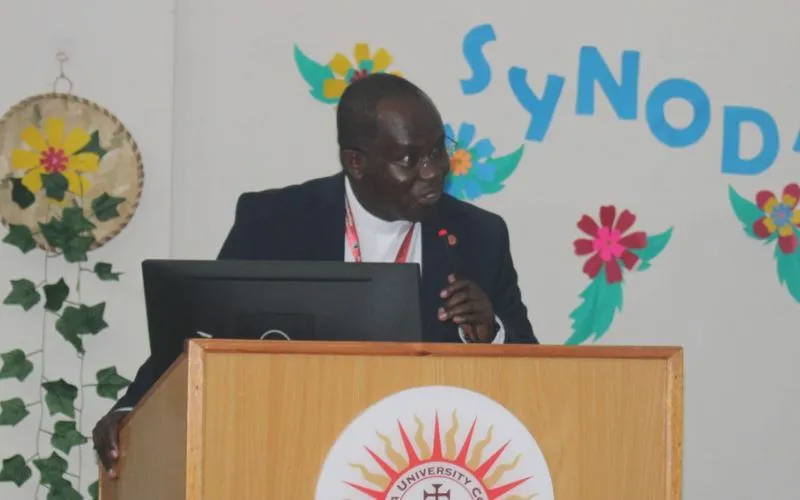
In his welcoming address, Fr. Uwineza gave the anecdote of Mary Magdalene who he said is the role model of women theologians.
According to the Rwandan Nairobi-based Jesuit Priest, Mary Magdalene who went to the tomb to look for Jesus ended up becoming “the first theologian of the Resurrection.”
“On that first Easter morning, when the world was still wrapped in darkness and despair, it was Mary Magdalene who went to the tomb,’ Fr. Uwineza said.
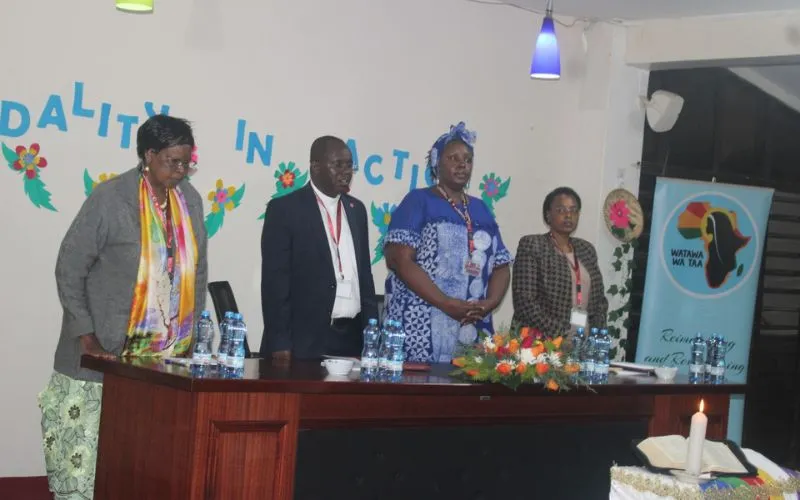 Credit: ACI Africa
He said that Mary Magdalene did not go to the tomb “with the strength of armies or with the assurance of success” but with love, with tears, and with fidelity.
“In her search, she encountered what others had not yet dared to see: The Risen Lord. And it was she, not Peter, not John, not the Eleven, who became the first herald of the Resurrection,” the Catholic Priest said.
“In proclaiming ‘I have seen the Lord!’ … Mary Magdalene became more than a faithful disciple. She became the first theologian of the Resurrection, a woman who interpreted the mystery of God’s victory over death and announced it to the Church. She was the first preacher of the Good News, the apostle to the apostles,” Fr. Uwineza said.
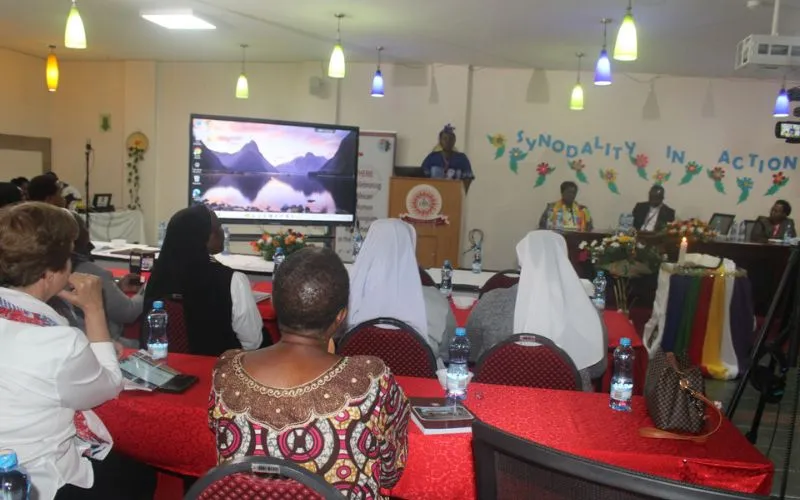 Credit: ACI Africa
The HUC Principal said that the African women theologians’ conference is a reminder that the Gospel cannot be fully proclaimed without the voices, the insight, the witness, and the leadership of women.
“The spirit of Mary Magdalene lives on in African women theologians today. Just as she stood at the threshold of despair and transformed it into hope, so too are African women theologians standing at the crossroads of cultures, faith, governance, and ministry, reimagining leadership, discerning new pathways, and reminding the Church that the Resurrection always begins at the margins,” he said.
In an interview with ACI Africa on the sidelines of the conference, Watawa wa Taa Director, Sr. Mumbi Kigutha, spoke about the success story of the First Women Theologians Conference that was held in March 2024 on the theme, “Celebrating decades of women’s theological empowerment.”
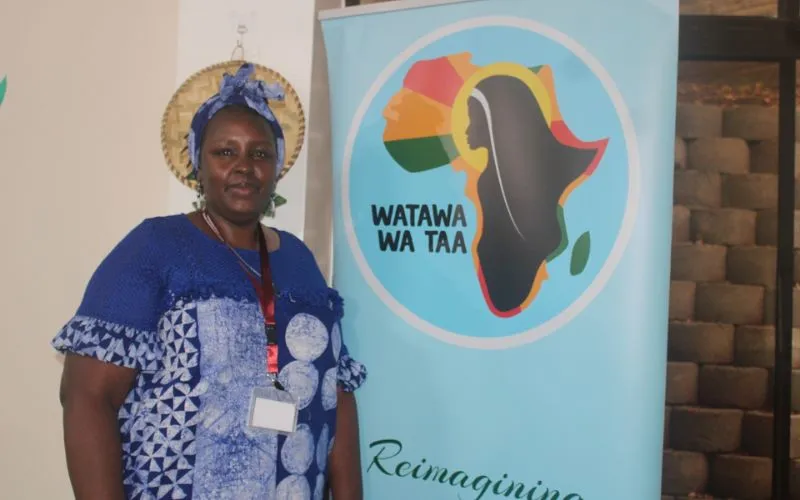 Sr. Mumbi Kigutha. Credit: ACI Africa
The Kenyan member of the Sisters of the Precious Blood (CPPS) said that the 2024 conference had “very good response and outcome”, and that they “were invited to collaborate” in the convening of the second one.
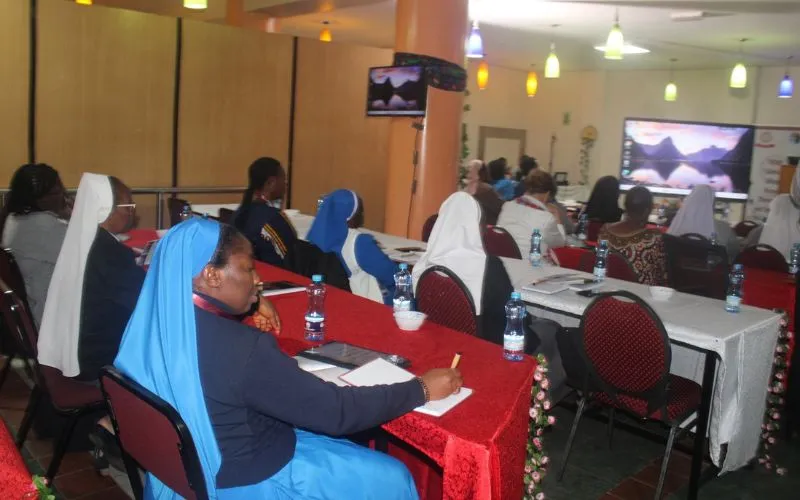
“It is rare that you have African women theologians coming together, to talk about how they view life through their lived experiences, how they're discerning God at work in the Church and society,” Sr. Mumbi said.
 Credit: ACI Africa
She added, “Because of that fruitful experience, it was decided to hold a second one, and Hekima University College invited us to come on board, and we were glad to because we are all about women and the lived experiences of women.”
“I believe that African women theologians can offer us an insight into how to continue navigating some of the challenges, that are particular to African women on this continent, both in the church and society,” she said, acknowledging that there are still many spaces that are not open to African women.
In her opening remarks on September 2, responding to the question, “Why do we need a conference for African women theologians?”, Sr. Mumbi said, “My answer is simple: because Africa stands at a unique crossroads in the life of the Church.”
She said that despite the tremendous growth of the Church in Africa, with the continent making up “about 20 percent of all Catholics worldwide”, the contribution of women within the African Church “remains restricted.”
“In too many Dioceses, customs, regulations, or poor formation still limit women’s voices. And when women’s voices are silenced, the Church does not grow stronger. It grows weaker. It loses vitality. It loses progress,” Sr. Mumbi said.
 Credit: ACI Africa
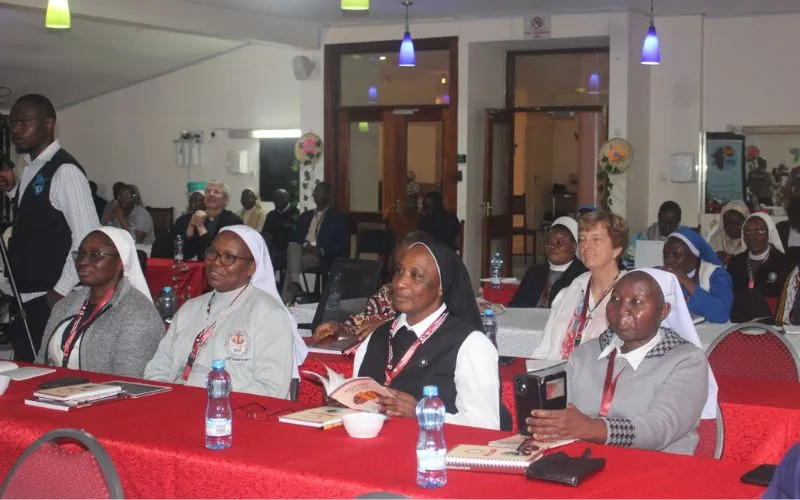
She said that African women theologians are “a uniquely blessed group” comprising women who have attained academic formation in a field where their presence is still rare.
“We gather because theology, shaped by our lived experiences, has so much to offer. Not only to Africa, but to the world. We gather because women, so often excluded from decision-making, know how to create space. For ourselves, yes, but also for the marginalized; for those left out; for those forgotten,” the official of Watawa wa Taa told ACI Africa on September 2.
She expressed optimism that the September 2-6 conference would be a moment when African women theologians move from the margins to the center, and “from exception to essential… because the Church in Africa, and the Church universal, cannot reach its fullness without the voices of its daughters.”
Agnes Aineah is a Kenyan journalist with a background in digital and newspaper reporting. She holds a Master of Arts in Digital Journalism from the Aga Khan University, Graduate School of Media and Communications and a Bachelor's Degree in Linguistics, Media and Communications from Kenya's Moi University. Agnes currently serves as a journalist for ACI Africa.




 Fr. Marcel Uwineza. Credit: ACI Africa
 Credit: ACI Africa
 Fr. Marcel Uwineza. Credit: ACI Africa