Advertisement

Three Things an African Woman Can Do with Theology Knowledge

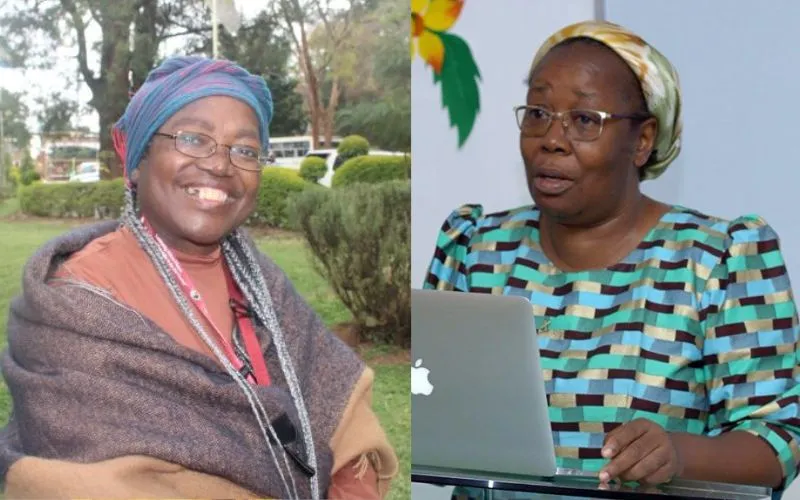
Sr. Josée Ngalula (right) and Dr. Hadebe Nontando (left). Credit: ACI Africa)

One of the most nagging questions that African women theologians receive is their inspiration to engage in the field that to some, belongs to men intending to become Priests.

According to Sr. Josée Ngalula, a widely published Congolese member of the International Theological Commission, many people do not understand that theology is not just about Priesthood.

“Questions arise for women who decide to do theology. You are asked whether you want to become a Priest. You are asked, ‘do you intend to replace the Priest?’” the member of the Sisters of Saint Andrews (RSA) said at the September 2-6 Second African Women Theologians Conference held at Hekima University College (HUC) in Nairobi, Kenya.

“When you pursue theology, you don’t have to end up a Priest,” she clarified.

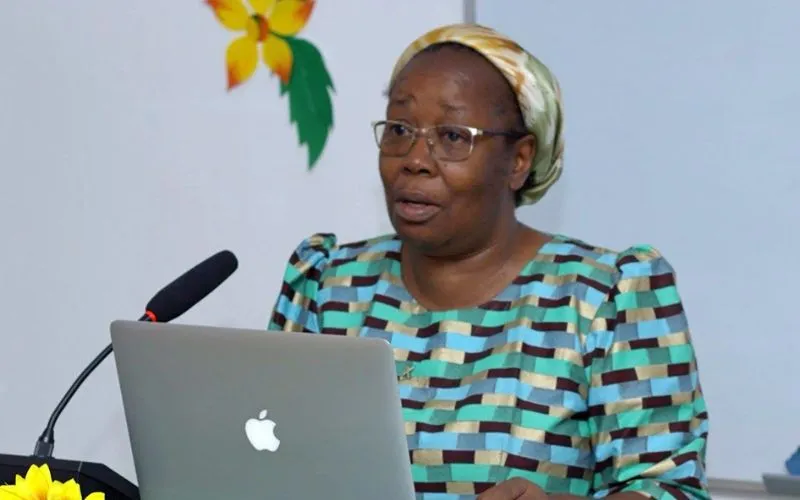
Sr. Josée Ngalula. Credit: ACI Africa

Advertisement

In her address on September 5, Sr. Ngalula spoke widely about the challenges that African women theologians face, including the misinterpretation of their intellectual activities.

“When you are a Religious in a community, other Sisters do not see what you do, because as a theologian, you take a long time to read and to write. It is not interesting for my Sisters, when I travel and come back with books,” she said, and added, “Intellectual life is not seen as very important in Africa, especially for women.”

Weighing in on Sr. Ngalula’s sentiments in an interview with ACI Africa, Dr. Hadebe Nontando, a lay woman theologian and a member of the Circle of Concerned African Women Theologians said women can do many things with their knowledge of theology.

“You don't need to have that goal to be a Priest for you to do theology. You can do theology and become many things,” Dr. Nontando said.

The former lecturer at St. Augustine College in South Africa acknowledged the shortage of women professors, noting that female theologians who have earned doctorates can be useful in institutions of higher learning.

More in Africa

In her interview with ACI Africa, Dr. Nontando underlined three things that African women can do with their knowledge of theology.

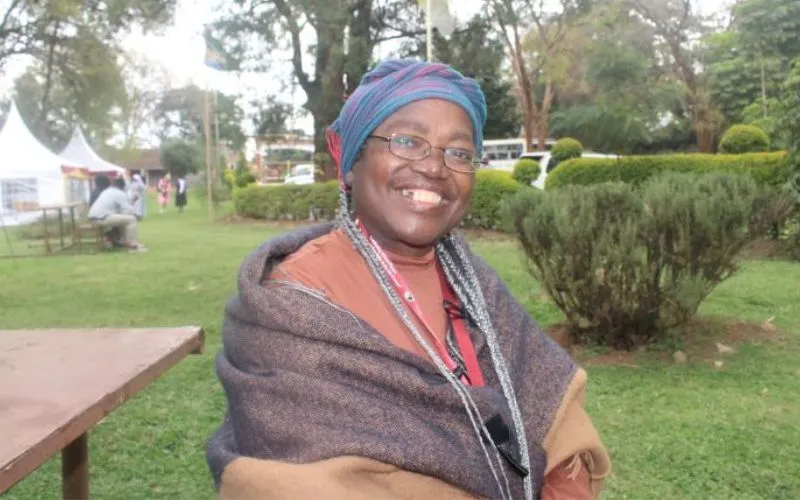
Dr. Hadebe Nontando. Credit: ACI Africa

Teachers, professors and formators in institutions where there is a dearth of female experts

Studying theology can be a calling, where you do it full time. Afterwards you can work your way up and be a lecturer at a university. Or you can be a religious teacher at a school.

You can go up to PhD and be a lecturer because there's a big shortage of African women professors everywhere. And there's a great need for women to be formators in Seminaries.

Advertisement

Many students in Seminaries receive their theology from men. And few of them have ever been taught by a woman. So, there's a need for that.

Have “a theology for everybody”, just like first aid

I always feel that there should be a theology for everybody. It is just like first aid. All of us have some basics of first aid. I believe we all need a kind of entry point theology for everybody so that we know about our faith.

We must know something about the Bible, something about the history and teachings of the Church. This way, there are two levels of having theology knowledge. If you feel called to be a theologian, then you can study theology right up to PhD and be a researcher. Or sometimes you could learn some theology and teach other women.

I have a radio program known as ‘looking at life with Dr. Nontando’ on Radio Veritas, where I teach theology to ordinary women every Wednesday. I go through the Bible with women and make Biblical materials accessible to them.

(Story continues below)

Combining theology with other areas of expertise

One can find ways to combine theology with something else, such as counselling, law, and other areas of expertise. You could do a degree in practical theology together with counselling and psychology. This way, you could end up being a Christian counsellor or Christian psychologist.

Therefore, you can actually mix theology with a profession. When I studied theology in South Africa, the institution insisted that one does theology and an art subject. This involves infusing Catholic social teachings in law, Catholic social teachings in politics, ethics, and other professions.

If you have theology, you cannot go wrong in these other professions because theology gives you a deeper perspective into issues. We even have engineers who have studied theology for them to be able to address ethical issues in their workplace.

Agnes Aineah is a Kenyan journalist with a background in digital and newspaper reporting. She holds a Master of Arts in Digital Journalism from the Aga Khan University, Graduate School of Media and Communications and a Bachelor's Degree in Linguistics, Media and Communications from Kenya's Moi University. Agnes currently serves as a journalist for ACI Africa.