Advertisement

Award-Winning African Scholar Calls for Mentorship, Positive Criticism between Men and Women Theologians

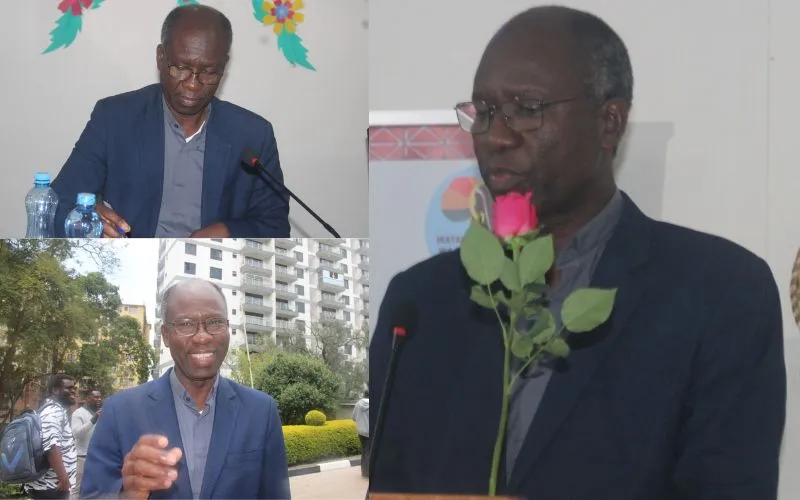
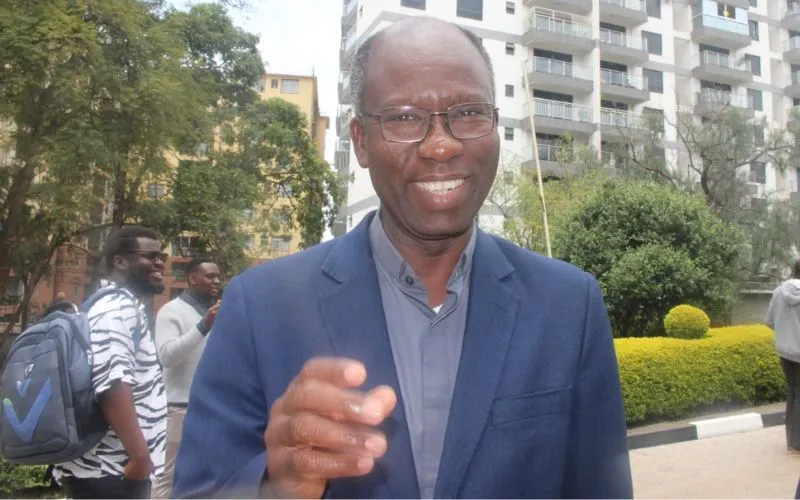
Fr. Prof. Paul Béré. Credit: ACI Africa

Male theologians in Africa can sometimes be very dismissive of the ideas of their female counterparts, Fr. Prof. Paul Béré has said, calling for respect, mentorship, and positive criticism of women theologians.

In an interview with ACI Africa on the sidelines of the September 2-6 second African Women Theologian Conference that was held in Nairobi, the award winning Burkinabé theologian agreed with participants at the event who said that a woman theologian is not taken seriously, and is treated as “an amateur dabbling in theology”.

“It is true that sometimes, we men theologians can be dismissive of women's position based on the fact that they are women. That is not good,” the recipient of the 2019 Ratzinger Prize told ACI Africa in the interview on September 5 at the event that was held at Hekima University College (HUC) in Kenya.

He added, “If a female theologian has an insight that I don't understand, I shouldn’t be quick to dismiss it. I should be able to say, look, I don't understand this, can you explain?”

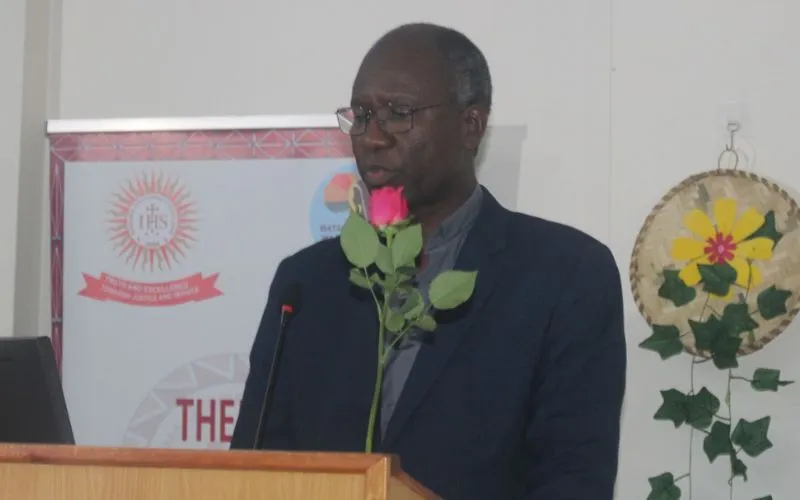
Fr. Prof. Paul Béré. Credit: ACI Africa

Advertisement

“If we find ourselves in the same space with female theologians who are still doctorate students, we should mentor them with respect,” Fr. Béré said.

Narrating his own experience in theology, the member of the Society of Jesus (Jesuits/SJ) who serves as the Dean of the Faculty of Biblical Sciences at the Rome-based Pontifical Gregorian University said, “I have a few doctoral students whom I am trying to mentor so that they stand on their feet, they make their own voice heard; not my voice as their mentor, but their own voice.”

He suggested that female theology students look for a mentor who reads and positively criticize their papers, their books, “because they are not writing for women; they are writing for the whole church.”

Underscoring the need for diversity in academia, Fr. Béré said he reads from theologians from different walks of life.

“I read female theologians, either Africans or non-Africans, because I personally need the lens of the other. And for me, the other can be the European, it can be the Asian, the woman, the African woman, the Western woman, the Asian woman,” the Catholic Priest said, and added, “Diversity is part of my worldview.”

More in Africa

Convened by HUC in partnership with Watawa wa Taa (Consecrated Women of Light), the September 2-6 conference sought to create a platform for the voices of African women theologians to be heard in global theological and ecclesial discourse.

It was also a way to strengthen and channel the intellectual abilities, leadership, and contributions of African women Religious towards the growth of the Church in Africa and beyond, according to the conveners who sought to create a network of African women scholars committed to the mission of the Church in Africa and beyond.
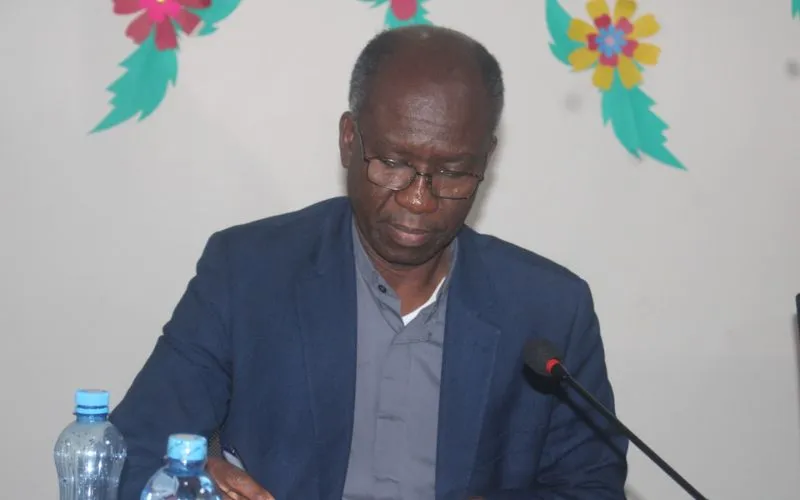
Fr. Prof. Paul Béré. Credit: ACI Africa

In the September 5 interview with ACI Africa, Fr. Béré lauded the conference, saying that his biggest takeaway from the event was the quality of African women theologians' conversations and the serenity with which they engage heavy issues.

“My impression is that Sisterhood is really experienced and lived out in this conference,” he said, and added, “I'm really happy to see that they are patient with one another. They are not nervous. They may disagree, but in a very gentle way.”


Advertisement

Describing the event as a learning experience in his journey as a theologian, the Jesuit Priest said, “I think that if we want to see the other side of the coin, we need to experience that in a context like this one. It's difficult to look at reality from the perspective of women unless they act and you are there, you observe, you experience, you feel.”

He encouraged the African women theologians to keep coming together to discuss issues among themselves, and added, “I believe that when the female group is well rooted and consolidated, and the men as well come together in dialogue based on the fact that we look at the world from different perspectives, it will be enriching.”

Fr. Béré also weighed in on the suggestion to put insights from the conference into a curriculum for institutions of higher learning and seminaries, saying, “I am absolutely in favour of that. And I think it's a must.”

“A book, for me, is the outcome of a conversation and it's a kind of instrument to foster conversation further. The insights from this conference should therefore go into the curricula and our students in Africa should continue the conversation,” he said.

Fr. Prof. Paul Béré. Credit: ACI Africa
(Story continues below)

According to the celebrated theologians, insights from the African women theologians’ conference should specially find their way into schools of theology in Africa.

“African women theologians are talking here, discussing issues which are important for our lives as Christians, as communities, as church in Africa, only for us to train people with books that have nothing to do with our own context and our situation,” Fr. Béré said, and added, “For me, that's a huge problem.”

“I am really happy with that suggestion. The insights from this conference should go into the curricula, not for footnotes, but really for students to engage what they have put into writing,” he emphasized in his September 5 interview with ACI Africa.

Agnes Aineah is a Kenyan journalist with a background in digital and newspaper reporting. She holds a Master of Arts in Digital Journalism from the Aga Khan University, Graduate School of Media and Communications and a Bachelor's Degree in Linguistics, Media and Communications from Kenya's Moi University. Agnes currently serves as a journalist for ACI Africa.