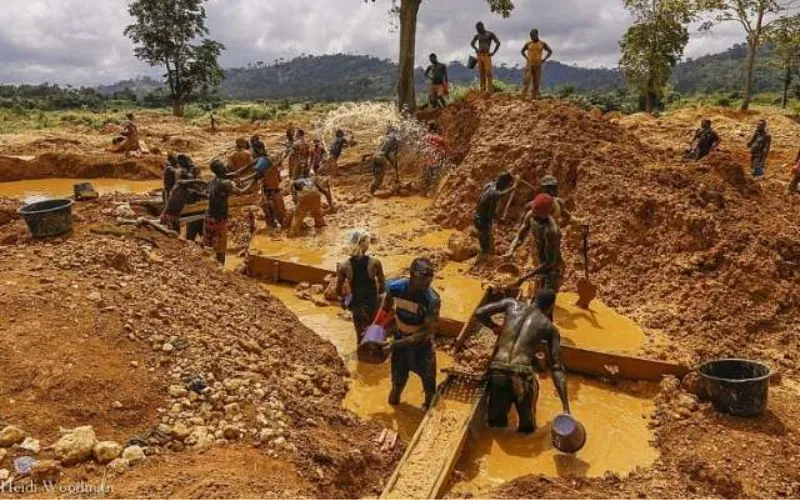
“In opposition, they demand drastic measures; in power, they downplay the crisis, arguing that declaring a state of emergency would negatively affect the nearly 4 million people living in mining areas,” he says.
He further laments, “Honestly, if this has not turned into a political ploy, then what is it? The constant back-and-forth is wearing people out, to the point where many no longer pay attention to developments in the galamsey industry.”
Earlier, on September 15, members of the Ghana Catholic Bishops’ Conference (GCBC) reiterated their concern about the spread of illegal mining in the country and urged the government to declare a state of emergency in “mining zones” as a step toward addressing the perennial challenge.
Describing illegal mining as “cancer,” which they said has become one of the gravest afflictions in the West African nation, the Bishops said a declaration of the state of emergency “would empower extraordinary interventions: curfews in volatile areas, the securing of devastated lands, the dismantling of entrenched criminal syndicates, and the halting of corrupt administrative complicities.”
Ghana’s Catholic Bishops recalled that God has entrusted human beings with stewardship of the earth and explained that to “desecrate creation through galamsey is not only an offence against neighbour; it is a grave sin against God Himself, the Creator and Owner of all.”
In another statement, members of Ghana’s National Catholic Laity Council (NCLC) backed the Catholic Bishops’ call for the state of emergency, affirming that they are experiencing first-hand impact of the illegal mining.
“We, the lay faithful, live in the very communities where the impact is felt most painfully,” they said, adding that they have witnessed water sources that were once life-giving and clear, now poisoned with mercury and cyanide, running brown and lifeless.
They added, “We watch fertile farmlands, which for generations fed families and sustained livelihoods, destroyed and abandoned to gaping pits. We witness our children, who should be in school learning for a brighter future, dropping out to risk their lives in unstable mining shafts, for quick but fleeting gains.”
In his reflection published September 19, Fr. Nibetol expounds on the genesis of illegal mining in Ghana, saying, “In earlier years, many—especially the youth living near mining sites—engaged in small-scale mining as a means of survival.”
Though unregulated, he says, “its impact on the environment, aquatic life, and human health was not as devastating as what we see today.”