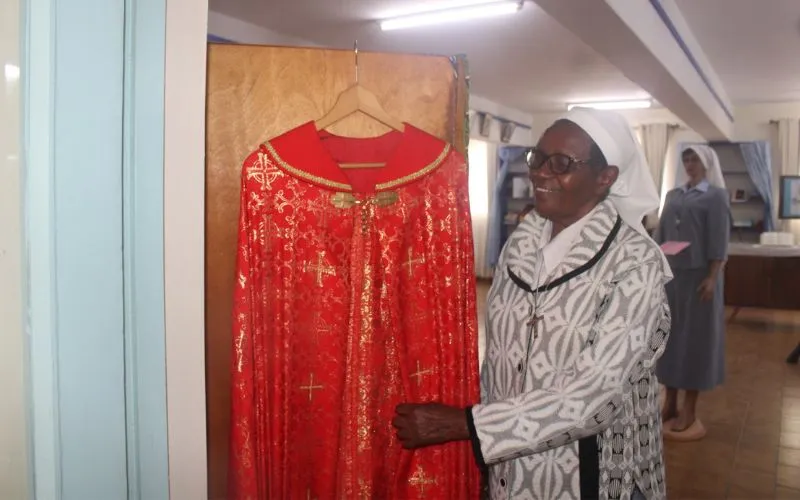
 Preserved vestment of Archbishop McCarthy inside ASN's Heritage Room Credit: ACI Africa
The orphanage had become a haven during the war, sheltering many children who had lost their parents and had nowhere else to go. Word had spread across nearby villages that there were missionaries offering care and protection to the poor and vulnerable.
Within that sanctuary, the young African girls came to know the life and mission of the Sisters. Inspired by their witness, they began expressing a desire to live as they did.
In the interview with ACI Africa, Sr. Elizabeth recounted the beginnings of the ASN Congregation, saying, “When the girls said that they wanted to be like the Sisters in the orphanage, even they themselves didn’t know what that meant. They were asked, ‘Do you want to belong to God and serve Him?’ And they said, ‘Yes.’ So, the Sisters understood they wanted to be women Religious. That is how our Congregation was started.”
 Credit: ACI Africa
(Story continues below)
It was the MSOLA Sisters who went on to form and guide the first members of the ASN, at the request of Archbishop McCarthy, helping the young women to shape their identity, spirituality, and mission as a new local Religious Congregation.
For instance, Mother Winfred Moris, a British-born member of the MSOLA, served as the first Novice Directress and the first Superior General of ASN – from 1956 to 1964.
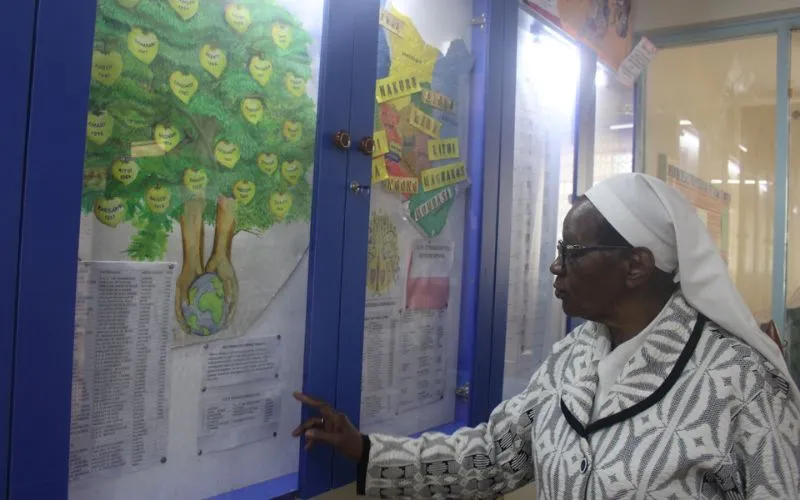
Details of how the Congregation was founded – and its growth to date – are in the ASN Heritage Room that was launched on September 14.
In the October 2 interview with ACI Africa about the ASN Heritage Room, a project that Sr. Elizabeth has overseen for the past 40 years until its completion, the Kenyan Sister also spoke about her 70 years in the Congregation, which received its Decree of Pontifical Recognition in 1998—a status that placed it under the direct authority of the Vatican rather than a Local Ordinary.
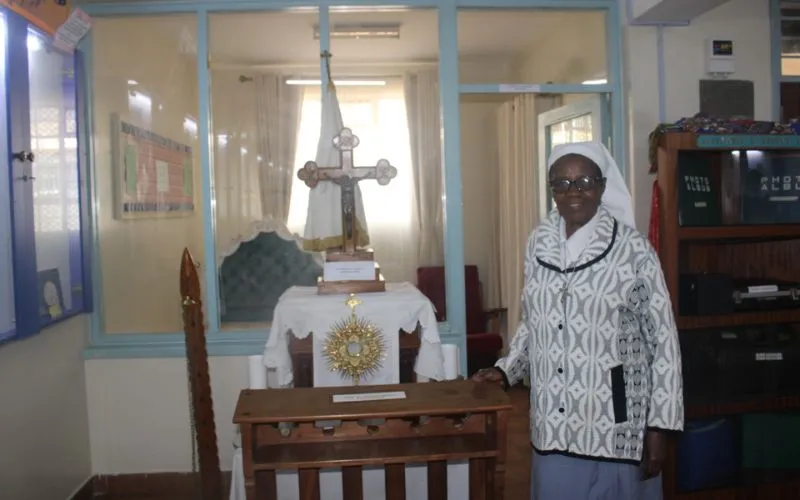 Archbishop McCarthy's kneeler. Credit: ACI Africa
Born to Protestant parents in Kenya’s Catholic Diocese of Nakuru, Sr. Elizabeth was attracted to the way of life of missionaries who educated her. Their example inspired her to learn Catechism, receive Baptism, and eventually join the ASN. In time, her parents too embraced the Catholic faith.
She recalled joining the ASN in 1960 alongside six other girls—though, over time, all but she left the formation journey, leaving her to continue alone.
Sr. Elizabeth also reflected on the many challenges that young African girls aspiring to Religious Life faced during Kenya’s colonial era, when societal expectations and cultural barriers often stood in the way of their vocational calling.
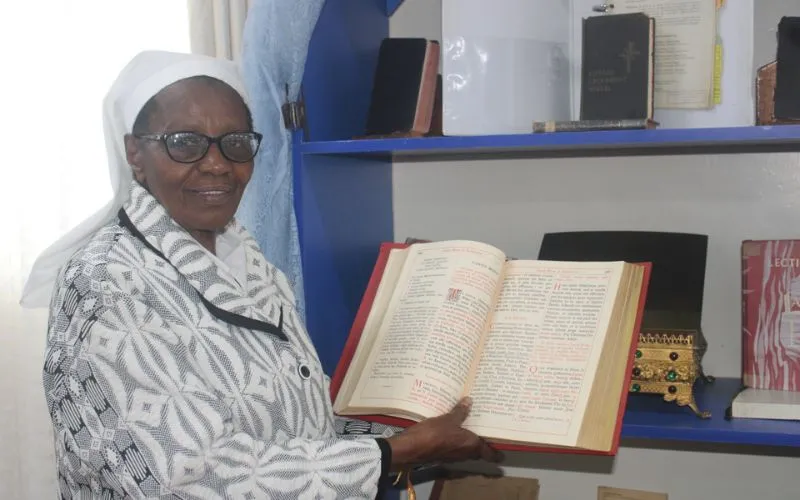 Credit: ACI Africa
“Before, if a girl wanted to be a Sister, she was brought to Uganda where African Sisters were,” Sr. Elizabeth narrated.
“In our time, however, the Assumption Sisters had been founded just for Africans. Our founder had informed all the missionaries in the Archdiocese of Nairobi that there was a place, in the Archdiocese, for young African girls who wanted to enter Religious Life. That they could be brought into the Assumption Sisters instead of bringing them all the way to Uganda,” she further recalled.
Archbishop J.J. McCarthy wanted a purely African Congregation for members who could work among their people, especially in Kenya. “He believed Africans know themselves and they can help their own people better, because they understand them very well. That's why he started us,” the ASN member told ACI Africa on October 2.
Sr. Elizabeth further recounted being taken for a “come and see” session at the ASN house in Karibaribi, off Thika town in the ADN. “I saw some African Sisters there, but even at that particular point, it didn't click in my mind that it was the life I wanted. I had known Sisters to be white, from those who taught us. And seeing some black Sisters, I was very surprised. At the time, I was still in school.”
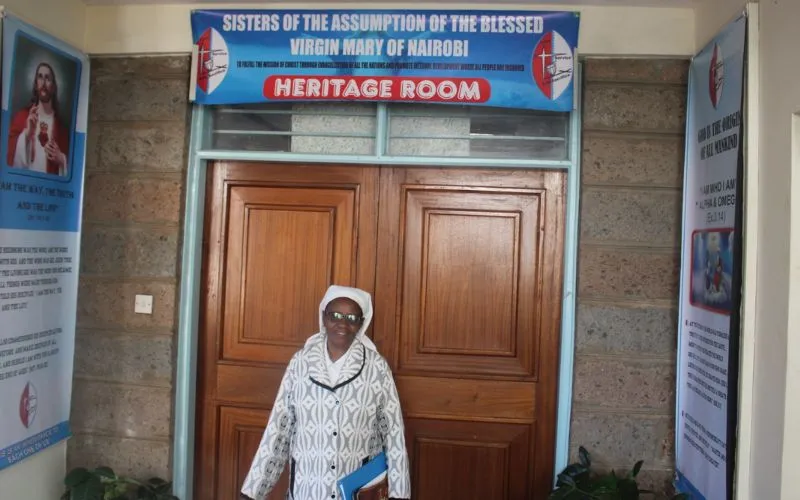 Sr. Elizabeth Njoki wa Joel poses for a photo outside the ASN Heritage Room. Credit: ACI Africa
She joined the Congregation a year after the first ASN perpetual profession in which 10 young African women made their Perpetual Profession.
“Some of our pioneer members are still alive,” she told ACI Africa, adding that “they are all very old. Others are sick and we are taking care of them.”
After her First Vows in 1963, Sr. Elizabeth was assigned, along with other ASN members, to assist with domestic work at the home of their founder on Riverside Drive, just outside Kenya’s capital, Nairobi – the same location that now houses the ASN Heritage Room.
Agnes Aineah is a Kenyan journalist with a background in digital and newspaper reporting. She holds a Master of Arts in Digital Journalism from the Aga Khan University, Graduate School of Media and Communications and a Bachelor's Degree in Linguistics, Media and Communications from Kenya's Moi University. Agnes currently serves as a journalist for ACI Africa.



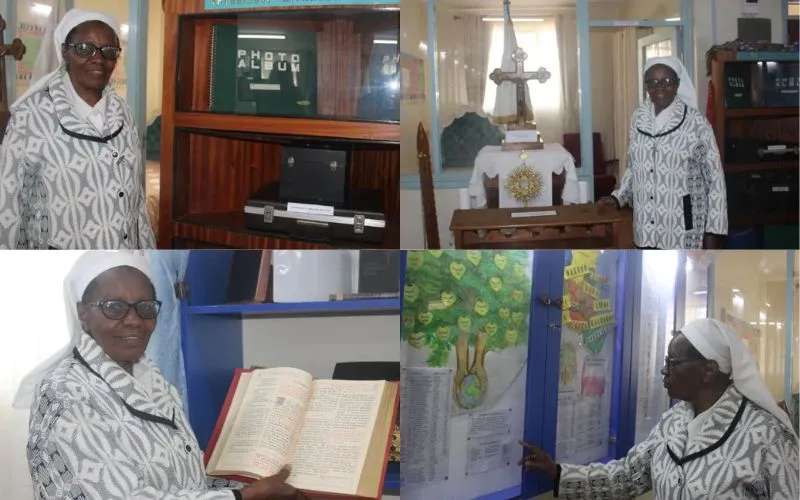

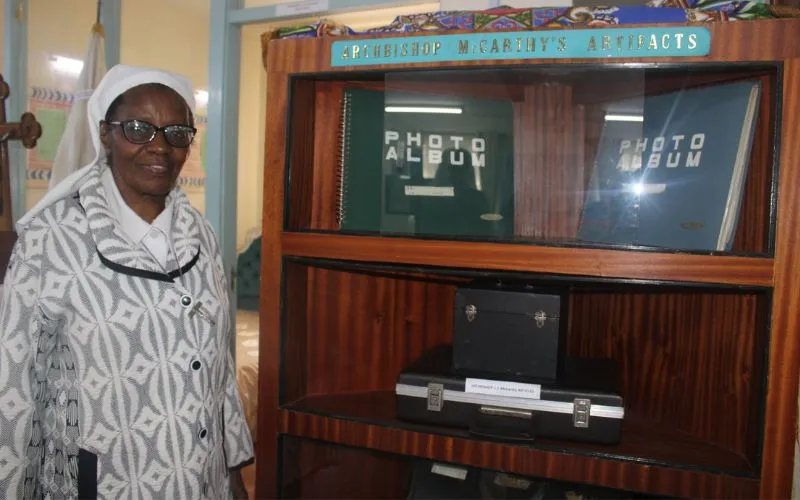 Sr. Elizabeth Njoki wa Joel posses for a photo against Archbishop McCarthy's artefacts. Credit: ACI Africa
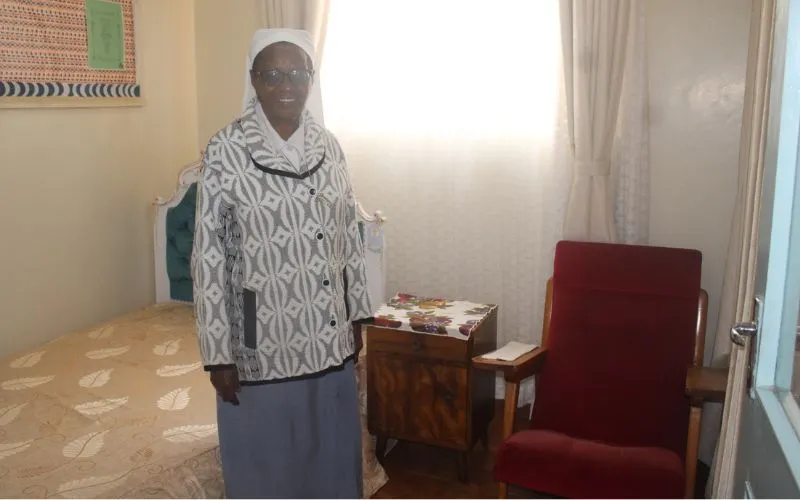 Sr. Elizabeth Njoki wa Joel poses for a photo in founder McCarthy's room. Credit: ACI Africa
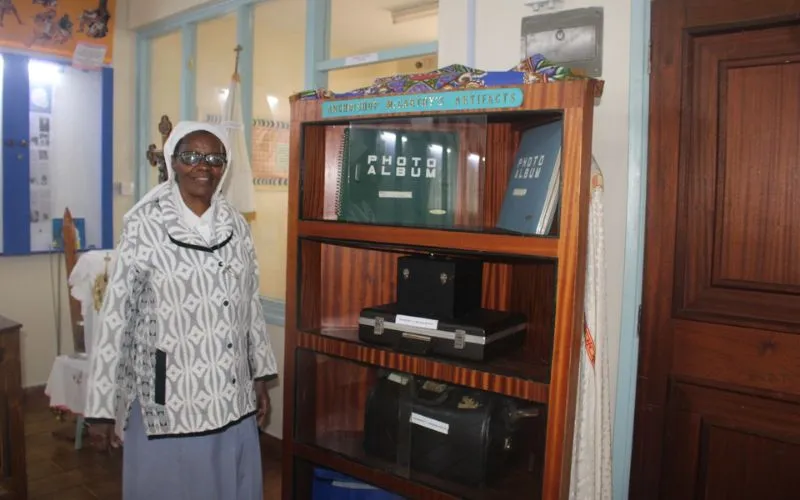 Sr. Elizabeth Njoki wa Joel posses for a photo against Archbishop McCarthy's artefacts. Credit: ACI Africa