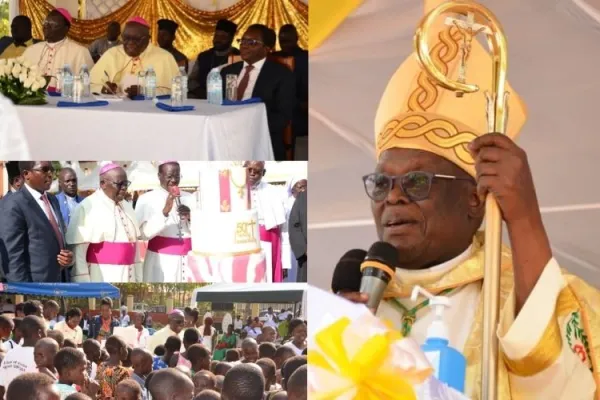
He urges the people of God to persevere amid hardship, hoping for “a new humanity united not just by economic interests, party and political positions or ethnic interests,” but grounded in justice and mutual support.
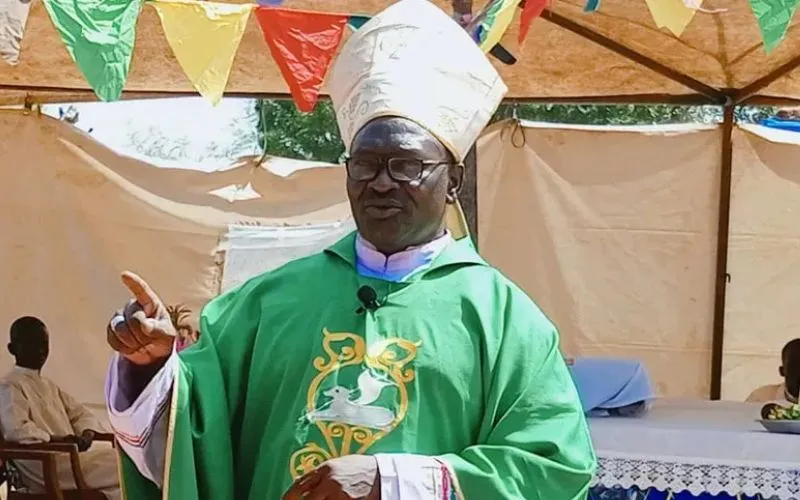
Turning to the situation of his Episcopal See, the Local Ordinary of El Obeid since his Episcopal Consecration in April 2017 paints a sobering picture of a Church caught in the conflict.
“Our diocese in Kordofan has become the battle ground after Darfur,” he says, adding that a” number of its parishes are deserted and desecrated.” The impact on pastoral life is severe, he laments, and explains, “There are no priests to celebrate Sacred Sacraments for the faithful.”
Even so, Bishop Trille insists that Christmas remains meaningful. “With trust, Christmas is a religious and spiritual occasion, granting us the reason to rejoice because the Saviour is born for us and peace to us, who enjoy his favour.”
He draws a parallel between the manger and Sudan’s humanitarian crisis, saying, “Seeing the baby Jesus in the manger describes the situation of all those of us in our country who remain without shelter and in fear.”
(Story continues below)
Christ, he continues, “is born into the world’s largest displacement crisis, with millions of people in need of assistance.” This reality is visible everywhere, as “we see and hear stories of women, children and elderly and large numbers of communities displaced from their homes, their life reduced to poverty and misery,” he testifies.
Against such suffering, the Sudanese Bishop expresses concern over the language of war, observing that “our leaders continue saying; we fight to the last person! A situation of a despair as it is.”
Still, Bishop Trille urges his people not to surrender to hopelessness. “Let us not despair or be overcome by what obscures our future and the future of our country,” he writes, calling Sudanese back to hope inspired by the birth of Christ.
The “news of great joy and peace preached by the angels,” he insists, “is to be shared by all people without discrimination.”
His Christmas message also calls for inclusive dialogue as a path toward peace. Bishop Trille says the Gospel “encourages our inclusive dialogue between all Sudanese without discrimination,” and urges engagement with “women, youth, and diverse civil society groups.”
He affirms that “we are sons and daughters of our Sudanese parents and are to be included in decision-making for lasting peace.”
As Sudan approaches the 70th anniversary of independence in 2026, Bishop Trille makes a pastoral appeal rooted in compassion and faith. He calls the people of God to see themselves as “brothers and sisters in solidarity; weeping with parents and relatives of those who morn the killed,” and to remember the words of Jesus: “whatever you did for one of these least brothers of mine, you did for me.”
Gathering testimony, prayer and hope together, he appeals, “Let us make our hearts the manger where the Baby Jesus can live to help us renew our lives and live peace.”
Spoken from within war, Bishop Trille’s repeated refrain remains both reassurance and challenge to Sudan and the world: “Do not be afraid.”
ACI Africa was founded in 2019. We provide free, up-to-the-minute news affecting the Catholic Church in Africa, giving particular emphasis to the words of the Holy Father and happenings of the Holy See, to any person with access to the internet. ACI Africa is proud to offer free access to its news items to Catholic dioceses, parishes, and websites, in order to increase awareness of the activities of the universal Church and to foster a sense of Catholic thought and culture in the life of every Catholic.