“In the case of re-presenting dead loved ones we meet one such case where prior conceptions about identity, vitality, and presence are being reshaped along technological lines,” he said.
“If someone who no longer exists in human form, body and soul, can be ‘resurrected’ from an archive of the digital traces of their life, who or what are we actually engaging with?” he said.
Robinson argued that present modes of technology have echoes of earlier centuries “when the cosmos was filled with presence — the presence of God, of angels, of demons, and of magic.”
The problem at hand, he said, is that the “new magic” of modern technology “is divorced from the hierarchical, ordered cosmos of creation and the spiritual realm.”
Donna MacLeod has worked in grief ministry for decades. She first became involved in Catholic grief counseling after the death of her youngest daughter in 1988. The funeral ministry evolved into Seasons of Hope, a grief support program for Catholics that “focuses on the spiritual side of grieving the death of a loved one.”
(Story continues below)
MacLeod said the program is one of “hospitality and spirituality” that arises in an intensive community of individuals suffering from grief.
“It builds parish communities,” she said. “People discover they’re not alone. That’s a big deal to grieving people — a lot of people feel very alone in their loss.”
“And society expects everybody to move on,” she continued. “But grief has its own timetable. Those who are grieving start to understand that the Lord is with them and that he really cares about them. There’s hope and healing at the end of it.”
“It’s doing what Christ asks us to do — walking with each other in hard times,” she said.
Regarding the AI avatar technology, MacLeod acknowledged that those who have lost a loved one make it a “very high priority” to “seek connection” with the deceased.
“People will say, ‘I’m not taking my loved one’s voice off of my answering machine,’” she said. “Or we have people taking out videos of family gatherings so they can see their loved ones again.”
“Everyone seeks to still be connected with their loved ones,” she said. “It’s related to our Catholic faith and the communion of saints — people feel this spiritual connection with their loved ones.”
MacLeod described herself as “on the fence” about how people could be affected by AI avatar apps. There could be “emotional and psychological risks interacting with AI versions of loved ones,” she admitted, though she said that many users “might look at it, but not get hung up on it,” unless they have underlying mental health issues.
But “where the difficulty arises is that some people get stuck in the denial stage,” she said. Those suffering from grief can get desperate in such circumstances, she said, and sometimes resort to means such as mediums or psychics, which MacLeod pointed out the Church explicitly forbids.
Whether or not AI avatars fall under that forbidden category is unclear. The Catechism of the Catholic Church expressly outlaws any efforts at “conjuring up the dead.” The use of mediums or clairvoyants “all conceal[s] a desire for power over time, history, and, in the last analysis, other human beings,” the Church says.
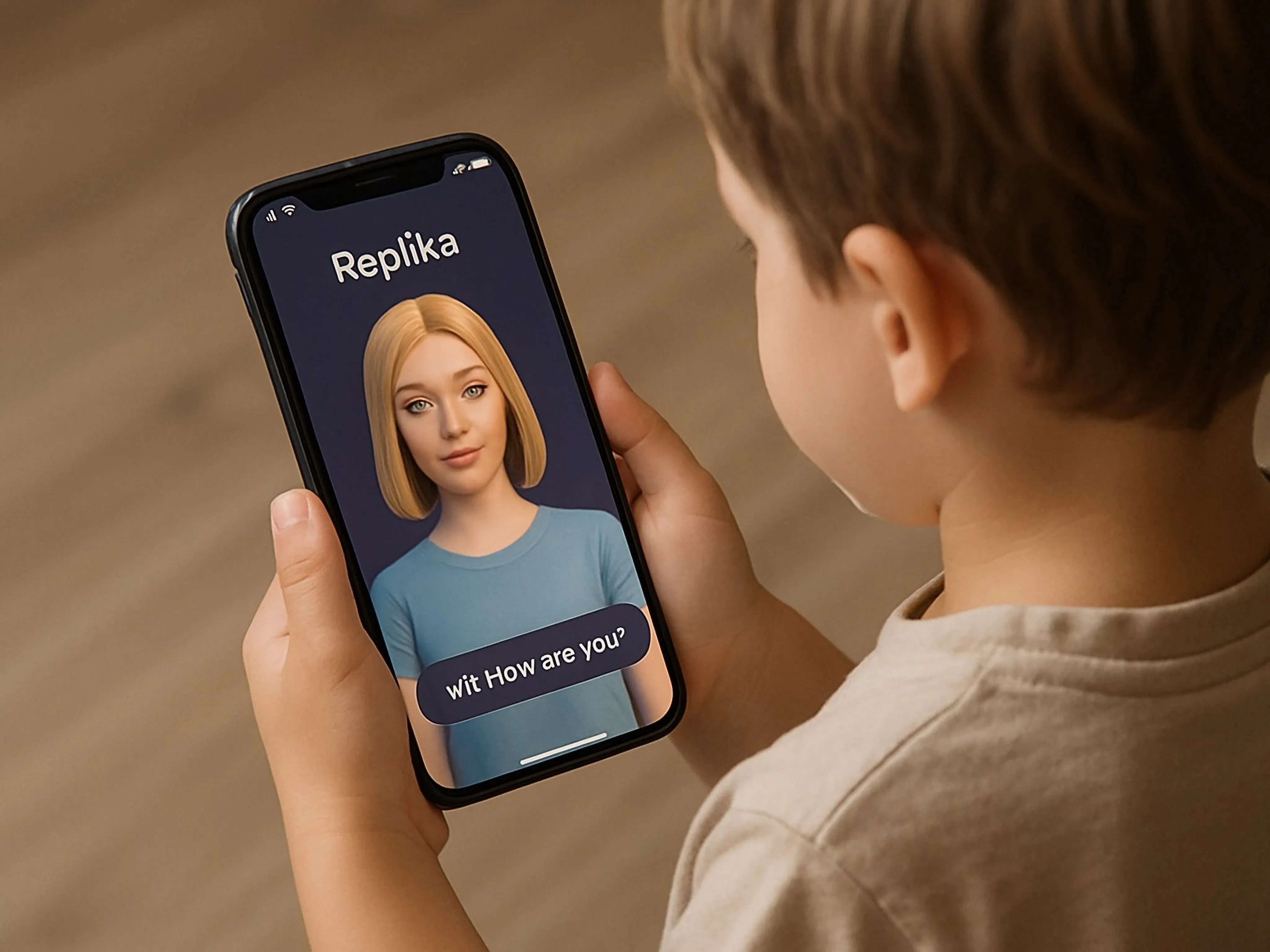
Baggot said apps like 2wai’s “assemble data about the deceased without preserving the person.”
He further argued that AI avatars “could also disrupt the grieving process by sending ambiguous signals about the survival of the departed person.”
Robinson, meanwhile, acknowledged that it is “good to want to connect to deceased loved ones,” which he pointed out we do “liturgically through prayer and memorials that honor those souls that are dear to us.”
He warned, however, against “technocratic creators of complex computational machines that are becoming indistinguishable from magic.”
Such technology, he said, alters “the spiritual order” in ways “that are disordered and disembodied from the ritual forms that sustain religion and our belief that our eternal destiny rests with God in heaven and not in a database.”
Daniel Payne is a senior editor at Catholic News Agency. He previously worked at the College Fix and Just the News. He lives in Virginia with his family.