

Advertisement

Mali’s Church Leaders Blame “external perceptions” for Christian Persecution Reports, Applaud Interfaith Dialogue

Credit: Episcopal Conference of Mali (CEM)

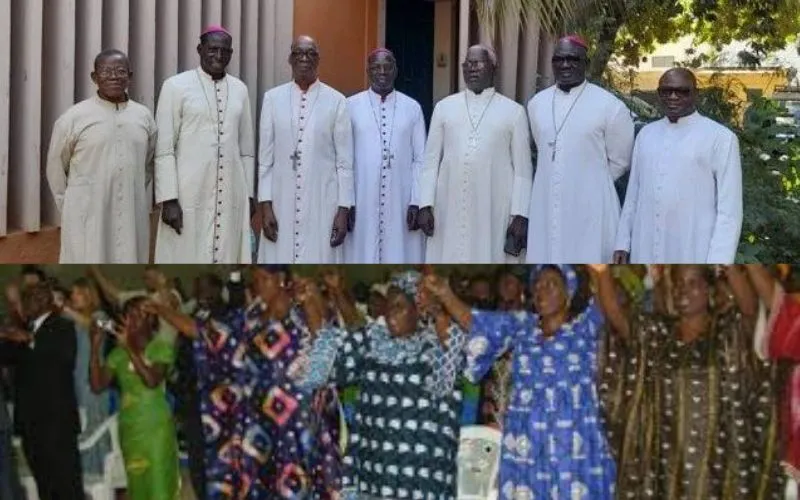
Church leaders in Mali have pushed back against reports suggesting that Christians are facing targeted persecution in the West African nation, attributing such claims to “external perceptions” and underscoring the country’s long-standing culture of peaceful coexistence between members of religious communities.

In a statement issued on December 31, the religious leaders, who include members of the Episcopal Conference of Mali (CEM), the Association of Groups of Evangelical Protestant Churches and Missions of Mali (AGEMPEM), acknowledge Mali’s ongoing security challenges but stress that these affect all Malians, not Christians in particular.

“We wish to emphasize that, contrary to certain external perceptions, Christians are not particularly threatened in Mali,” the church leaders say.

While noting the broader insecurity Malians face, they affirm that Christian life and worship continue without restriction. They say, “Although our country is facing security challenges that affect all segments of the population, Christian communities continue to practice their worship freely.”

According to the religious leaders, churches remain open and pastoral activities ongoing across the country, with interreligious initiatives playing a central role in maintaining social cohesion. They say, “Churches remain open, pastoral activities continue, and initiatives for interreligious dialogue help to strengthen ties between communities.”
Advertisement

The church leaders’ statement further highlights Mali’s deep-rooted tradition of interfaith harmony, describing the country as “a land of dialogue where Muslims and Christians have lived together in respect and fraternity for generations.”

From rural villages to major urban centers, the leaders say, everyday interactions reflect this shared social fabric. “In villages as well as in large cities, Catholics, Protestants, and Muslims meet, greet one another, work together, and thus bear witness to a harmonious social climate,” they explain.

They also point to the shared participation in religious celebrations as a visible sign of mutual respect. “Religious celebrations are often lived in a spirit of sharing: Muslims come to extend their greetings to Christians at Christmas or Easter, and Christians join their Muslim brothers and sisters on the occasion of Tabaski or during Ramadan,” the church leaders say. 

They reiterate that “this daily reality is a concrete sign of the peaceful coexistence that characterizes our nation.”

The Catholic and protestant church leaders further “reaffirm their shared commitment to peace, national unity, and social cohesion.”

More in Africa

“Together, with our Muslim brothers and sisters, we will continue to promote mutual understanding, respect for beliefs, and solidarity among the sons and daughters of Mali,” they add, and implore, “May God bless our country and grant us peace and harmony.”

Jude Atemanke is a Cameroonian journalist with a passion for Catholic Church communication. He holds a Bachelor’s Degree in Journalism and Mass Communication from the University of Buea in Cameroon. Currently, Jude serves as a journalist for ACI Africa.