

Advertisement

Nigerian Catholic Archbishop Warns New Tax Regime Could Aggravate Hardship for the Poor

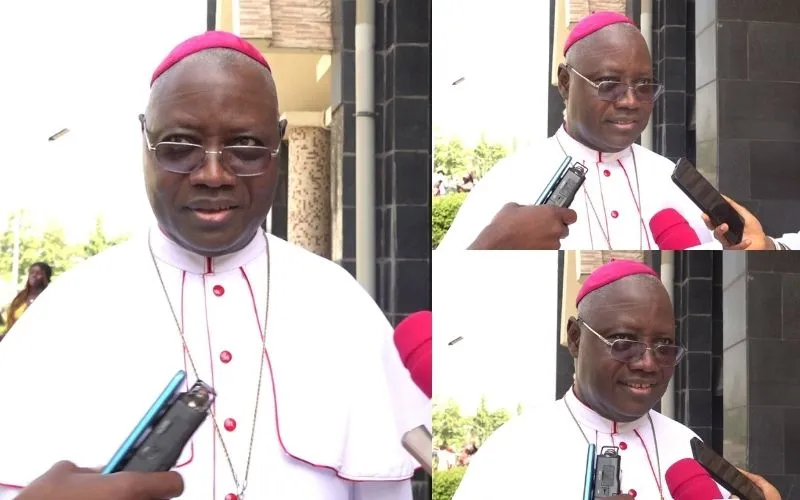
Archbishop Ignatius Ayau Kaigama of Nigeria’s Catholic Archdiocese of Abuja. Credit: ACI Africa

Archbishop Ignatius Ayau Kaigama of Nigeria’s Catholic Archdiocese of Abuja has expressed concern about the implementation of a new tax regime signed into law by President Bola Ahmed Tinubu, warning that the regime comes at a time when many Nigerians are already facing economic hardship.

Weighing in on the widespread public outcry after the law took effect on January 1, Archbishop Kaigama told ACI Africa that the country’s current economic realities make taxation a particularly sensitive issue.

“We are starting a new regime of the tax act that has been signed into law. Nigerians are passing through difficulties, through difficult economic situations now. They are being taxed,” Archbishop Kaigama said in the Sunday, January 11 interview with ACI Africa.

The Catholic Archbishop described the tax policy as complex and poorly understood by the general public, noting that the lack of clear information about the policy has fueled anxiety and confusion among citizens.

“Yes, this tax issue is a bit complicated, and I think it is not as clear as we should expect it to be,” he said, adding, “I just hope to get a clearer picture of what this is going to be and what the implications, the consequences are, especially on citizens.”


Advertisement

Archbishop Kaigama said that although government officials may understand the policy, many Nigerians do not, a gap he identified as a major source of tension. 

He explained that even after following seminars and media discussions on the issue, clarity remains elusive.

“We have been doing a lot of seminars on this. I have watched programs on television and YouTube. I am still not clear. The government may be clear about what it wants, but the citizens are not clear about it. And this is what creates tension and conflict,” he said.

The Local ordinary of Abuja said his greatest concern is the potential impact of the tax regime on the poor, particularly those at the grassroots level whom he serves through his pastoral ministry. He warned against any policy that could deepen poverty.

“My concern is for the local people—my calling, my constituency, the grassroots communities I serve—who are already poor,” he said, adding, “If any tax regime is going to deepen poverty, then I am sorry that is not what we bargained for.”

More in Africa

Archbishop Kaigama cautioned authorities against implementing measures that could make hunger, unemployment, and the lack of basic services across the country worse.

He cautioned the government against implementing policies that could add to the hunger, unemployment, and lack of basic services in the country.

Archbishop Kaigama also urged the government to be more transparent about how the tax regime will work and how it will benefit the population, especially the poor and marginalized.

“They should do more to tell us the implications of this tax regime, and hopefully it will be to the benefit of the poor and the marginalized,” he said.

The Catholic Church leader emphasized that any revenue generated must be used to ease citizens’ suffering rather than enrich a few individuals.

Advertisement

“Even if the tax regime is implemented and it yields some dividends, it should be aimed at providing for the poor, alleviating their hardship. It should not be for individuals to amass this or hoard the proceeds,” he said.

The Catholic Archbishop warned that increased hardship could place added pressure on religious and social institutions, as more people seek help to meet basic needs. 

He noted that his office already receives numerous appeals from struggling individuals.

“The more this is implemented, I know that my office will be bombarded with people coming to cry for hunger, for lack of this, lack of that. I just hope that it does not create any negative consequences for our people,” he said.

Addressing concerns about corruption, Archbishop Kaigama said skepticism among Nigerians has been heightened by recent cases involving recovered public funds. 

(Story continues below)

Many citizens, he noted, doubt whether tax revenue will be used for the common good.

“In other countries, they survive on taxes, whether it's in the UK or the US. They pay taxes, but they are sure to reap the benefits in great abundance. There is social security provided,” Archbishop Kaigama said.

By contrast, he lamented, Nigerians often lack support during emergencies such as accidents, job loss, or the death of a family member.

“But here, if you are involved in an accident, your husband has died, your wife died, and you have nothing, you are on your own,” he said.

The archbishop, who began his episcopal ministry in April 1995 as Bishop of Jalingo, also highlighted the plight of retirees who struggle to access their pensions despite decades of service.

He warned that continued misuse of public resources could trigger public anger and unrest, as citizens grow weary of seeing wealth concentrated among a few while basic needs go unmet.

His concerns notwithstanding, Archbishop Kaigama said he remains hopeful that the government will listen to the voices of the people and address their fears.

“Let us wait and see. I am optimistic that the government is sensitive and it should listen to what the people are saying. After all, we say the voice of the people is the voice of God,” he said.

Abah Anthony John is a Nigerian Catholic journalist with passion for Church communication and media apostolate. He holds a bachelor’s degree in mass communication from Benue State University, Makurdi in Benue State Nigeria. He has a background in print, electronic and multi-media production.