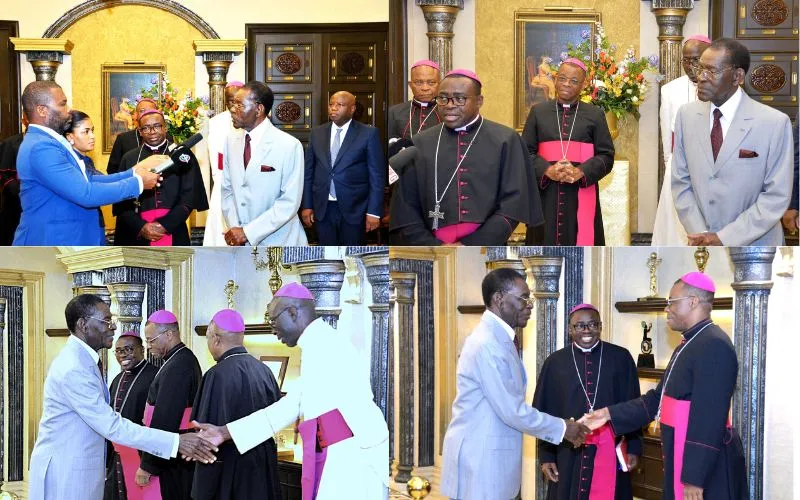
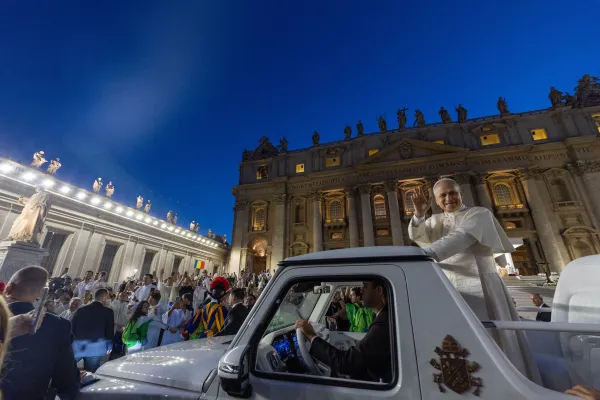
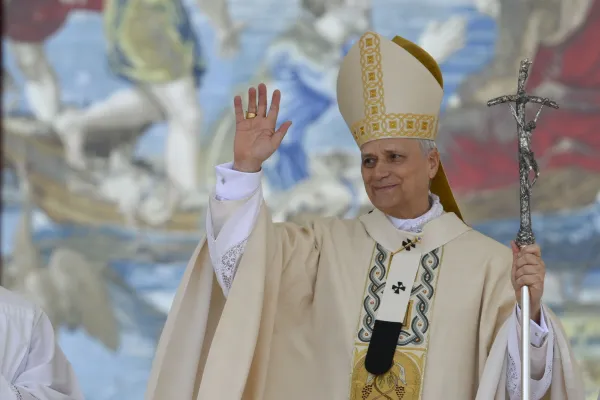
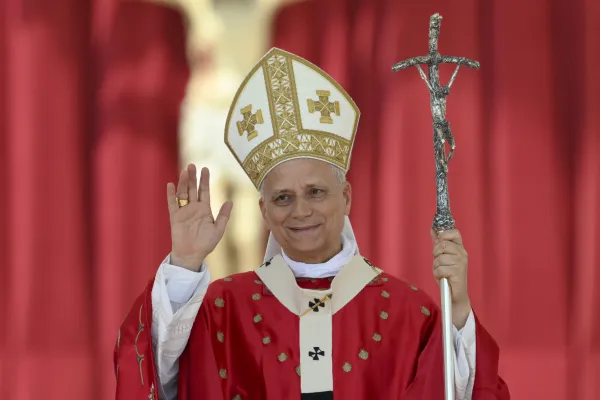
He emphasized that Pope Leo XIV would be received with the highest level of public engagement, stating, “Equatorial Guinea is accustomed to receiving personalities, so it will mobilize the population to give it the apotheosic sense that the Holy Father deserves, to bring a good impression of the population and the name of Equatorial Guinea at the international level.”
The President further described the visit as having a dual character: pastoral, in Pope Leo XIV’s role as leader of the Catholic Church, and political, in his capacity as Head of State of the Vatican.
For the local Church, the announcement has been framed as a moment of profound spiritual significance. Bishop Domingo-Beka described the anticipated visit as “a moment of grace and joy for the people of Ecuato Guinean,” noting that it will be the first time in 44 years that a Pontiff sets foot in the country.
He called on the people of God in parishes and other Catholic institutions nationwide to begin immediate spiritual preparation, urging them to unite around three guiding actions: “prepare, receive and live this pastoral visit of the Holy Father.”
The last Papal visit to Equatorial Guinea took place on 18 February 1982, when St. John Paul II arrived in the country, becoming the first and, until now, the only Pontiff to do so.
The PDGE report recalls that the visit marked “a milestone in the ecclesiastical history of the country,” with Pope John Paul II encouraging Christians “in loyalty to Christ and the Church.” During that visit, the late Pontiff met President Obiang and celebrated Mass in Bata, an event that left a lasting imprint on the nation’s religious and social life. The report describes the visit as having brought “a message of peace and reconciliation,” adding that it is remembered as transformative for a country that has since “evolved and thrived.”
Since the death of Pope John Paul II, relations between Equatorial Guinea and the Holy See have remained consistently strong, the report indicates, adding that the government and the Catholic Church have repeatedly expressed their desire to host another Papal visit, with President Obiang making successive trips to the Vatican to meet each of the Pontiffs who succeeded John Paul II.
In 2016, the presidential couple undertook a pilgrimage to Rome alongside members of the Christian faithful, further cementing ties with the Holy See. These relations bore visible fruit in 2017, when the Cathedral Basilica of Mongomo hosted the enthronement of three new bishops and the erection of two new dioceses, Mongomo and Ebibeyin.
Following the election of Pope Leo XIV, the PDGE report notes that the presidential couple travelled again to the Vatican to greet the new Pontiff and formally reiterate the invitation that is now being planned.
As a result, the government and the Church are jointly preparing to receive Pope Leo XIV both as spiritual leader of the universal Catholic Church and as Head of State.