


Advertisement

Loss of African Identity Weakens Church’s Mission, Angolan Dominican Friar Warns at “feeling Africa” Conference

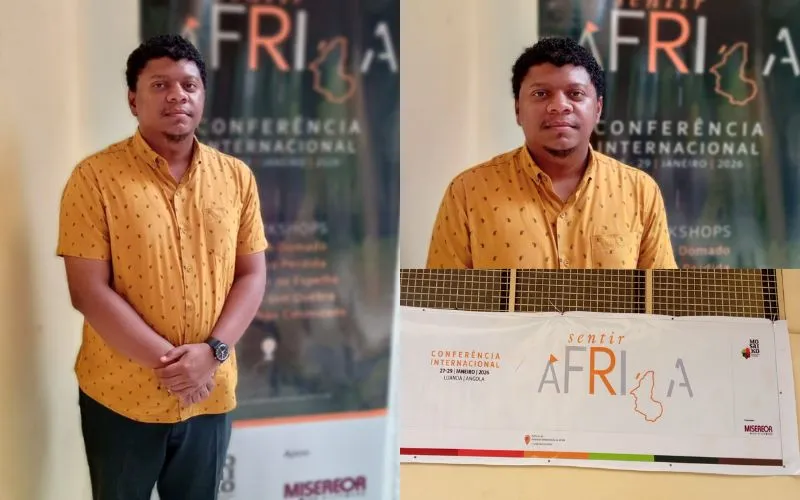
Friar Danilson Lopes. Credit: ACI Africa

The growing loss of African identity is undermining citizenship, social participation, and the mission of the Catholic Church on the continent, a member of the Order of Preachers (OP) from Angola has warned.

Speaking to ACI Africa on Tuesday, January 27, on the sidelines of a three-day International Conference titled “Feeling Africa,” Friar Danilson Lopes said many Africans are increasingly disconnected from their cultural roots. 

“We Africans, and especially Angolans, have distanced ourselves from our own identity. This is a cause for concern because a society that does not know itself cannot fully participate in its own construction,” Friar Lopes told ACI Africa during the ongoing event at St. John Paul II Higher Institute in Luanda.

The January 27-29 conference is aimed at helping participants move beyond intellectual reflection to lived experiences of African identity. 

It seeks to integrate culture, history, psychology, and spirituality in a way that allows people to rediscover their Africanness in daily life.

Advertisement

“This time our objective is not only to think about Africa; it is to feel it in the body, in the mind, and in everyday experience. We need participants to immerse themselves in their Africanness practically and consciously,” Friar Lopes said. 

He explained that reclaiming African identity is essential for strengthening self-determination, rebuilding social confidence, and fostering a Church that is more engaged with the lived realities of the people.

The Administrative and Financial Director of the MOSAIKO Institute for Citizenship noted that many Africans have adopted external models of behavior, aesthetics, and social organization, often at the expense of their own traditions. 

“Every time we ignore who we are, we run the risk of losing our voice, our culture, and our ability to position ourselves in the world,” he said.

At the center of the conference is a series of thematic workshops, beginning with “The Tamed Body,” which explores historical and contemporary forms of domination experienced by Africans. 

More in Africa

Friar Lopes explained that slavery and colonialism profoundly shaped Africans’ relationship with their bodies and continue to influence access to opportunities, freedom, and respect. 

“When the body is tamed, the whole expression of the person is conditioned,” he said, adding, “This is not just the past; it is the present—it is politics, economics, and society.”

Other workshops address additional dimensions of African identity. 

“Lost Language” examines the devaluation of African languages and oral traditions.

 “Language is our first school of identity,” Friar Lopes said, and added, “To lose a language is to lose part of memory, culture, and the way we relate to the world.”

Advertisement

In “Mirror Image,” participants reflect on appearance, hair, skin color, and aesthetics, challenging external standards and reclaiming African beauty and heritage. 

Another workshop, “Breaking School,” focuses on how education systems can fragment children’s identities by devaluing African culture. 

Friar Lopes recalled cases of discrimination linked to hair texture and skin color, insisting that education should build citizens rather than reproduce exclusion. 

“We need schools that strengthen African identity and teach the values of our continent,” he said.

The workshop “Uncolonized Future” invites participants to imagine development models rooted in African realities. 

(Story continues below)

“It is time to think about our future without blindly copying external models,” Friar Lopes said, and added, “We must create our own solutions that respect our history, culture, and potential.”

“Feeling Africa means recognizing our history, respecting our collective memory, and integrating these dimensions into daily life,” he said, adding that this process strengthens both civil society and the Church in their mission to promote dignity and conscious participation.

Friar Lopes expressed hope that participants will leave with a deeper understanding of their identity and a renewed sense of responsibility toward their communities. 

“When we know ourselves better and recognize our culture, we are better prepared to dialogue with others, participate constructively, and contribute to a more conscious society and a Church that walks with its people,” he said.

João Vissesse is an Angolan Journalist with a passion and rich experience in Catholic Church Communication and Media Apostolate.