


Advertisement

“A vocation of service to human family”: Zambia’s Catholic Bishops Decry Wrong notion of Politics Ahead of August Polls

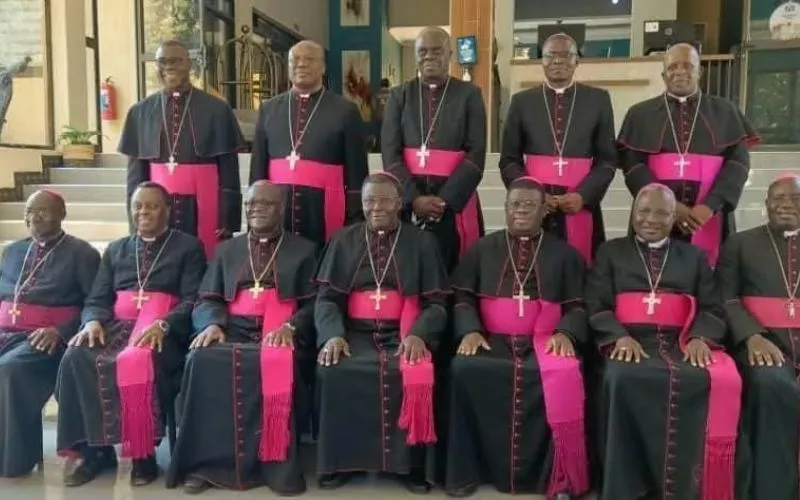
Members of the Zambia Catholic Bishops Conference (ZCCB). Credit: ZCCB

As Zambia prepares for the August general elections, members of the Zambia Catholic Bishops Conference (ZCCB) have denounced the wrong perception of politics in the Southern African nation, noting that politics should not only go beyond personal interest but should also be devoid of conflicts.

In their Pastoral letter issued Friday, January 30, the Catholic Bishops in Zambia highlight what they describe as “the actual meaning of politics,” explaining that politics should not be reduced to “a contest for power, a means for self-interest, or an arena of conflict.”

“We offer this reflection, rooted in the Gospel and the Church's social doctrine, to remind all citizens and leaders that politics, in its truest sense, is a noble and difficult calling, a vocation of service to the human family,” ZCCB members say in the letter.

The Southern African nation is scheduled to hold its general elections on 13 August 2026, when eligible citizens are expected to vote to elect the president, members of the National Assembly, councillors, and council chairpersons.

In their January 30 pastoral letter, the Catholic  Bishops in Zambia explain that the authentic purpose of political life should be to serve the common good, which they emphasize is the central pillar of all sound political philosophy.

Advertisement

“The common good does not mean merely the collective will of the majority or the sum of private interests. Rather, it is defined as ‘the total of social conditions which allow people, either as groups or as individuals, to reach their fulfillment more fully and more easily,’ they say.

Besides just winning debates or securing privilege as perceived in the country, the Catholic Bishops in Zambia say, politics is “a noble art of organizing society so that every person can thrive.”

“Its (politics) measure is its effectiveness in creating the necessary conditions for justice, peace, and human dignity for all, especially for the poor, the marginalized, and the unborn,” the Bishops say in the pastoral letter.

The Bishops say that the human person is the ultimate goal and the sole foundation of all political institutions. They warn that “any political system or policy that degrades human life or ignores the fundamental dignity of any individual has, by definition, failed its primary purpose.”

“The noble nature of politics requires discernment from all who participate in it. We distinguish the noble act of governance for the common good from the lesser reality of partisan politics, the struggle for electoral advantage,” the Bishops say.

More in Africa

The Bishops note that while political parties are legitimate vehicles for action, they must never become ends in themselves.

“To be a political servant means to seek what is true and just, not simply what is expedient or popular. We therefore urge political leaders to resist the temptations of corruption, manipulation, and the use of power merely for self-preservation or ideological purity,” the Bishops say.

They emphasize that the vocation of politics does not belong only to elected officials but to every citizen.

“Responsible citizenship is a moral virtue and a necessary obligation”, the Bishops say and explain that to fulfill this noble vocation, both leaders and citizens require a well-formed conscience free from social vices such as corruption.

The Catholic Bishops in Zambia call on all people of God in the country to be active, informed, and “conscientious participants in civic life, whether through voting, civil dialogue, advocacy, or community service.”

Advertisement

“While the separation of Church and State can protect religious freedom, it does not, however, require a division between faith and public action. Our faith must inform our public commitments,” the Bishops say.

They explain that a well-formed conscience is not merely a private feeling or justification for personal preference, but it involves seeking the “objective moral truths found in reason, natural law, and religious faith.”

They add that a well-informed conscience is also “about diligently examining the facts and implications of policy choices, and thirdly, it is about focusing always on respecting human dignity and achieving the common good.”

“As your shepherds, relying on the Social Teaching of the Church and guided by the Holy Spirit, our role is to form your conscience, not to replace it,” the Catholic Bishops in Zambia say in their eight-page Pastoral letter.

They add, “We offer moral guidance so that you may choose wisely, ensuring your political actions are consistent with the essential requirements of justice and love.”

(Story continues below)

“We entrust all Zambians and the forthcoming General elections to the Maternal intercession of the Blessed Virgin Mary, Queen of Peace.  May God bless our beautiful, great nation,” the Bishops implore.

Silas Mwale Isenjia is a Kenyan journalist with a great zeal and interest for Catholic Church related communication. He holds a Bachelor’s Degree in Linguistics, Media and Communication from Moi University in Kenya. Silas has vast experience in the Media production industry. He currently works as a Journalist for ACI Africa.