Advertisement

Vatican Official Proposes Creation of “missionary welcome centres” in the West for Incoming African Priests

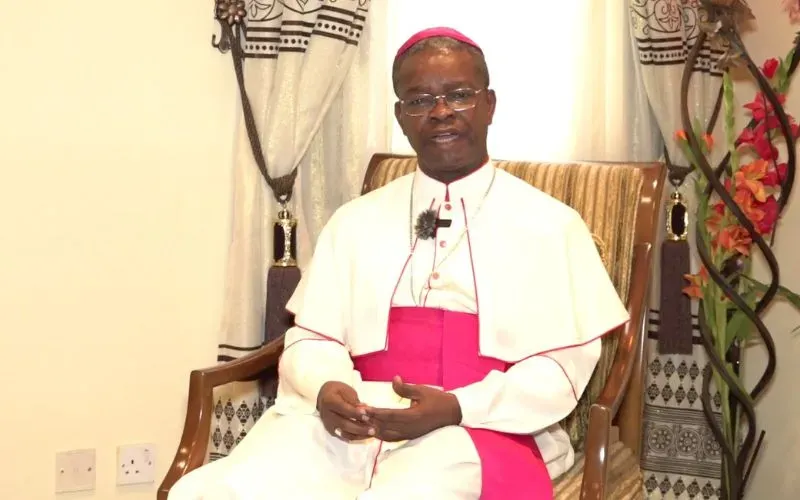
Archbishop Fortunatus Nwachukwu. Credit: ACI Africa

The Secretary for the Vatican Dicastery for Evangelization has weighed in on the possibility of the Church in the West establishing places where Priests coming from Africa could be equipped with skills to efficiently respond to the pastoral needs of their Episcopal Sees. 

In his address at the III Pan-African Catholic Congress on Theology, Society, and Pastoral Life that was held in Ivory Coast’s city of Abidjan from August 5-10, Archbishop Fortunatus Nwachukwu underlined the need for a coordinated response what he described as a “pastoral need in the West” that missionaries from Africa are moving to meet.

He said that incoming Clergy from Africa “and other younger Churches” need places where they can learn the language, culture and pastoral expectations of their host Dioceses before immersing themselves in mission.

Formation of these incoming Priests, the Nigerian-born Vatican official said, could be done in “underused” Seminaries in the West.

“A practical way forward would involve establishing missionary welcome centres in underused Seminaries in the West. Here, incoming Clergy from Africa and other younger Churches could learn the language, culture, sensitivities, and pastoral expectations of their host Dioceses,” Archbishop Nwachukwu said in his presentation on August 7.

Advertisement

“Formation must mirror the training once given to Western missionaries before they were sent abroad,” he added in his presentation titled, “The Church of the Sheaves: Africa’s Mission to itself and to the World in a Synodal Church”.

He explained that for Africa, the image of the sheaf reflects the reality of a continent that once received the Christian Gospel through the self-giving mission of others, and that is now emerging as a rapidly growing Church, “like young and luxuriant branches of a tree, bearing fruit for the wider body of Christ.”

“To call the Church in Africa the Church of the Sheaves is not mere fanciful terminology. It is a clarion call for the Church in Africa to take her rightful place in the global mission of the Church,” the Vatican official said.

He said that one of the challenges to “the Church of the Sheaves” in her outward mission is the need for thorough and intentional formation for integration into the Church in the West.

“If African missionaries of the Church of the Sheaves are to minister effectively in Europe, America, or other parts of the world, they must be formed with the destination in mind,” he said, and added, “This includes acquiring proficiency in the languages of the host countries, understanding their cultures, learning the legal frameworks within which the Church operates, and adapting to social customs, food, climate, and modes of life.”

More in Africa

The former Vatican diplomat, who had been serving as Apostolic Nuncio from November 2012 till he was appointed Secretary of the Dicastery for Evangelization in March 2023 clarified that cultural immersion is not a loss of identity but “a form of pastoral charity.”

He said that when missionaries arrive unprepared, their effectiveness may be hampered by a lack of basic linguistic, social, and pastoral skills required for the new environment.

“Those who are sent must be equipped to understand and serve in environments very different from their own,” he said.

“The model of earlier missionaries who came to Africa and chose to learn the local languages, adopt local customs, and live among the people with great respect remains a compelling witness,” he said, and continued, “The same is now required of the Church of the Sheaves. Those sent from Africa to serve the Church in the West must not carry a rigid or triumphalist posture. They must resist the temptation to replicate their home practices without discernment.”

Formation for Priests from Africa must move beyond academic preparation, and must include training in sensitivity, cultural dialogue, pastoral flexibility, and a deep commitment to listening, the Archbishop said, and added, “Only then can the Church of the Sheaves truly become what she is called to be: a fruitful branch of the universal Church, offering not only its presence, but its heart.”

Advertisement

He noted that the early missionaries who brought the Gospel to Sub-Saharan Africa did so with courage, “sowing the seed of faith in conditions of great difficulty.”

The missionaries from the West, he observed, “crossed seas and borders without the benefits of modern transport or medicine, driven by faith and the hope that the Church would one day take root and grow.”

“These missionaries went out weeping, bearing the seed of faith: sowing in tears, in toil, and in love,” he said.

According to the Archbishop, certain forms of dependence remain but the Church in Africa is already showing signs of fruitfulness and maturity.

“The Church in Africa is vibrant, growing, and filled with joyful witness,” he said, and added, “Seminaries are full, parishes are alive, and African voices are increasingly shaping global Catholic discourse.”

(Story continues below)

“The sacrifice of the missionaries has not been in vain. Indeed, their legacy lives in the millions of African Catholics who now carry the faith forward,” he said.

Archbishop Nwachukwu said that Africa is moving “from being a mission territory to becoming a missionary Church.”

The Church in Africa, he said, carries within herself the joy and strength of homecoming, as ‘sheaves’, prepared to offer her gifts to the universal Church and to take part in the shared mission of proclaiming the Gospel.

“Having received the Gospel through perseverance and faith, this Church now ministers with increasing confidence to her own people and reaches outward in service to the wider world,” the Secretary for the Dicastery for Evangelization said.

He said that as both the fruit and agent of mission, the Church in Africa is uniquely placed to sustain her own growth while enriching the wider Church through a spirituality of joy, resilience, and mutual upbuilding.

“Africa is no longer on the margins of the Church. It stands at the centre of her life today and her future. The harvest is plentiful, and the sheaves are full,” he said, drawing from Psalms 126:6.

Organized by the Pan-African Catholic Theology and Pastoral Network (PACTPAN), the five-day conference in Abidjan brought together Theologians, Bishops, Priests, Deacons, women and men Consecrated, Lay Leaders, Youths, and Catholic Communicators who engaged on the theme, “Journeying together in Hope as Church, Family of God in Africa”.

In PACTPAN’s characteristic palaver engagement, the participants explored Africa’s contribution to the global Church’s understanding of the Synod on Synodality, advancement of African theological scholarship, and the place of women and youths in the Church in Africa.

Participants also engaged on urgent issues affecting African communities, including human trafficking, religious persecution, and environmental degradation.

Agnes Aineah is a Kenyan journalist with a background in digital and newspaper reporting. She holds a Master of Arts in Digital Journalism from the Aga Khan University, Graduate School of Media and Communications and a Bachelor's Degree in Linguistics, Media and Communications from Kenya's Moi University. Agnes currently serves as a journalist for ACI Africa.