Advertisement

“Dangerous plan”: Lay Executives in Chad Join Catholic Bishops in Denouncing Government’s Draft Pastoral Code

Credit: Tchad Infos

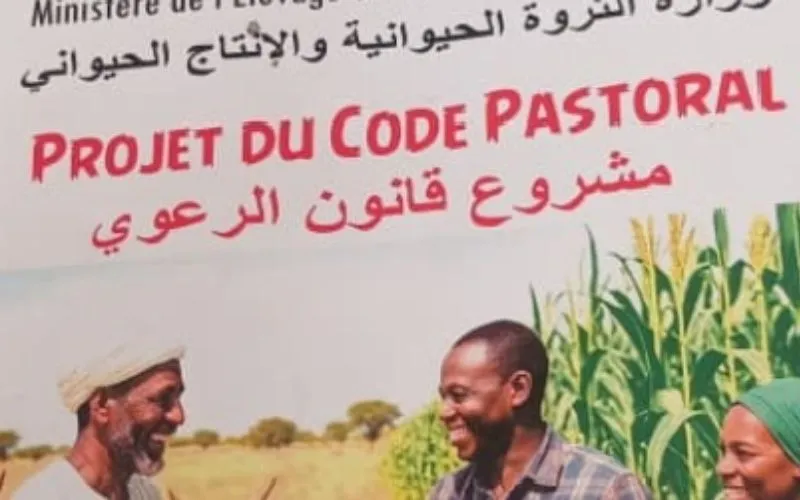
Members of the Union of Christian Executives of Chad (UCCT) have expressed their support for the Catholic Bishops’ recent rejection of the draft Pastoral Code by the government, warning that the proposed legislation threatens peace, unity, and the survival of farmers in the landlocked country at the crossroads of North and Central Africa.

In a statement issued on Wednesday, September 10, UCCT members say the controversial legislation reflects the authorities’ “manifest and persistent determination to promote initiatives that foster division among citizens, instead of fulfilling their fundamental mission of ensuring security, cohesion, and the well-being of the population.”

“How have we come to a government that, rather than taking constructive steps for development, devotes its energies to sustaining discord and injustice?” the lay executives pose.

They add, “The draft Pastoral Code sufficiently demonstrates, on the one hand, the political ill will to create conditions for lasting peace and social justice, and on the other, a blatant bias in favor of herders.”

“The UCCT calls on the Government, if it is sincerely committed to peace and justice, to demonstrate this by abandoning this dangerous plan for the Republic,” the Catholic Lay Executives say.
Advertisement

The Ministry of Livestock’s move to reintroduce a draft revision of the pastoral code is reigniting debate. Originally drafted in 2014 and adopted by the National Assembly in 2015, the bill was never promulgated by former President Idriss Déby Itno amid strong domestic opposition.

The government has defended the Pastoral Code as a framework for regulating livestock activities, but critics, including Catholic Bishops, argue that it is skewed in favour of herders and undermines the rights of farmers, who constitute the majority of the population.

Authorities now say they want to engage all stakeholders to reach a consensus.

In a joint statement issued on August 31, the Bishops of Doba, Goré, Koumra, Moundou, and Sarh, expressed their rejection of the draft Pastoral Code, describing it as a “farmer-killing” text.

“The Catholic Church, whose vocation and mission in society consist of serving truth, justice and peace, demands that this wicked draft pastoral code be simply thrown into the trash and that the masquerade of workshops—which only serve to justify and validate a project that betrays the farming community representing more than 80% of the Chadian population—be stopped,” the Catholic Bishops said.

More in Africa

The Catholic also called for a new approach: the development not of a single Pastoral Code, but of two separate texts – a Pastoral Code and an Agricultural Code – constructed in direct dialogue with village communities and not imposed from above.

They declined to participate in the official review workshop organized in Sarh.

In their September 10 statement, UCCT members say they “fully embrace the recent declaration of the Bishops of Chad regarding the draft Pastoral Code.”

They question the process behind the draft, asking, “If the real objective was to produce a balanced and consensual text, why then exclude other stakeholders, particularly the Ministry of Agriculture, and choose to move forward unilaterally?”

The Catholic executives further fault the government’s reliance on a project already declared unconstitutional, noting that such an approach risks eroding the very capacity of leaders to “think about the common good.”

They urge the authorities to embark on an inclusive process that respects both farmers and herders.

“Christian executives, together with all Catholic movements, will remain vigilant and mobilized against any attempt to impose laws or policies that compromise peace, justice, and peaceful coexistence among the communities of Chad,” UCCT members say.

Advertisement

Addressing President Mahamat Idriss Déby Itno directly, the Catholic executives remind him of his constitutional role as “guarantor of national unity, social cohesion, territorial integrity, and the protection of all citizens,” insisting that genuine leadership must reject divisive projects and prioritize the welfare of all Chadians.

Charles Muchiri contributed to the writing of this story

ACI Africa was founded in 2019. We provide free, up-to-the-minute news affecting the Catholic Church in Africa, giving particular emphasis to the words of the Holy Father and happenings of the Holy See, to any person with access to the internet. ACI Africa is proud to offer free access to its news items to Catholic dioceses, parishes, and websites, in order to increase awareness of the activities of the universal Church and to foster a sense of Catholic thought and culture in the life of every Catholic.