In his keynote address, which the International Journal of Research and Innovation in Social Science (IJRISS) published on December 9 following the delivery of his keynote address on October 31 at the Annual Conference of the National Association of Clinical Psychologists of Nigeria, Fr. Ehusani, described how years of insurgency, banditry and kidnapping have left millions psychologically scarred.
“Many survivors of our high-intensity conflicts have lost everything overnight, including their family members, their sources of livelihood, their homes, and properties,” he said, adding that others now live with disabilities, unresolved grief and deep emotional wounds.
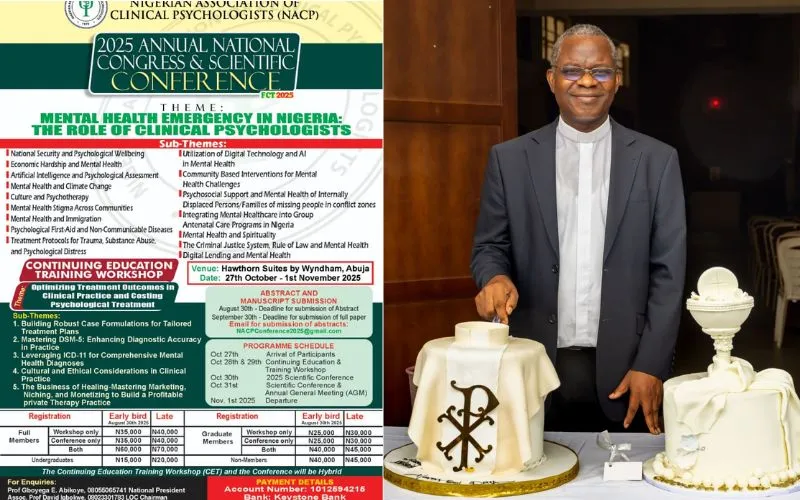 Credit: Fr. George Ehusani/Facebook
Fr. Ehusani warned that untreated trauma does not remain private. Instead, he said, people often “visit their unaddressed psychopathologies on their fellow countrymen and women, further worsening the already precarious situation.”
This cycle of pain, he argued, helps explain rising domestic violence, family breakdown, substance abuse and what he called an “epidemic of hopelessness.”
(Story continues below)
 Credit: Fr. George Ehusani/Facebook
Low awareness, few professionals
A major obstacle, Fr. Ehusani told psychologists, is Nigeria’s extremely low level of mental health awareness, even among educated citizens.
“Until people strip and parade the streets naked, we often do not give their mental health issues any serious attention,” he observed, criticising the tendency to spiritualise or deny psychological distress until it becomes severe.
 Credit: Fr. George Ehusani/Facebook
The shortage of trained professionals compounds the problem, the PSI founder said, explaining that with fewer than 400 licensed clinical psychologists serving a population of nearly 220 million in Nigeria, Africa’s most populous nation, “the harvest is indeed plentiful, but the labourers are very few.”
Yet he insisted that scarcity must not lead to resignation. Instead, it should spur innovation, task-sharing and a broader vision of where psychologists can serve.
 Credit: Fr. George Ehusani/Facebook
The psychologist as healer and guide
In a reflective section of his keynote, Fr. Ehusani described clinical psychology as both a science and an art, noting that the complexity of the human person often defies neat measurement.
“The very mysterious workings of the human mind and soul,” he said, can make “the daily enterprise of the clinical psychologist more of an art than a science.”
 Credit: Fr. George Ehusani/Facebook
Because of their training and daily encounters with human suffering, he argued, psychologists can become figures of wisdom and discernment within society. Their role, he suggested, echoes older traditions of “soul care” and “soul cure” that once belonged to religious communities.
This perspective, he said, is especially important in African contexts where spirituality remains central to how people understand illness and healing.
 Credit: Fr. George Ehusani/Facebook
Integrating mind, body and spirit
One of the keynote’s distinctive contributions was its emphasis on psycho-spiritual integration. Fr. Ehusani cautioned that mental health practice in Africa risks failure if it ignores the spiritual dimension of human life.
“For those of us in the integrative psycho-spiritual enterprise,” the Executive Director of the Lux Terra Leadership Foundation said, “we now speak of the mind-body-spirit relationship, because of our acute awareness and profound conviction that the human reality is a complex constituent of mind, body and spirit.”
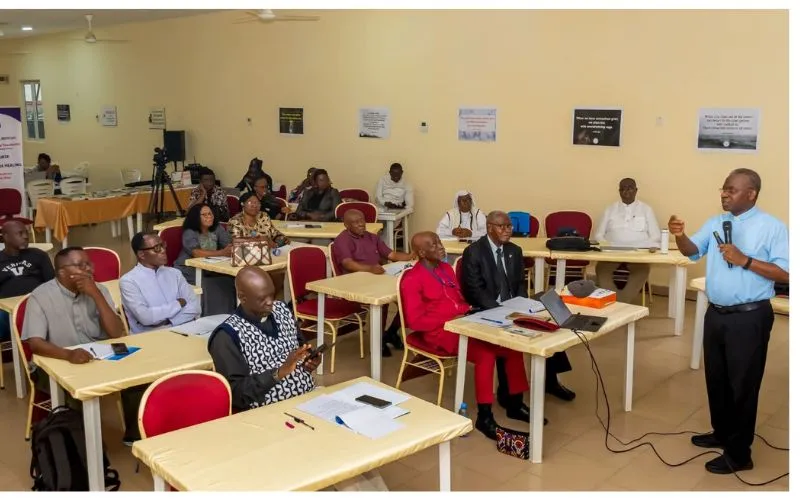 Credit: Fr. George Ehusani/Facebook
He went on to remind psychologists that the word “psyche” itself means soul, and argued that therapy can legitimately draw on resources such as meaning, forgiveness, gratitude and community support – without abandoning scientific rigour.
Beyond hospitals: New frontiers for psychologists
In his keynote address, Fr. Ehusani urged psychologists to expand their presence far beyond clinics and hospitals. He listed schools, correctional centres, rehabilitation facilities, research institutes, workplaces and even electoral bodies as spaces where psychological expertise is urgently needed.
At a time of widespread substance abuse, he said, psychologists should be active in institutions of learning, including schools and universities. In the justice system, they can support inmates and staff alike. In public life, he argued, psychological screening could help prevent what he described as “widespread leadership debauchery.”
His vision seems ambitious: mental health professionals, he said, should be central to national wellbeing and development.

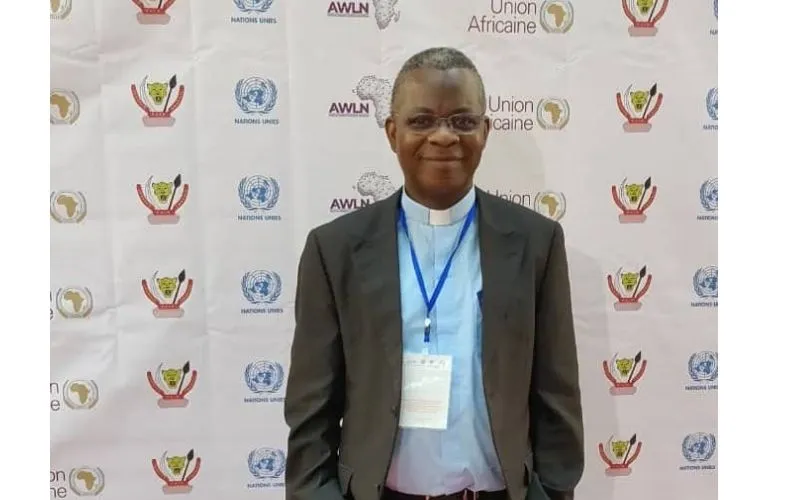
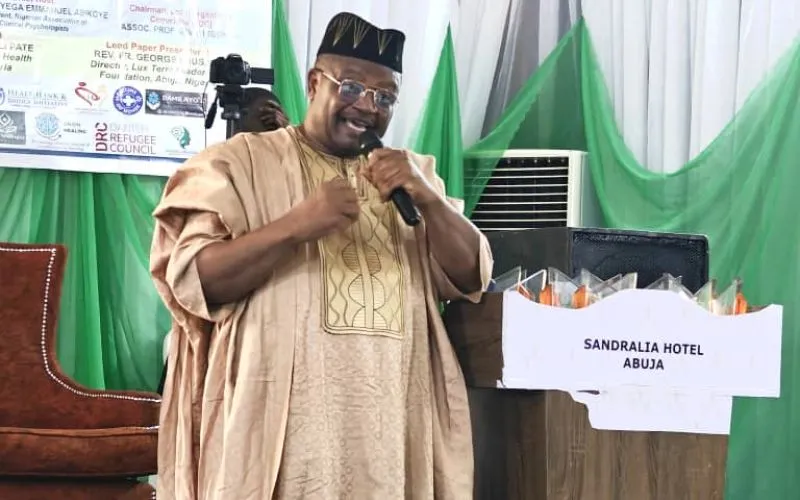 Prof. Andrew Zamani, President of the Pan African Psychology Union, at the event. Credit: Fr. George Ehusani/Facebook.
Prevention as a moral and professional duty
While much of the address detailed interventionist skills, Fr. Ehusani stressed that prevention must become the guiding framework for Africa’s mental health response.
“The scale and intensity of the mental health emergency in Nigeria demand a preventive response that is systematic, culturally attuned, and institutionally embedded,” he said.
He called for society-wide psycho-education to reduce stigma and teach basic coping skills, trauma-informed institutions that avoid re-traumatisation, and advocacy for legal reforms and sustained funding.
Prevention, the Nigerian Catholic Priest argued, also means focusing on vulnerable groups – children, internally displaced persons, survivors of violence – and using group-based and community-driven approaches that restore social bonds.
Technology, task-sharing and research
To address severe workforce shortages, Fr. Ehusani encouraged task-sharing models in which psychologists train and supervise non-specialists, as well as expanded use of telepsychology and helplines.
He also emphasised the need for data, monitoring and implementation research, warning that prevention programmes risk being ignored if they cannot demonstrate impact.
“Without proper measurement,” Fr. Ehusani cautioned, “these initiatives risk being overlooked by policymakers and losing support from donors.”
A call that resonates beyond Nigeria
Although rooted in Nigeria’s crisis, Fr. Ehusani’s keynote resonated as a broader African appeal as many countries face similar combinations of trauma, underinvestment and cultural misunderstanding around mental illness.
His message to psychologists across the continent was: clinical expertise must be paired with cultural sensitivity, advocacy and a long-term preventive vision.
“The scale of Nigeria’s mental health emergency calls for urgent, coordinated, and sustained action,” he said, warning that failure to act will continue to undermine social stability and development.
Fr. Ehusani challenged African psychologists to look beyond the treatment of individual distress and to engage in the healing of wounded societies, urging them to help restore what he described as “the soul of the nation” itself..
ACI Africa was founded in 2019. We provide free, up-to-the-minute news affecting the Catholic Church in Africa, giving particular emphasis to the words of the Holy Father and happenings of the Holy See, to any person with access to the internet. ACI Africa is proud to offer free access to its news items to Catholic dioceses, parishes, and websites, in order to increase awareness of the activities of the universal Church and to foster a sense of Catholic thought and culture in the life of every Catholic.





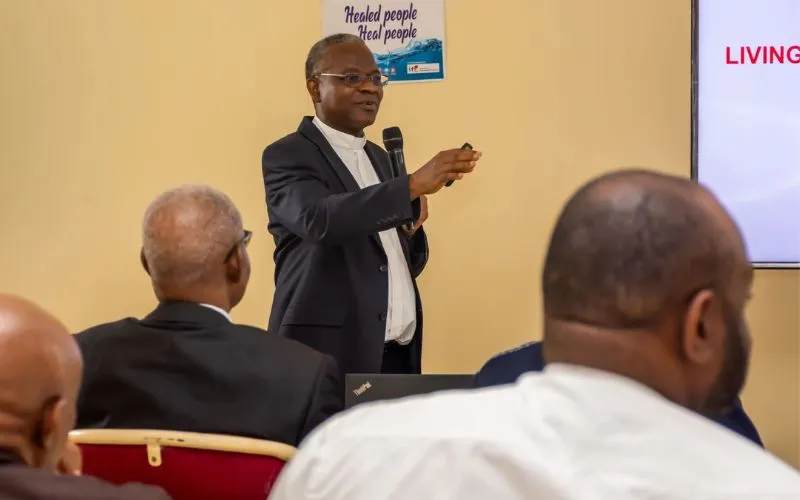
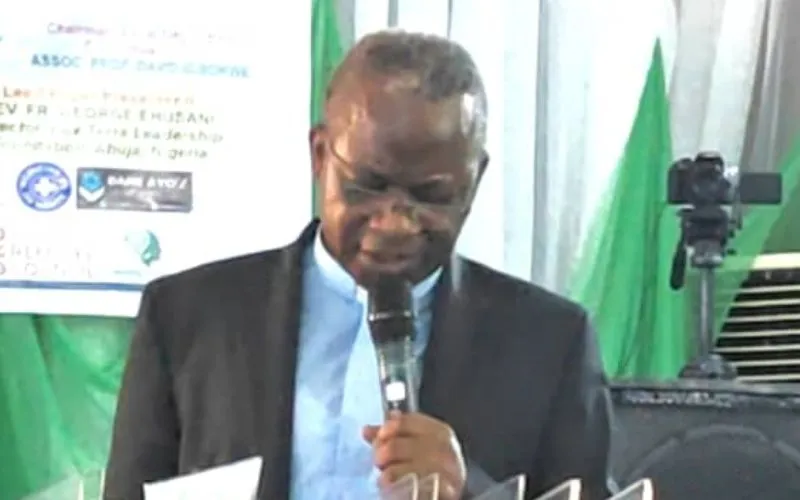 Fr. George Ehusani making his presentation at the conference. Credit: Fr. George Ehusani/Facebook.
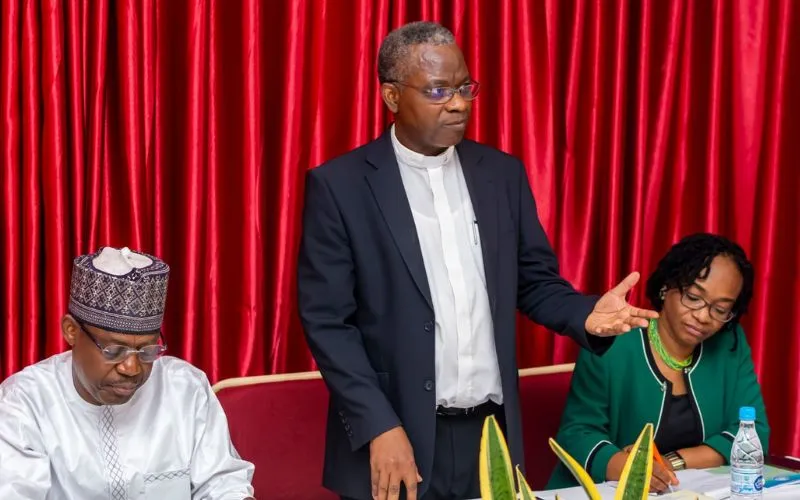
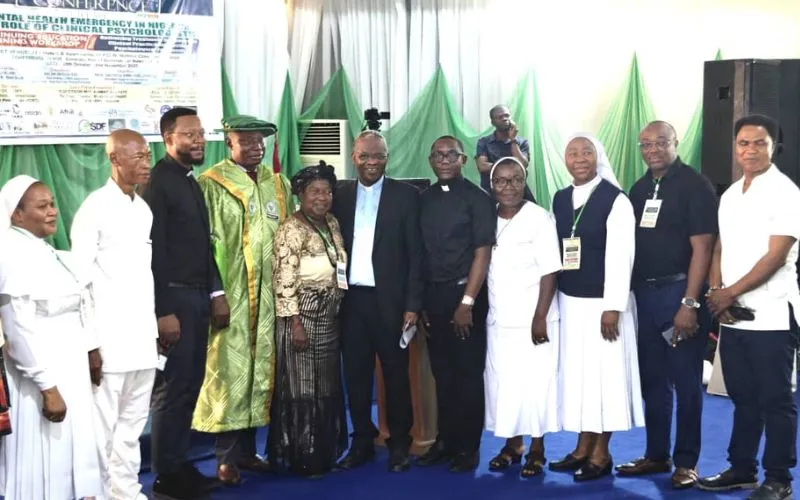 Nigerian Catholic Clergy, women and men Religious psychologists at the conference. Credit: Fr. George Ehusani/Facebook
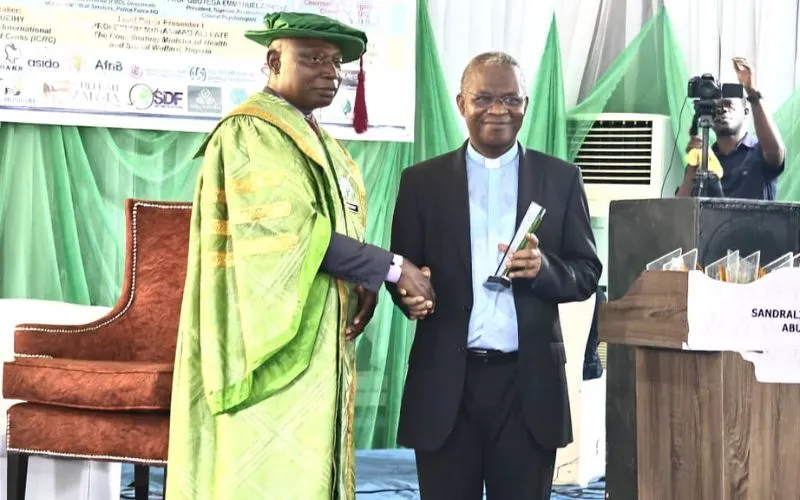 Credit: Fr. George Ehusani/Facebook
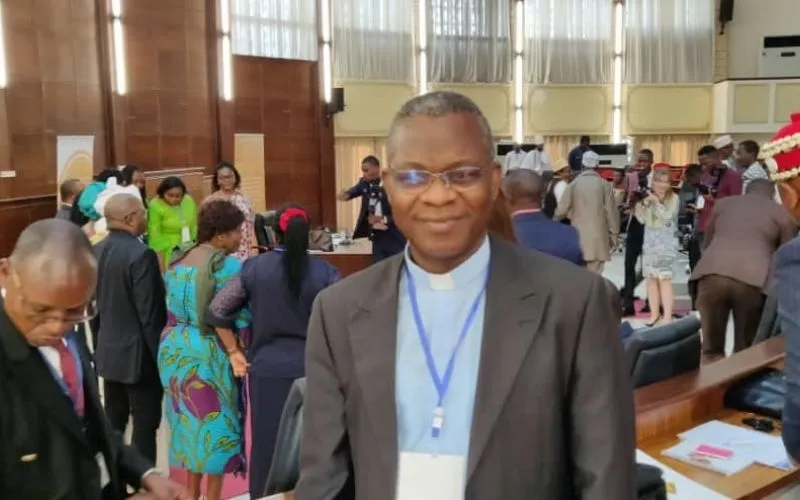
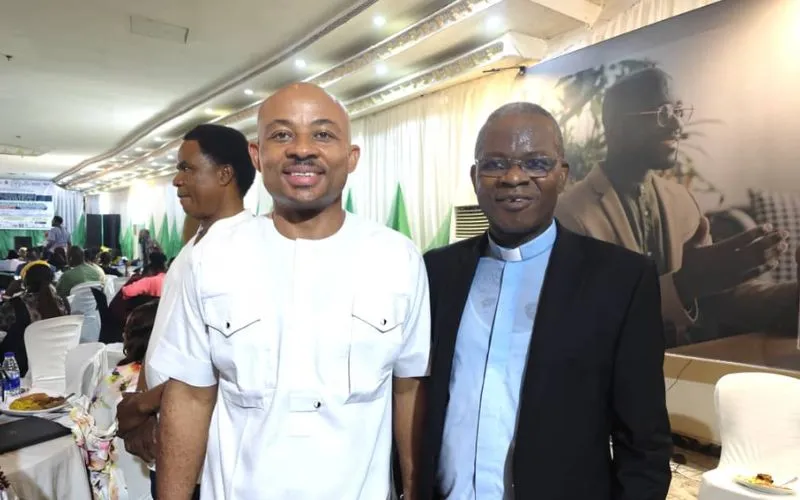 Prof. David Igbokwe, Chairman, Local Organising Committee for the event. Credit: Fr. George Ehusani/Facebook
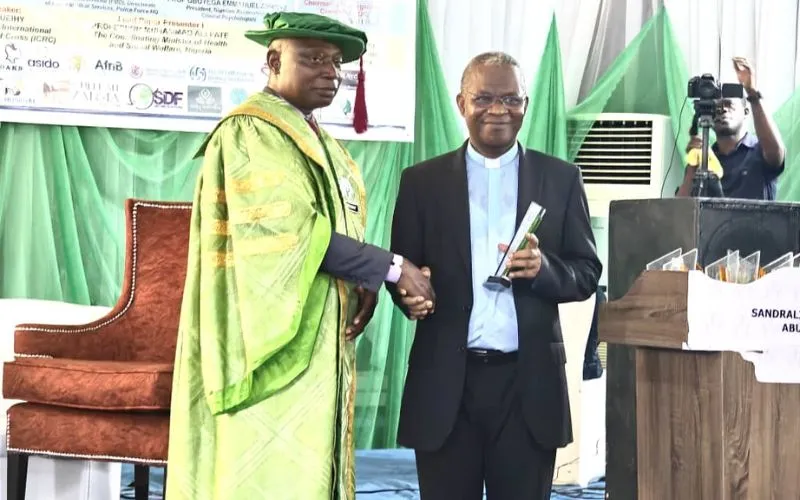 Prof. Gboyega Akiboye, President of the National Association of Clinical Psychologists of Nigeria, presenting a plaque to Fr. George Ehusani after his address. Credit: Fr. George Ehusani/Facebook.