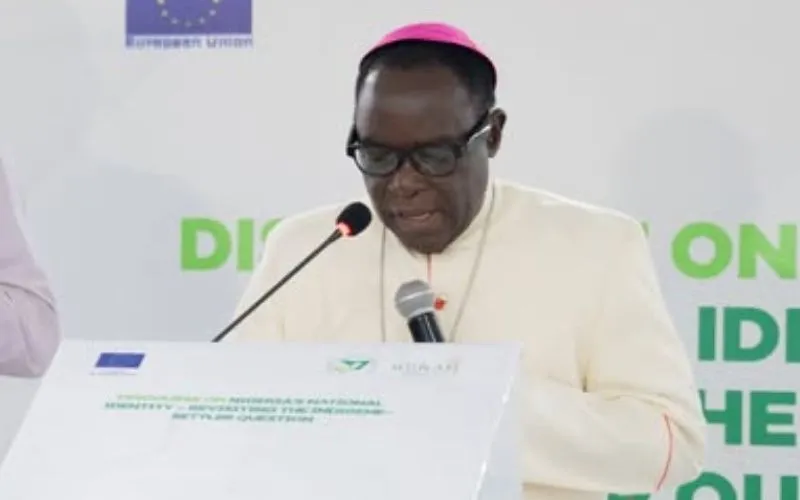
Nigeria reportedly accounts for 72 percent of Christian killings in the world. According to Bishop Kukah, early warnings that the country would be where it is now were ignored.
“You look at what is driving the senseless killings, we have only come to a point in which we can now see the killings. But if we developed a sharper radar, we should have seen most of all this coming up much longer than now,” he said.
He however blamed killings and abductions in Nigeria on “distortions in the Nigerian landscape” and “the inability of the state to manage effectively and efficiently the resources that our country possesses.”
“A structural design of a system that produces corruption and inefficiency is what has brought us to where we are now to the point that even the killers have developed a sense of righteousness by saying, well, they are doing this because the country has ignored them,” he said.
“I think at the heart of the killings and the abductions, tragic as they are, will be for us to have the courage to accept that at another level, those who govern Nigeria have also to a great extent been guilty of these charges of abducting this particular resource of state,” he said.
(Story continues below)
Bishop Kukah described the killings and abductions in Nigeria as “evidence of the moral, the collapse of the moral fabric of our society.”
“These are not things you hear about even in our neighboring countries, not to talk about other parts of the world. So the question all of us should ask ourselves, although it's convenient for us to point at the government is, how did we get to this point? And what really did we contribute by doing or not doing?” he said.
Bishop Kukah cautioned against focusing solely on the government in the search for a solution to what is ailing Nigeria, saying, “The killers and the murderers are among us.”
He said that with the incessant killings in Nigeria, life is no longer considered sacred.
“Not everybody believes that life is given by God because many of us have assumed that we have a right to take life and nothing will happen,” he said, adding that the sacredness of life is however “directly related to our readiness and willingness to treat each and everyone as if they are ourselves or our brothers and our sisters.”
Agnes Aineah is a Kenyan journalist with a background in digital and newspaper reporting. She holds a Master of Arts in Digital Journalism from the Aga Khan University, Graduate School of Media and Communications and a Bachelor's Degree in Linguistics, Media and Communications from Kenya's Moi University. Agnes currently serves as a journalist for ACI Africa.