

Advertisement
Catholic News
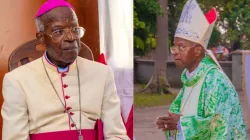
Benin-born Former Vatican Culture Secretary Dies at 83, Eulogized as “great theologian”
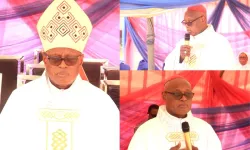
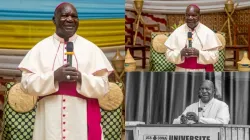
Bishop Barthélemy Adoukonou, a native of Benin and former Secretary of the Pontifical Council for Culture at the Vatican, has passed on at the age of 83. Bishop Adoukonou passed on shortly after midnight on Monday, October 27, at the University Teaching Hospital in Cotonou, the Local Ordinary of Cotonou Catholic Archdiocese who doubles as the President of the Episcopal Conference of Benin (CEB) announced in a statement. “A great theologian, educator, and man of faith, Bishop Adoukonou devoted his entire life to the service of God, the Church, and culture,” Archbishop Roger Houngbédji says in the October 27 statement. Archbishop Houngbédji notes that as former Secretary of the Pontifical Council for Culture, Bishop Adoukonou “worked with intelligence and passion to foster dialogue between faith and reason, between the Gospel and African cultures.” “His teaching, wisdom, and deep love for the Church have profoundly influenced generations of Priests, women and men Religious, intellectuals, and lay faithful,” the member of the Order of Preachers (OP/Dominicans) says. He further says the late Bishop’s passing “leaves a great void in the life of the Church and the intellectual world, but his radiant witness remains a precious spiritual and cultural legacy.” “We commend his soul to the mercy of the Lord, in the firm belief that Christ, conqueror of death, welcomes him into the joy of His Kingdom,” Archbishop Houngbédji says, and adds, “Funeral arrangements will be communicated at a later date.” Bishop Adoukonou served as rector of Saint-Paul di Djimé Major Seminary in Benin from 1977 to 1984; professor of fundamental theology at the Catholic Institute of West Africa (CIWA) in Abidjan Ivory Coast, from 1978 to 1982. From 2000 to 2009, Bishop Adoukonou served as Secretary of the Regional Episcopal Conference of West Africa (RECOWA). In December 2009, he was appointed Secretary of the Pontifical Council for Culture and was ordained Bishop in October 2011. The founder of the Movement Le Sillon Noir (Mewihwendo), which he animated from its inception in 1970 until 1999 also served as member of the Pontifical Council for Social Communications, and the Pontifical Council for the Promotion of Christian Unity, now the Dicastery for Promoting Christian Unity. He was also a member of the International Theological Commission for two five-year terms. In another statement issued October 27, the Rector of the Catholic University of the Congo (UCC) described Bishop Adoukonou as an “undisputed and indisputable master of the inculturation of the Christian faith in Africa.” Fr. Léonard Santedi Kinkupu recalled that the late Bishop Adoukonou, who was awarded an honorary doctorate by the university’s Faculty of Theology, “was one of the pioneers of African theology.” “The Theological School of Kinshasa pays a vibrant tribute to this master,” Fr. Santedi says, adding that his 1977 doctoral thesis, Foundations for an African Theology: An Essay on a Christian Hermeneutic of the Dahomean Vodun, written under the supervision of Professor Joseph Ratzinger – later Pope Benedict XVI – “remains a masterpiece in theology and a major contribution to the essential and ever-demanding dialogue between faith and culture.” Fr. Santedi extends his condolences “to the biological and religious family of the deceased, as well as to the entire African academic community,” and commends his soul “to your fervent prayers.” “May the Lord welcome him into His Kingdom and grant him the reward promised to the good and faithful servant,” the UCC Rector implores.
Remembered as “a man of dialogue, reflection”, Second Bishop of DR Congo’s Goma Diocese Dies at 90
Bishop Faustin Ngabu, the second Bishop of the Goma Catholic Diocese in the Democratic Republic of the Congo (DRC), has passed on after a prolonged illness. He was aged 90.
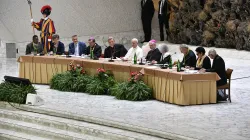
"Women are already better": Pope Leo XIV on Gifts of Women and Synodality
Pope Leo XIV drew laughter and applause when he recalled asking his mother in the 1970s whether she wanted equality with men. “No,” she replied, “because we’re already better.”
Over 100 Christians Killed in Nigeria, 120 Abducted in 76 Days: Intersociety Report
A new report by the International Society for Civil Liberties and Rule of Law (Intersociety) covering the period between August 10 and October 26 has revealed that in just the 76 days, over 100 Christians in Nigeria were killed, and 120 others kidnapped by jihadist groups.
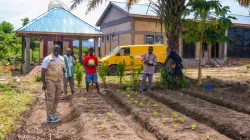
In Extensive Campaign, Caritas Freetown Constructs Rehab Centre for Underage Girls Addicted to Killer Drug “kush”
Young girls under the age of 14 who are addicted to the killer drug “kush” in Sierra Leone will find help in an ongoing campaign by Caritas Freetown to address the rampant use of the substance, which has been officially classified by authorities in the country as a national epidemic.
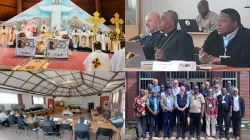
Salesian Leaders in Africa Chart New Path for “sustainability of formation, effective animation” at Meeting in Ethiopia
In a gathering aimed at charting a new path for formation of members, leaders of the Religious Institute of Salesians of Don Bosco (SDB) from across Africa met in Addis Ababa, Ethiopia.
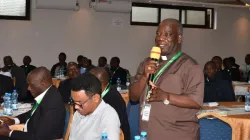
“Continue to be prophetic, voice of the voiceless”, Archbishop Urges Malawi’s Church Leaders in Post Election Reflection
The Archbishop of Malawi’s Catholic Archdiocese of Blantyre has underscored the essential role of Church leaders in guiding and forming the moral conscience of the people of God, especially during general elections.
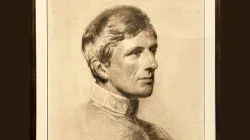
Meet 10 Patron Saints of Catholic Education, Students, and Teachers
Newman will join a list of several other Catholic saints considered patrons of other aspects of education. Get to know them here.
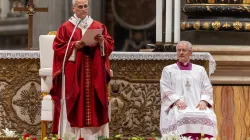
Pope Leo XIV Urges University Students to Feed "hunger for truth and meaning"
Pope Leo XIV urged university students to feed their “hunger for truth and meaning,” lamenting that modern education often loses sight of the “big picture.”
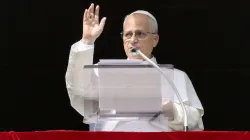
Pope Leo to Pray at Tomb of St. Charbel During First Apostolic Journey to Turkey, Lebanon
The trip will center on two key moments: a pilgrimage to mark the 1,700th anniversary of the First Council of Nicaea and a visit to the tomb of St. Charbel Makhlouf.
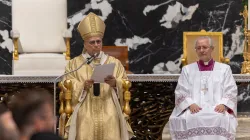
Pope Leo XIV: The First Lesson for Every Bishop is Humility
Pope Leo XIV consecrated Mons. Mirosław Stanisław Wachowski a bishop during a Mass at the Altar of the Chair in St. Peter’s Basilica on Oct. 26, 2025.
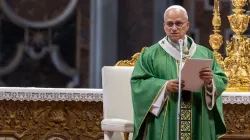
Pope Leo: Don’t Let Tension Between Tradition, Novelty Become "harmful polarizations"
Pope Leo XIV celebrated Mass for the closing of the Jubilee of Synodal Teams and Participatory Bodies, part of the Church’s wider Jubilee of Hope in 2025.
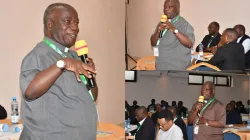
Vocations Boom in Malawi is a Blessing and “heavy responsibility”: Commission for Seminaries Chairman
The Chairman of the Commission for Seminaries at the Malawi Conference of Catholic Bishops (MCCB) has described the increase in priestly and religious vocations across the southeastern African nation as both a “blessing” and a “heavy responsibility” for the local Church.
South Africa’s G20 Presidency: Catholic Bishop Calls for Inclusive Systems for World’s Vulnerable Populations
The chairperson of the Social Action Department at the South African Catholic Bishops' Conference (SACBC) has appealed to global leaders to take bold, tangible actions that promote justice, equity, and inclusion for the world’s most vulnerable populations during the ongoing Group of Twenty (G20) Presidency in South Africa.
Pope Leo XIV Gives Advice for Living with Hope in a "troubled era"
Pope Leo XIV said the key to living in a difficult time, when the Church’s teachings are often challenged, is to embrace the hope that is “not knowing.”
Pope Leo XIV: There’s No Template for Synodality Across all Countries
Pope Leo XIV spoke about synodality during the jubilee of synodal teams and participatory bodies Oct. 24-26, part of the Church’s wider Jubilee of Hope in 2025.
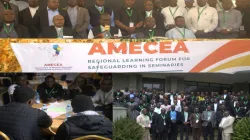
Delegates Commit to Uphold “highest” Safeguarding Standards in Seminaries at AMECEA Conference
Delegates at the just-concluded conference on safeguarding in seminaries that was organized by the Association of Member Episcopal Conferences in Eastern Africa (AMECEA) have committed to ensuring that Seminaries in the region uphold the highest standards of safeguarding.
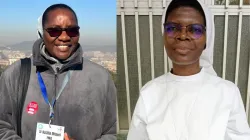
Catholic Sisters in Angola Reflect on Life, Legacy of Recently Canonized Members in Rome
Catholic Sisters in Angola have joined the universal Church in celebrating the canonization of members of their Congregations, who were canonized on October 19 by Pope Leo XIV in Rome, reflecting on their legacy of faith, courage, and service to humanity.
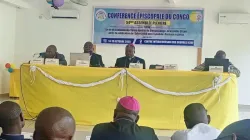
Congo Brazzaville Catholic Bishops Encourage Youth Formation to Build a Just, Peaceful Society
Catholic Bishops in the Republic of the Congo (Congo Brazzaville) have called for renewed evangelization, moral integrity, and active social engagement among young people and all members of the Church.
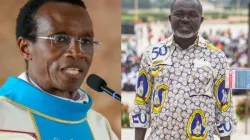
Catholic Entities in Ivory Coast Call for Non-Violence Ahead of October 25 Presidential Election
The Episcopal Commission for Justice, Peace, and the Environment in Ivory Coast and the National Laity Council are urging young people to reject violence and become agents of peace ahead of the country’s October 25 presidential election.