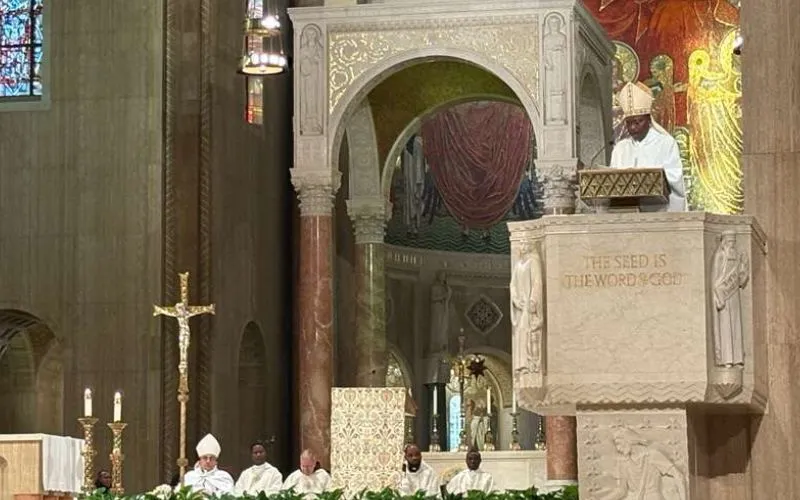
 Credit: EWTN News/Julia ConveryWhen familiarity becomes disbelief
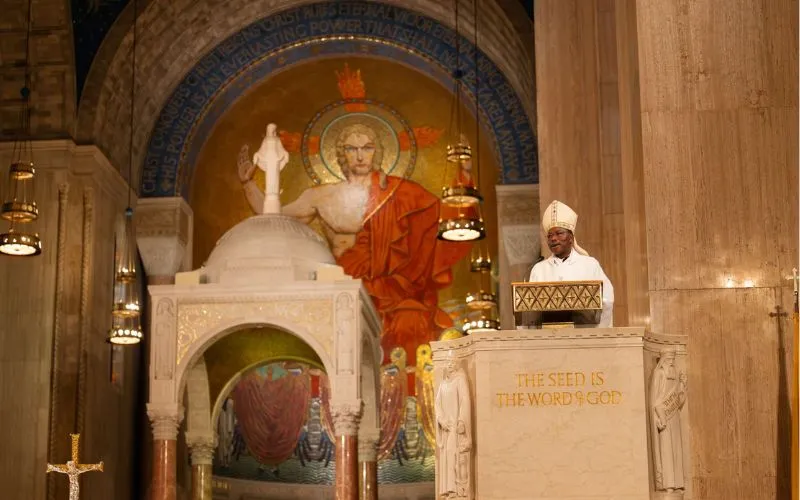
Reflecting on Jesus’ rejection in Nazareth, His native hometown, Bishop Mamza warned that the same dynamic threatens the Church in every age.
“They know his family. They know his trade. They know his background. And because they think they know him, they cannot receive him,” he said of Jesus’ neighbours, adding that what appears reasonable and unthreatening becomes spiritually fatal.
“This is a temptation for the Church in every culture and every age,” the First Vice President of SECAM further said, and continued, “We can become so accustomed to our own ways of worship, governance, theology, and pastoral practice that we fail to recognize the Spirit speaking through voices that sound different from our own.”
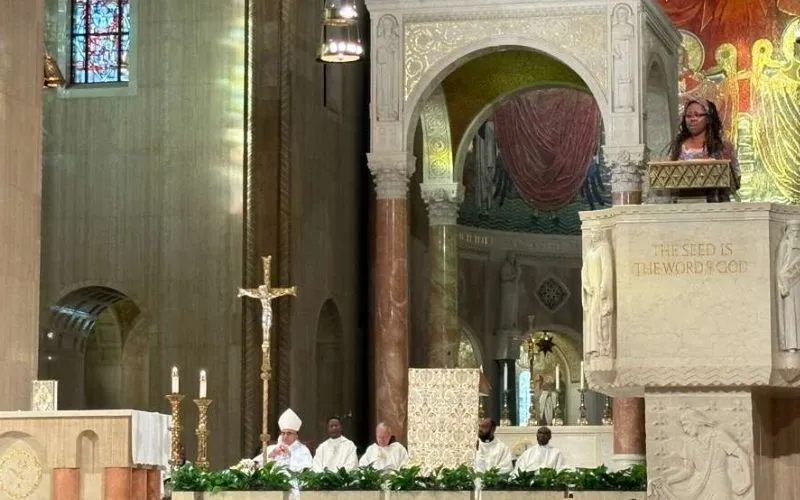
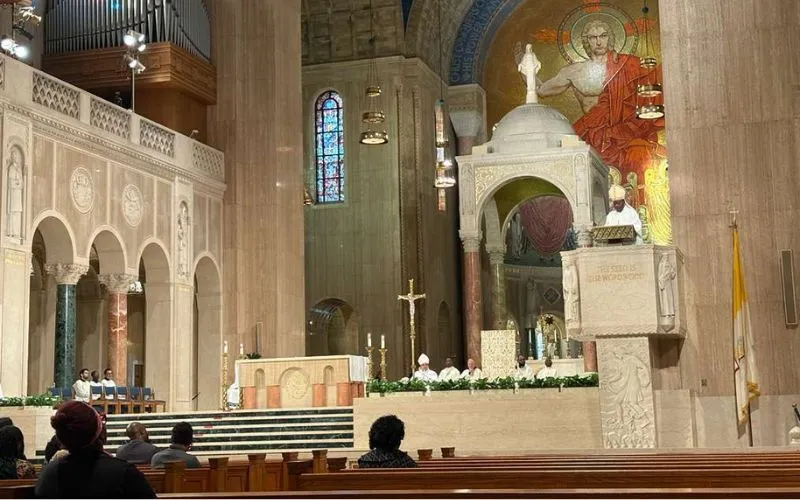 Credit: EWTN News/Julia Convery
(Story continues below)
In this light, the relationship between the Church in Africa and the Church in the U.S. becomes a concrete test case, he said, noting that Africa and the U.S. emerge from different histories and ecclesial experiences.
Bishop Mamza explained that while the Church in Africa brings “a faith that is vibrant, communal, and resilient in the face of poverty, conflict, and persecution,” the Church in the U.S. brings “gifts of theological scholarship, institutional resources, and long experience engaging pluralistic societies.”
“If we see one another only through the lens of stereotypes, power, or past assumptions,” the Local Ordinary of Yola Diocese warned, “we risk becoming like Nazareth – too familiar with our own perspectives to recognize Christ speaking through the other.”
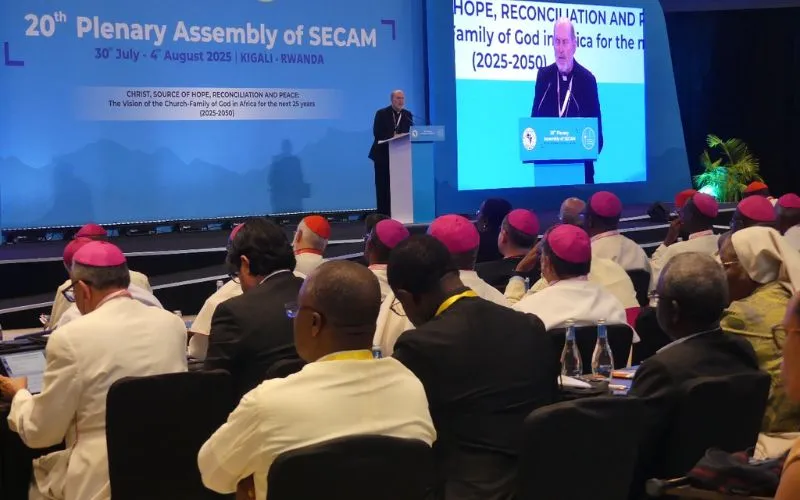 Archbishop Thomas Robert Zinkula, Chairperson of the USCCB Subcommittee on the Church in Africa, during the 20th SECAM Plenary Assembly in Rwanda’s capital, Kigali. Credit: ACI Africa
From Yola to Washington, DC: A witness forged in suffering
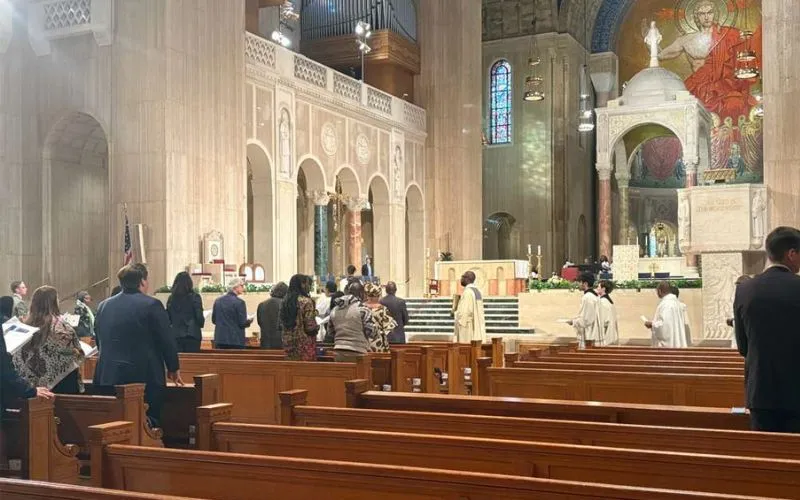
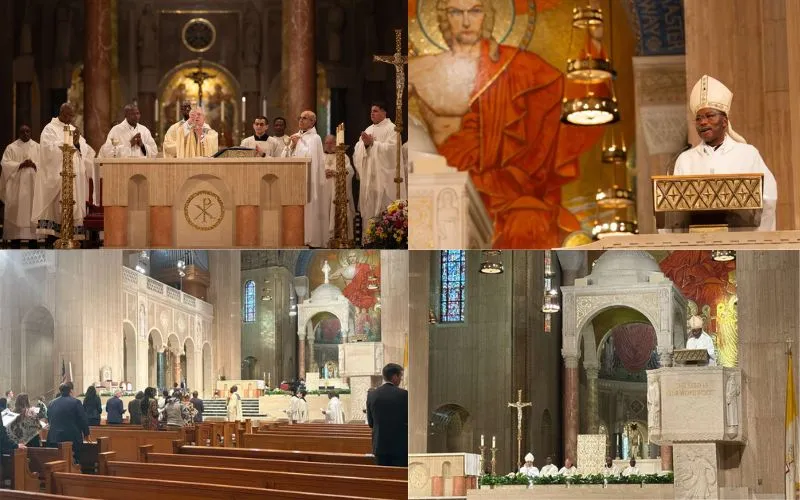
Bishop Mamza grounded his February 4 homily in lived experience. As Bishop of Yola Diocese in Northeastern Nigeria since his Episcopal Consecration in April 2011, he has shepherded a people deeply affected by the Boko Haram insurgency between 2014 and 2017, when large parts of the Nigerian region were overrun, forcing thousands to flee to Yola in search of safety.
“The Boko Haram insurgency led to my deep involvement in taking care of the Internally Displaced persons (IDPs) who ran for their lives,” he recalled. In that context, solidarity was not a theological abstraction but a matter of survival.
The Nigerian Catholic Bishop publicly thanked the universal Church for its support during the height of the crisis, singling out institutions in the United States and Europe. He cited Mission Appeal initiatives, the Hungarian Government’s Hungary Helps program, and especially German Catholic organizations including Aid to the Church in Need (ACN), Missio in Aachen, and the Catholic Archdiocese of Cologne.
 The USCCB autumn General Assembly in Baltimore, Md. (CNS photo/Bob Roller)
“These three Church Institutions in Germany are the reasons behind the survival of the Catholic faith in many African countries especially in North East Nigeria,” Bishop Mamza said, explaining that churches, schools, parish houses, and hospitals destroyed by Boko Haram were rebuilt through their assistance.
The international humanitarian agency of the Catholic community in the U.S., Catholic Relief Services (CRS), and other agencies, he further said, offered humanitarian aid “to everybody irrespective of religious affiliation.”
One Body, not two Churches
At the theological core of his homily was Bishop Mamza’s insistence on ecclesial unity that goes beyond sentiments. Citing 1 Corinthians 12:26, he reminded the people of God that “if one member suffers, all suffer together; if one member is honoured, all rejoice together.”
 Members of the Symposium of Episcopal Conferences of Africa and Madagascar (SECAM). Credit: SECAM
“This truth is not metaphorical – it is ecclesial, sacramental, and deeply real,” he said, and emphasized, “The Church in the United States and the Church in Africa are not two separate entities. They are two lungs of the same Body, breathing the same Spirit.”
In this vision, Catholic Bishops in Africa who speak out against war, corruption, and poverty are not engaging in regional activism alone, Bishop Mamza said, adding that their voices “echo in American Dioceses.”
Likewise, when Catholic Bishops in the U.S. “defend the sanctity of life, advocate for migrants, or confront the culture of individualism,” their witness strengthens the Church in Africa, the Nigerian Catholic Bishop said.
Listening before speaking
Another central theme of Bishop Mamza’s homily was listening as the foundation of solidarity. “Solidarity begins not with speaking but with listening,” he said.
He described Catholic Bishops in Africa as calling the global Church to remember the poor, defend the family, and ground moral teaching in lived experience. Their counterparts in the U.S., he said, call the Church to cultural engagement, the protection of religious liberty, and the defense of migrants, refugees, and the unborn.
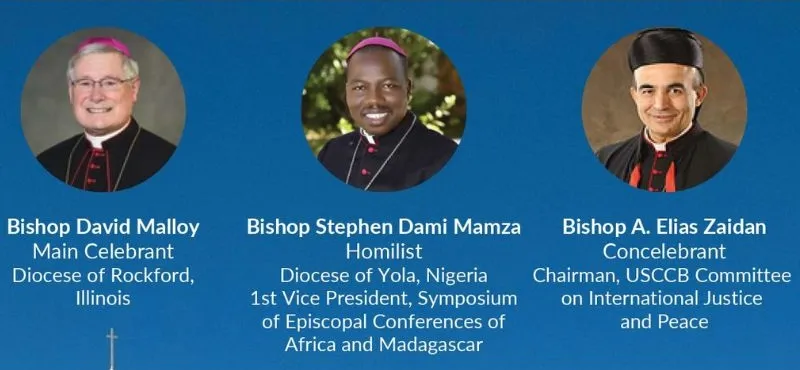 Credit: United States Conference of Catholic Bishops (USCCB)
“Each has something essential to say. Each has something essential to hear,” Bishop Mamza said, describing Episcopal unity in a polarized world as “a prophetic sign – showing that Christ can hold together what the world insists must be divided.”
A Mission shared across continents
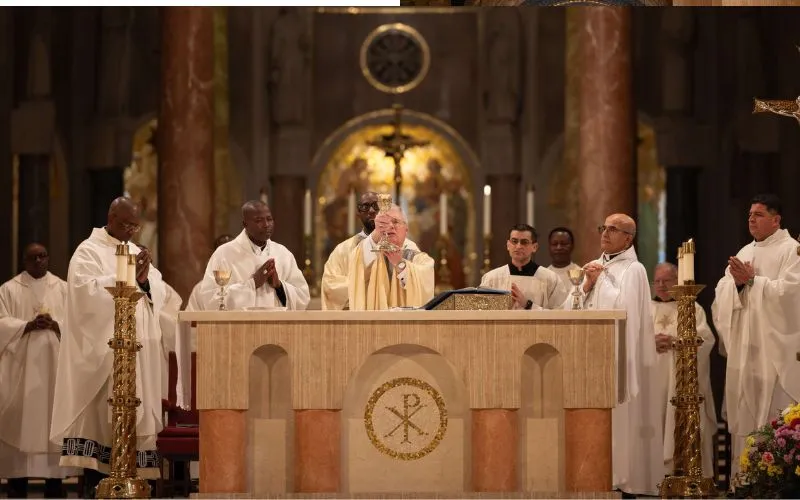
The February 4 Eucharistic celebration also gave concrete expression to a shared missionary responsibility. “The Great Commission was not given to continents, but to the whole Church,” Bishop Mamza said during his homily, citing Matthew 28:19.
Together, he argued, Catholic Bishops in Africa and the U.S. must confront global poverty, resist ideologies that undermine human dignity, promote peace, and defend life “from conception to natural death.”
The pastoral implication of this, Bishop Mamza noted, is that genuine solidarity would mean no longer closing churches in America for lack of priests while qualified candidates in Africa are turned away from seminaries because of limited resources.
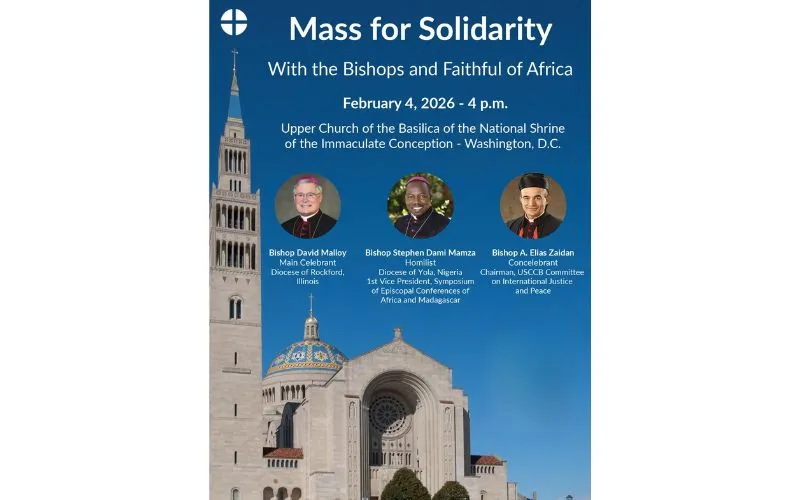 Credit: United States Conference of Catholic Bishops (USCCB)
The joint call for “brothers and sisters in hope”
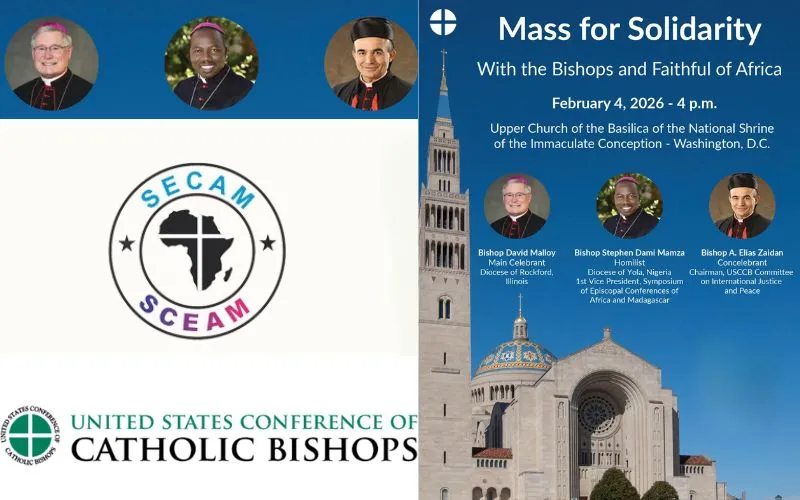
Themes in Bishop Mamza’s homily closely echoed the February 2 joint statement by SECAM and the USCCB’s Committee on International Justice and Peace, which he cosigned with Bishop Zaidan.
In the statement, they wrote: “As brother Bishops, we address the Church in the U.S and Africa with a call to renewed fraternity and mutual solidarity between our peoples.”
They reaffirmed that “integral human development, the development of every person and the whole person, especially of the poorest and most neglected in the community, is at the very heart of evangelization.”
 Credit: United States Conference of Catholic Bishops (USCCB)
The representatives of the Catholic Church leaders in Africa and the U.S. also expressed concern over declining international assistance and reiterated their commitment to humanitarian and development cooperation that “saves and affirms human life.”
“The faithful of the U.S. and Africa are gifts to one another,” they said, and added, “Together, we call for robust lifesaving and life-affirming U.S. assistance to the continent, grounded in thoughtful partnership.”
In his February 4 homily, Bishop Mamza insisted that solidarity must resist both paternalism and indifference. “We are, in truth, co-workers in the vineyard of the Lord,” he said.
 The plenary assembly of the United States Conference of Catholic Bishops gets underway on Nov. 11, 2025, at the Baltimore Marriott Waterfront. First row, left to right: Father Michael J.K. Fuller, general secretary; Archbishop Timothy P. Broglio, president, and Archbishop William E. Lori, vice president. | Credit: Jack Haskins/EWTN News
Hope that does not disappoint
Bishop Mamza concluded his homily by returning to hope, a theme also emphasized in the February 2 joint SECAM-USCCB statement in reflection of the Catholic Church’s 2025 Jubilee Year of Hope, which concluded officially on January 6.
Africa, he said, teaches hope through perseverance amid persecution and conflict. The U.S. Church teaches hope through renewal amid secularism and social division.
Quoting the late Pope Francis, Bishop Mamza reminded the people of God that “no one is saved alone.” He added, “No Church evangelizes alone; no Bishop shepherds alone; no continent stands alone.”
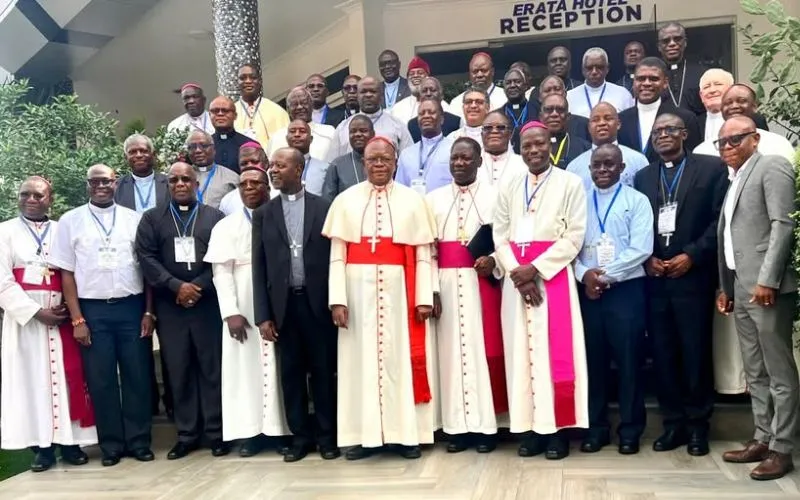 Members of the Standing Committee of the Symposium of Episcopal Conferences of Africa and Madagascar (SECAM). Credit: SECAM
“At the foot of the Cross stood people from different places, different experiences, and different wounds – but under the Cross, they became one,” the First Vice President of SECAM said.
Under that same Cross, he went on to say, the Catholic Church leaders in Africa and their counterparts in the U.S. are called to stand together.
Bishop Mamza emphasized the Gospel challenge: to recognize the person of Jesus Christ not in what is familiar or powerful, but in one another.
ACI Africa was founded in 2019. We provide free, up-to-the-minute news affecting the Catholic Church in Africa, giving particular emphasis to the words of the Holy Father and happenings of the Holy See, to any person with access to the internet. ACI Africa is proud to offer free access to its news items to Catholic dioceses, parishes, and websites, in order to increase awareness of the activities of the universal Church and to foster a sense of Catholic thought and culture in the life of every Catholic.



 Credit: USCCB
 Credit: EWTN News/Julia Convery
 Credit: USCCB
 Credit: EWTN News/Julia Convery