Advertisement
Vatican news
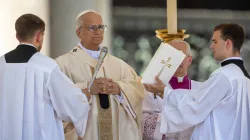
Homily of Pope Leo XIV on Jubilee for Families, Children, Grandparents and the Elderly: Full Text
FULL TEXT: Homily of Pope Leo XIV on Jubilee for Families, Children, Grandparents and the Elderly
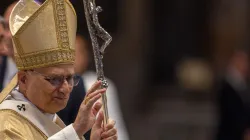
"Never its master": Why Pope Leo XIV Says Science Must Serve Humanity
Pope Leo XIV praised a major bioethics summit in Rome for promoting science rooted in truth and respect for human dignity.
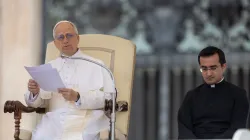
Pope Leo XIV Appeals for End to Hostilities in Gaza in First General Audience
Pope Leo XIV in the first general audience of his pontificate appealed for an end to hostilities in the Gaza Strip and for the entry of humanitarian aid.
In First Personnel Appointments, Pope Leo XIV Replaces Chancellor of Rome's John Paul II Marriage, Family Institute
Pope Leo XIV on Monday named Cardinal Baldassare Reina grand chancellor of the Pontifical Theological Institute John Paul II for Marriage and the Family.
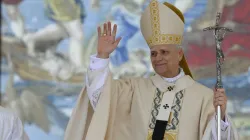
A Papacy Begins: Pope Leo XIV Calls for United Church at His Inauguration Eucharistic Celebration
Pope Leo XIV, the first U.S.-born pontiff, began his papacy with a richly-symbolic inaugural Mass, celebrated at the Vatican before a crowd of 150,00 people.
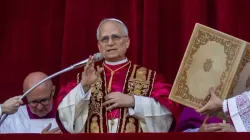
Pope Leo XIV’s Countercultural Past and Clues for the Future
Since the papal conclave elected Cardinal Robert Francis Prevost on May 8, many have been watching intently for clues as to how Pope Leo XIV will follow or depart from the path set by his late predecessor. Observers have noted his choice of a traditional papal name and his decision to wear the red cape called a mozzetta at his first appearance on the loggia of St. Peter’s Basilica — both signs of contrast with the maverick Pope Francis.
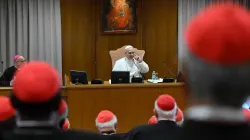
Pope Leo XIV Explains Choice of Papal Name, to Prioritize Catholic Social Teaching “in response to” AI Revolution
Pope Leo XIV explained his choice of name and the Church’s social teaching in the face of artificial intelligence and more.
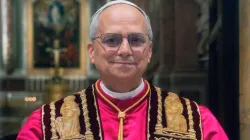
Vatican Unveils Pope Leo XIV’s Official Portrait and Signature, Returns to Traditional Papal Elements
The Vatican has released Pope Leo XIV's signature, which includes the traditional "P.P." notation ("Pastor Pastorum") not used by Francis.
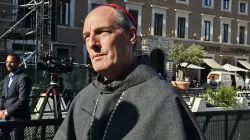
Holy Spirit Guided Election of Pope Leo XIV, “solid, discreet, and good worker”: Spanish-born French Cardinal Elector
Cardinal Bustillo says conclave was guided by the Holy Spirit with "freedom and trust," resulting in Pope Leo XIV's election in under 24 hours.
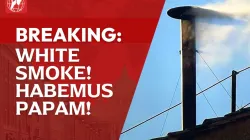
BREAKING: Habemus Papam! White Smoke Rises from Chimney of Sistine Chapel
White smoke rose from the chimney of the Sistine Chapel today at 6:09 p.m. Rome time, signaling the College of Cardinals has chosen a new pope. Of the 133 cardinals sequestered in the Vatican since May 7, one has now been elected as the 267th leader of the Roman Catholic Church.
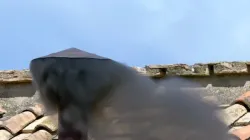
Black Smoke Rises from Sistine Chapel as Thursday Morning Voting Concludes Without a Pope
Black smoke rose from the chimney of the Sistine Chapel at 11:51 am Rome time on Thursday, signaling that the cardinals voting at the conclave have not yet elected a new pope.
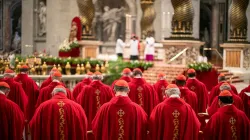
How Late Pope Francis Shaped Current College of Cardinals, Creating 108 out of the Expected 133 Electors
Of the 133 cardinals with the right to vote in this conclave, 108 were created by Pope Francis and therefore will be participating in the election of a pontiff for the first time.

Pope Francis’ Praise for St. Catherine of Siena, “great female figure of faith”
The late pope sent a telegram marking the 560th anniversary of the saint’s canonization in 2021 calling her “a great female figure of faith.”

May 7 Papal Conclave Date Finalized As Cardinals Prepare for Election
The Vatican announced Monday that the conclave to elect Pope Francis’ successor will begin on May 7, as the Church enters the final preparatory phase for choosing its 267th pope.
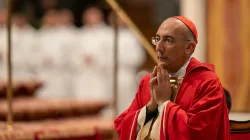
At Vatican Memorial Mass of Pope Francis, Cardinal Urges Discernment, Preservation of Late Pontiff’s “multiple" Reforms
Speaking at St. Peter’s Basilica on Monday, the 54-year-old vicar general for the Diocese of Rome described how the faithful feel like “sheep without a shepherd.”
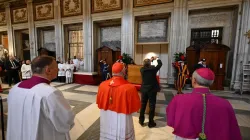
Pope Francis Laid to Rest in Beloved Marian Basilica after Coffin Crosses Rome in Popemobile
The pope’s burial site, at his request, is the Basilica of St. Mary Major, one of the four papal basilicas in Rome. He joins seven other popes buried there.
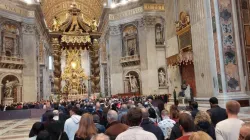
More than 128,000 Mourners Pay Respects to Pope Francis at St. Peter’s Basilica, Some Queuing for "about 5 hours"
Pope Francis passed away at 7:35 a.m. local time on Easter Monday, April 21, at his residence in the Vatican’s Casa Santa Marta, as confirmed by the Holy See Press Office. The 88-year-old pontiff led the Catholic Church for a little more than 12 years. Follow here for live updates of the latest news and information on the papal transition:
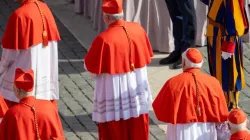
Cardinals Converge in Rome as Second General Congregation Gathers 103 Prelates
The College of Cardinals saw a significant increase in attendance at Wednesday's General Congregation, with 103 cardinals now present in Rome — nearly double the approximately 60 who participated in Tuesday's initial gathering.
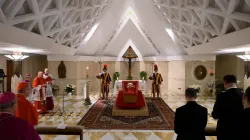
Pope Francis to Be Buried at St. Mary Major Basilica Following Saturday Funeral
In accordance with his personal wishes, Francis will not be buried in the Vatican grottoes but instead at the Basilica of St. Mary Major.
BREAKING: Pope Francis Dies at 88, Ending Historic Pontificate Marked by Mercy and Reform
Pope Francis passed away at 7:35 a.m. local time on Easter Monday, April 21, at his residence in the Vatican’s Casa Santa Marta, as confirmed by the Holy See Press Office. The 88-year-old pontiff led the Catholic Church for a little more than 12 years.