

Advertisement
Saint of the day
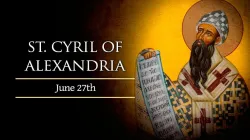
Today, June 27, We Celebrate St. Cyril of Alexandria
On June 27, Roman Catholics honor St. Cyril of Alexandria. An Egyptian bishop and theologian, he is best known for his role in the Council of Ephesus, where the Church confirmed that Christ is both God and man in one person. The Eastern churches celebrate St. Cyril of Alexandria on June 9.
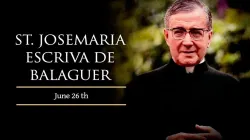
Today, June 26, We Celebrate St. Josemaria Escriva de Balaguer
On June 26, the Catholic Church commemorates the life of Saint Josemaría Escrivá, priest and founder of The Prelature of the Holy Cross and Opus Dei.
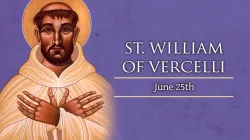
Today, June 25, We Celebrate St. William of Vercelli
William was born in 11th-century Italy to a noble family. He was orphaned as an infant and raised by relatives. At the young age of 14, he made a pilgrimage to Santiago de Compostela in Spain, and decided to devote his life to God as a hermit.

Today, June 24, We Celebrate The Nativity of St. John the Baptist
John the Baptist spent his adult life preparing the way for Jesus, and proclaiming that “the Kingdom of Heaven is close at hand.”. He was born to Zachary and Elizabeth, an elderly married couple. The Angel Gabriel had visited Zachary and told him that his wife would bear a child, even though she was already past the child-bearing age.
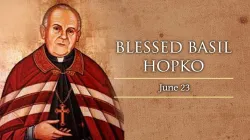
Today, June 23, We Celebrate Blessed Basil Hopko
Blessed Basil Hopko is considered one of the many priests and religious martyred by Communism. He was born in Slovakia to poor parents. His father died when he was a year old and his mother left for the United States when he was four in seach of work.
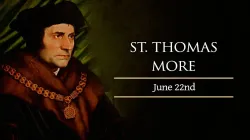
Today, June 22, we celebrate St. Thomas More
On June 22, the Catholic Church honors the life and martyrdom of St. Thomas More, the lawyer, author and statesman who lost his life opposing King Henry VIII's plan to subordinate the Church to the English monarchy.
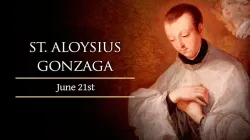
Today, June 21, We Celebrate St. Aloysius Gonzaga
As a young boy, St. Aloysius always had a great desire to know and serve God, but his family life was not always supportive of this desire. He was born into a noble Italian family, and his father was a compulsive gambler.
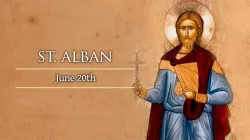
Today, June 20, We Celebrate St. Alban
St. Alban was the first Christian martyr in Britain during the early 4th century. He is the patron saint of converts and torture victims.

Today, June 19, We Celebrate St. Romuald
Saint Romuald, who founded the Camaldolese monastic order during the early eleventh century, has his liturgical memorial on June 19.
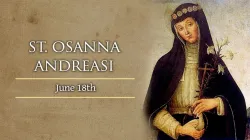
Today, June 18, We Celebrate St. Osanna Andreasi
St. Osanna was a Dominican tertiary, who spent her adult life serving the poor and the sick and offering spiritual direction to many. However, she was also a mystic and a visionary, eventually bearing the pain and red marks of the stigmata, though not the bleeding.

Today, June 17, We Celebrate St. Albert Chmielowski
Founder of the Albertine Brothers and Sisters, and one of the saints who inspired the vocation of the young Karol Wojtyla, the future Pope John Paul II was born on August 20, 1845 in (near Kraków) as Adam Hilary Bernard Chmielowski. Born into a wealthy and aristocratic family, Adam was the oldest of four children.
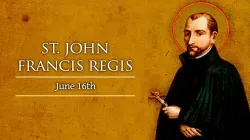
Today, June 16, We Celebrate St. John Francis Regis
On June 16 the Catholic Church celebrates the memory of Saint John Francis Regis, a 17th-century French Jesuit known for his zealous missionary efforts and his care for the poor and marginalized.

Today, June 15, We Celebrate St. Germaine Cousin
June 15 is the feast day of St. Germaine Cousin, a simple and pious young girl who lived in Pibrac, France in the late 1500s. Germaine was born in 1579 to poor parents. Her father was a farmer, and her mother died when she was still an infant. She was born with a deformed right arm and hand, as well as the disease of scrofula, a tubercular condition.
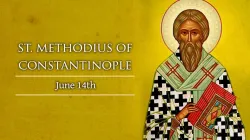
Today, June 14, We Celebrate St. Methodius of Constantinople
St. Methodius worked for unity and reconciliation in the Eastern Church and served as the Patriarch of Constantinople the last five years of his life.
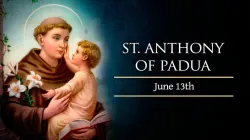
Today, June 13, We Celebrate St. Anthony of Padua
On June 13, Catholics honor the memory of the Franciscan priest St. Anthony of Padua. Although he is popularly invoked today by those who have trouble finding lost objects, he was known in his own day as the “Hammer of Heretics” due to the powerful witness of his life and preaching.
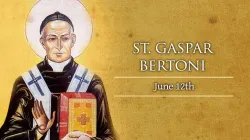
Today, June 12, We Celebrate St. Gaspar Bertoni
St. Gasper was born in Verona, Italy in 1777. He was baptized the day after. It is known that he was from an affluent family, and that his family's faith-life was also quite notable.
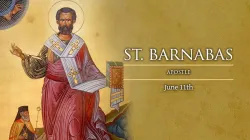
Today, June 11, We Celebrate St. Barnabas, apostle
Catholics celebrate the memory of St. Barnabas on June 11. The apostle and missionary was among Christ's earliest followers and was responsible for welcoming St. Paul into the Church.

Today, June 10, We Celebrate Blessed Edward Poppe
Blessed Edward Poppe is a contemporary saint. He died at the young age of 33.
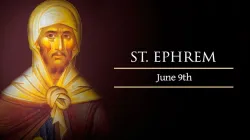
Today, June 9, We Celebrate St. Ephrem
On June 9, the Roman Catholic Church honors Saint Ephrem of Syria, a deacon, hermit, and Doctor of the Church who made important contributions to the spirituality and theology of the Christian East during the fourth century.
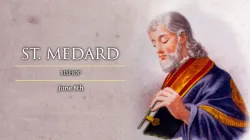
Today, June 8, We Celebrate St. Medard, bishop
St. Medard was born around 456 in Salency, France. His father Nectard was a noble Frenchman, and his mother, Protogia, descended from a Roman family that settled in Gaul.