

Advertisement
Saint of the day
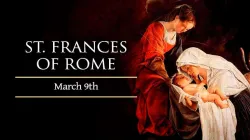
Today, March 9, We Celebrate St. Frances of Rome
St. Frances was born into a noble Roman family in the year 1384. From an early age, Frances felt drawn to the religious life, but at the age of thirteen her parents forced her into marriage.

Today, March 8, We Celebrate St. John of God, Confessor
The Catholic Church celebrates the extraordinary life of St. John of God on March 8. The saint lived through decades of sin and suffering before a profound conversion that led him to embrace poverty, humility and charity.
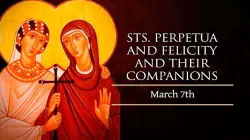
Today, March 7, We Celebrate Sts. Perpetua and Felicity and their Companions
Saints Perpetua and Felicity were martyrs who died for the faith around the year 203.

Today, March 6, We Celebrate St. Colette
St. Colette was the founder of the Colettine Poor Clares (Clarisses)
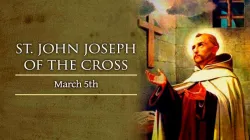
Today, March 5, We Celebrate St. John Joseph of the Cross
Self-denial is never an end in itself but is only a help toward greater charity—as the life of Saint John Joseph shows.

Today, March 4, We Celebrate St. Casimir of Poland
On March 4, the Catholic Church honors Saint Casimir Jagiellon, a prince whose life of service to God has made him a patron saint of Poland, Lithuania, and young people.

Today, March 3, We Celebrate St. Katharine Drexel
On March 3, the universal Church celebrates the feast of St. Katharine Drexel, a Philadelphia heiress who abandoned her family’s fortune to found an order of sisters dedicated to serving the impoverished African American and American Indian populations of the United States.
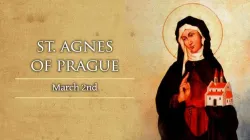
Today, March 2, We Celebrate St. Agnes of Prague
St. Agnes was born in Prague in the year 1200, and probably died in the year 1281. She was the daughter of Ottocar, King of Bohemia and Constance of Hungary, who was a relative of St. Elizabeth.

Today, March 1, We Celebrate St. David of Wales
Among Welsh Catholics, as well as those in England, March 1 is the liturgical celebration of Saint David of Wales.

Today, February 28, We Celebrate Blessed Villana de'Botti
Villana de’Botti was a wife and a Third Order Dominican. She was born in Florence in 1332.

Today, February 27, we celebrate Blessed Maria Caridad Brader
Mother Maria Caridad Brader was born into a pious family in Kaltburn, Switzerland, in 1860.
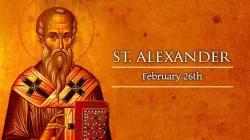
Today, February 26, we celebrate St. Alexander
St. Alexander succeeded St. Achillas as bishop of Alexandria in 313.

Today, February 25 we celebrate Blessed Maria Adeodata Pisani
Blessed Maria Adeodata Pisani was born into a noble family in Naples, Italy in 1806. Her father was an alcoholic and was exiled after being involved in a revolt.
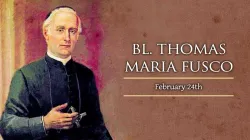
Today, February 24, we celebrate Blessed Thomas Maria Fusco
Thomas was born to a noble family in 1831 in Pagani, Italy. He was the seventh of eight children.

Today, February 23, we celebrate St. Polycarp of Smyrna
On Feb. 23, the Catholic Church remembers the life and martyrdom of St. Polycarp, a disciple of the apostle and evangelist St. John. Polycarp is celebrated on the same date by Eastern Orthodox Christians, who also honor him as a Saint.

Today, February 22, We Celebrate the Feast of the Chair of St. Peter
The Feast of the Chair of St. Peter celebrates the papacy and St. Peter as the first bishop of Rome. St. Peter's original name was Simon. He was married with children and was living and working in Capernaum as a fisherman when Jesus called him to be one of the Twelve Apostles.

Today, February 21, We Celebrate St. Peter Damian
On Feb. 21, Catholics honor Saint Peter Damian, a Benedictine monk who strove to purify the Church during the early years of its second millennium.

Today, February 20, we celebrate Sts. Francisco and Jacinta Marto
Francisco, 11, and Jacinta, 10, are the youngest non-martyrs to be canonized in the history of the Church. The brother and sister, who tended to their families’ sheep with their cousin Lucia Santo in the fields of Fatima, Portugal, witnessed the apparitions of Mary, now commonly known as Our Lady of Fatima.

Today, February 19, we celebrate St. Conrad of Piacenza
Conrad was born into a noble family in northern Italy. He married the daughter of a nobleman, Euphrosyne.

Today, February 18, we celebrate St. Simon
A relative of Jesus', possibly a first cousin. He is in the Gospel of Matthew, and is one of the brethren of Christ mentioned in Acts who was present at the birth of the Church on the first Pentecost.