Advertisement
Saints
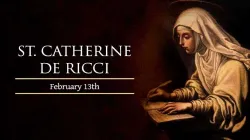
Today, February 13, we celebrate St. Catherine de Ricci
The Ricci are an ancient family in Tuscany. Catherine was born at Florence in 1522, and called at her baptism Alexandrina, but she took the name of Catherine at her religious profession.

Today, February 11: We Celebrate the Feast of Our Lady of Lourdes
On Feb. 11, the Catholic Church celebrates the liturgical memorial of Our Lady of Lourdes, recalling a series of 18 appearances that the Blessed Virgin Mary made to a 14-year-old French peasant girl, Saint Bernadette Soubirous.
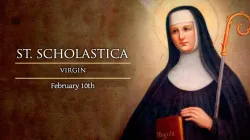
Today, February 10, we celebrate St. Scholastica
On Feb. 10, the Catholic Church remembers St. Scholastica, a nun who was the twin sister of St. Benedict, the "father of monasticism" in Western Europe.
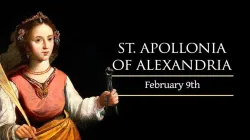
Today, February 9, we celebrate St. Apollonia of Alexandria
St. Apollonia was a holy virgin who suffered martyrdom in Alexandria during a local uprising against the Christians in the early 3rd century.
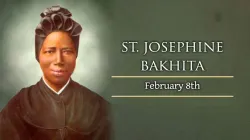
Today, February 8, we celebrate St. Josephine Bakhita
Josefina Bakhita was born in Sudan (Africa) and lived through slavery for much of her life. The name Bakhita, which means "fortunate," she obtained through her captors at age 9, and Josefina's, twelve years after her when she received her baptism.
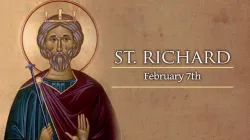
Today, February 7, we celebrate St. Richard
St. Richard was orphaned at a young age. His brother inherited his parents' estate after he was of age, but the death tax was so great that they were sent into poverty, and Richard had to work on his brother's farm.
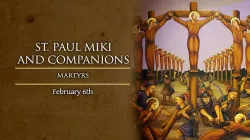
Today, February 6, we celebrate St. Paul Miki and Companions
On Feb. 6, the Catholic Church honors the 26 Martyrs of Nagasaki, a group of native Japanese Catholics and foreign missionaries who suffered death for their faith in the year 1597.
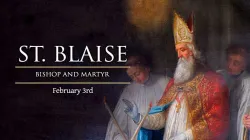
Today, February 3, we celebrate St. Blaise, patron saint of throat diseases and laryngologists
Blaise was a hard-working bishop dedicated to encouraging the spiritual and physical health of his people in Sebastea, Armenia.
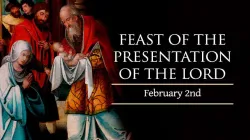
Today is the Feast of the Presentation of the Lord
At the end of the fourth century, a woman named Etheria made a pilgrimage to Jerusalem. Her journal, discovered in 1887, gives an unprecedented glimpse of liturgical life there.
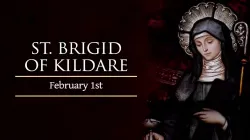
Today we celebrate Saint Brigid of Kildare, patron saint of Ireland
On Feb. 1 Catholics in Ireland and elsewhere will honor Saint Brigid of Kildare, a monastic foundress who is – together with Saint Patrick and Saint Columcille – one of the country’s three patron saints.

Today we celebrate St. Hyacintha of Mariscotti
Born of a noble family near Viterbo (Italy,) Hyacintha entered a local convent of sisters who followed the Third Order Rule. However, she supplied herself with enough food, clothing and other goods to live a very comfortable life amid these sisters who had pledged to mortification.
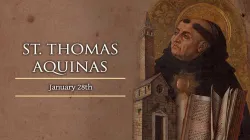
Today, January 28, We Celebrate Saint Thomas Aquinas, Doctor of the Church
On Jan. 28, the Roman Catholic Church celebrates Saint Thomas Aquinas, the 13th century theologian who showed that the Catholic faith is in harmony with philosophy and all other branches of knowledge.
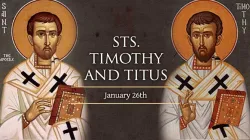
Today January 26 we celebrate Saints Timothy and Titus, close companions of the Apostle Paul
On Jan. 26, the Roman Catholic Church celebrates the liturgical memorial of Saints Timothy and Titus, close companions of the Apostle Paul and bishops of the Catholic Church in its earliest days.
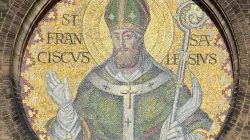
How St. Francis de Sales Overcame His Temper to Become a Saint of Kindness
On Jan. 24, the Church celebrates the patron saint of journalists, writers, and the Catholic press: St. Francis de Sales, doctor of the Church.
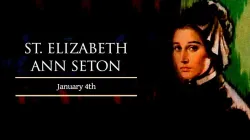
Today, January 4, We Celebrate St. Elizabeth Ann Seton
Saint Elizabeth Ann Seton was the foundress and first superior of the Sisters of Charity in the United States. She was born to Episcopalian parents into New York City high society on August 28, 1774.
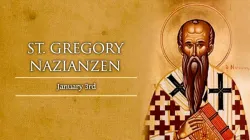
Today, Tuesday, January 3, We Celebrate the Memorial of St. Gregory Nazianzen
St. Gregory was a Doctor of the Church, born at Arianzus in Asia Minor, probably in 325, and died in 389. He was the son of Gregory, Bishop of Nazianzus (329-374.)
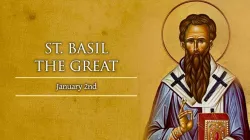
Today, Monday, January 2, We Celebrate the Memorial of St. Basil the Great
St. Basil, one of the most distinguished Doctors of the Church and Bishop of Caesarea, was likely born in 329 and died on January 1, 379.
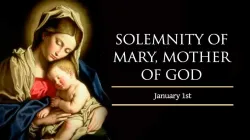
Today, Sunday, January 1, We Celebrate Solemnity of Mary, Mother of God
The title “Mother of God” goes back to the third or fourth century, but the Greek term Theotokos (“The God-bearer”) was officially consecrated as Catholic doctrine at the Council of Ephesus in 431, thus becoming the first Marian dogma. At the end of the Council of Ephesus, crowds of people marched through the streets shouting: “Praised be the Theotokos!”
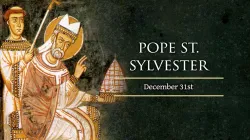
Today, December 31, We Celebrate the Feast of St. Sylvester, Pope
Saint Sylvester was born in Rome around the year 250. Not much is known about him, but legends surround him. Some legends state that at a young age, Sylvester was put under the care of a priest to be formed in the practice of religion and sacred literature.
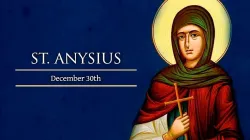
Today, December 30, We Celebrate St. Anysius
Saint Anysius was a Martyr of Greece. She was a wealthy woman of Salonika, in Thessaly, who used her personal funds to aid the poor.