Advertisement
Saints
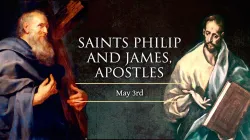
Today, May 3, We Celebrate Sts. Philip and James the Less, Apostles
Philip was born in Bethsaida in Galilee and was one of the 12 Apostles that Jesus called.
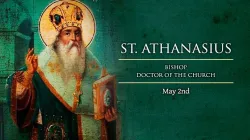
Today, May 2, We Celebrate St. Athanasius, doctor of the Church
Catholics honor St. Athanasius on May 2. The fourth century bishop is known as “the father of orthodoxy” for his absolute dedication to the doctrine of Christ's divinity.
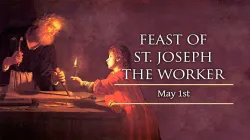
Today, May 1, is the Feast of St. Joseph the Worker
St. Joseph has two feast days on the liturgical calendar. The first is March 19—Joseph, the Husband of Mary. The second is May 1—Joseph, the Worker.
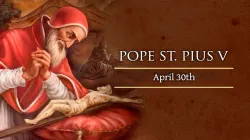
Today, April 30, We Celebrate Saint Pius V, Pope
St. Pius V was born Michele Ghislieri in 1504 to poor parents of noble lineage at Bosco, near Alexandria, Lombardy on January 17, 1504.
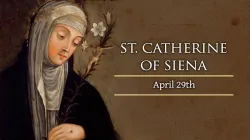
Today, April 29, We Celebrate St. Catherine of Siena
St. Catherine was a third-order Dominican, peacemaker and counselor to the Pope. She singlehandedly ended the Avignon exile of the successors of Peter in the 14th century.
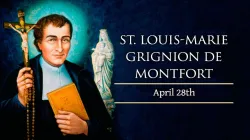
Today, April 28, We Celebrate St. Louis-Marie Grignion de Montfort
On April 28, the universal Church celebrates the feast day of Louis-Marie de Monfort, a 17th century saint who is revered for his intense devotion to the Blessed Virgin Mary.
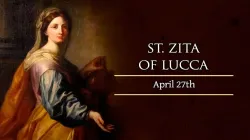
Today, April 27, We Celebrate St. Zita of Lucca
On April 27 the Catholic Church honors Saint Zita, a 13th century Italian woman whose humble and patient service to God has made her a patron saint of maids and other domestic workers.
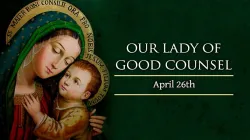
Today, April 26, We Celebrate Our Lady of Good Counsel
On the Feast of St. Mark, April 25, 1467, at the close of a festival in Genazzano, Italy, a cloud descended upon an ancient 5th-century deteriorated church, dedicated to Our Lady of Good Counsel.
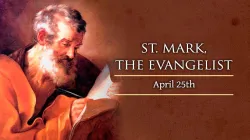
Today, April 25, We Celebrate St. Mark, the Evangelist
St. Mark, the Evangelist, is the author of the second Gospel and the patron saint of notaries. He wrote the Gospel in Greek for the Gentile converts to Christianity.
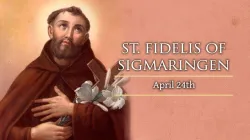
Today, April 24, We Celebrate St. Fidelis of Sigmaringen
A former lawyer who left his profession to become a Capuchin Franciscan priest, Saint Fidelis of Sigmaringen has his liturgical memorial on April 24.
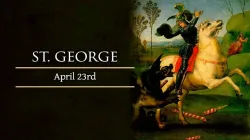
Today, April 23, We Celebrate St. George
St. George was a soldier of the Roman army who was tortured and beheaded for his Christian faith in the year 303, in Lydda (in modern day Palestine). He was likely born in Cappadocia, of a Cappadocian father and a Palestinian mother of noble rank.
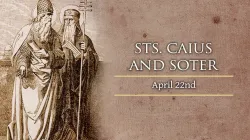
Today, April 22, We Celebrate Sts. Caius and Soter
Cauis and Soter, Popes of the early Church, are both venerated in tradition as martyrs, though no reliable account of their martyrdom survives today.
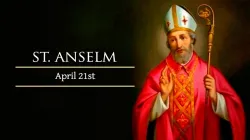
Today, April 21, We Celebrate St. Anselm
On April 21, the Catholic Church honors Saint Anselm, the 11th and 12th-century Benedictine monk and archbishop best known for his writings on Christ's atonement and the existence of God.
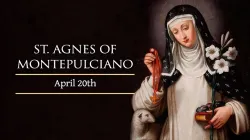
Today, April 20, We Celebrate St. Agnes of Montepulciano
St. Agnes of Montepulciano was born in 13th-century Tuscany. At the age of six, Agnes began trying to convince her parents to allow her to join a convent.
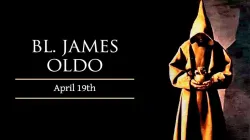
Today, April 19, We celebrate Blessed James Oldo
James Oldo experienced a radical conversion that led him to become a Franciscan tertiary, and later a priest.
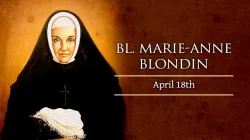
Today, April 18, We Celebrate Blessed Marie-Anne Blondin
April 18 commemorates the feast of Blessed Marie-Anne Blondin, a Canadian woman whose life was a story of obedience in the face of personal setbacks.
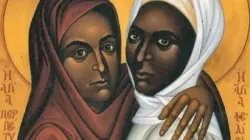
10 little-known facts about the early visionary St. Perpetua and her companion St. Felicity
As the Church celebrates the feast of Sts. Perpetua and Felicity on March 7, here are some interesting things to know about these early martyrs.
What Should a Lenten Homily be like? God Told a Saint
St. Angelo d’Acri (1669–1739) heard a divine voice give him advice on preaching and went on to become known for many spiritual gifts.
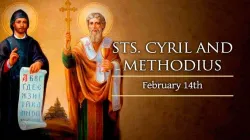
Today, February 14, We Celebrate Sts. Cyril and Methodius
On Feb. 14, the universal Church honors two brothers, Sts. Cyril and Methodius, who are called the “Apostles of the Slavs” for their tireless work in spreading the Gospel throughout Eastern Europe in the ninth century.
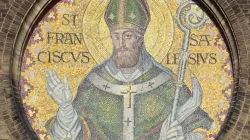
From Struggles With Temper to Path of Charity, St. Francis de Sales is a Model for us all
On Jan. 24, the Church celebrates the patron saint of journalists, writers, and the Catholic press: St. Francis de Sales, doctor of the Church.